Why You Will Never See the World "As It Is": Jakob von Uexküll and the Concept of Umwelt
We live with the conviction that we share the same universe with the creatures around us. Yet, modern biology whispers a far more unsettling truth: we are all trapped in our own biological soap bubbles. You and your dog never live in the same world.
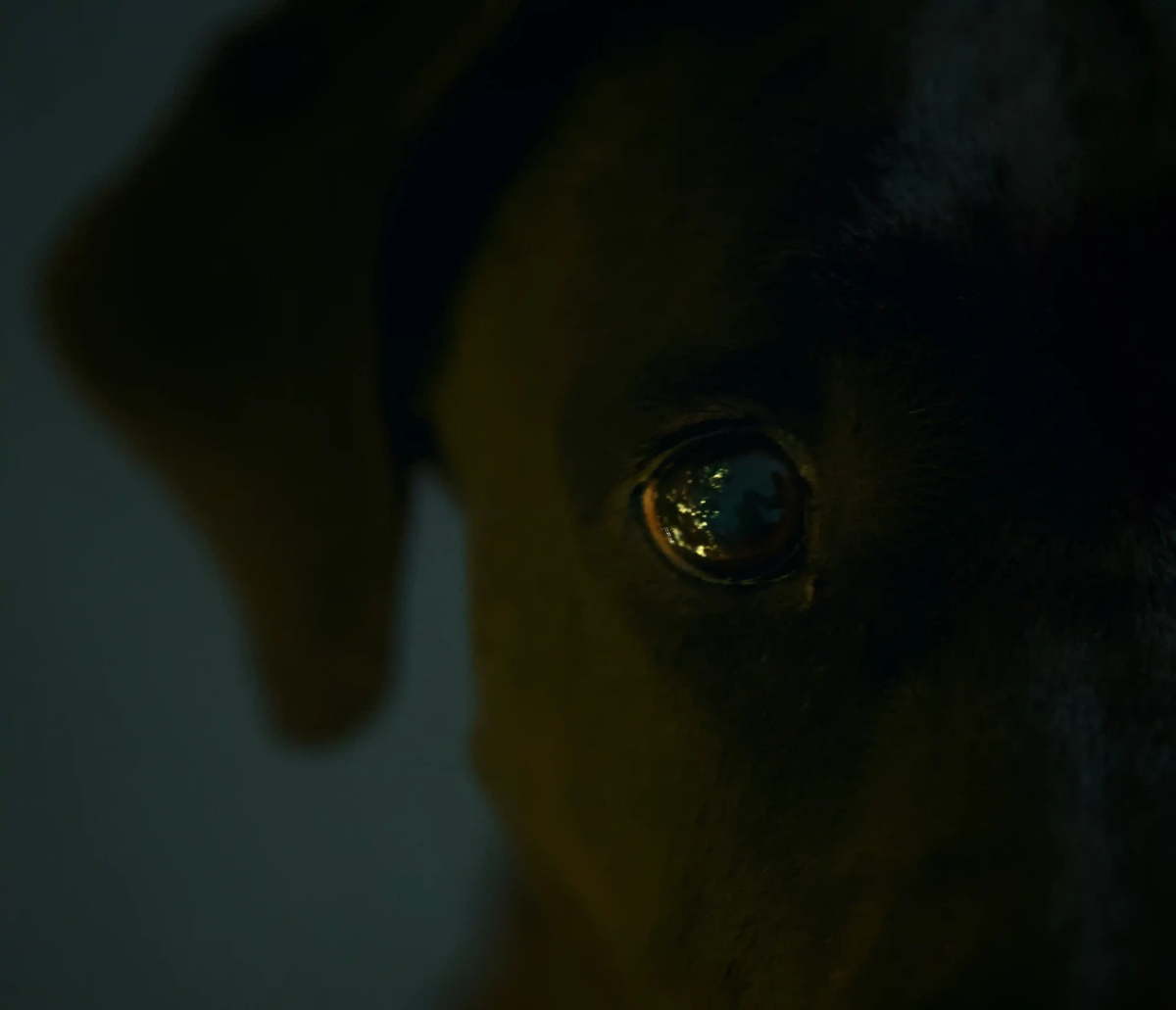
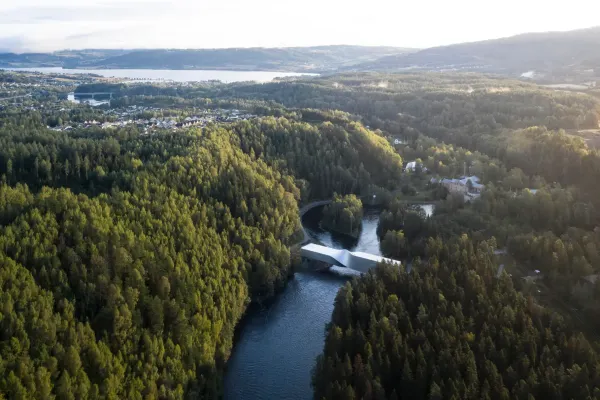
We live with an unshakable conviction that we share the exact same planet, physical space, and universe. When you take a walk in a forest, you assume you are looking at the same trees, the same birds perched on branches, and the same insects on the ground; you presume you are breathing in the exact same space. It is comforting to think that the dog walking beside you is treading the same path, existing within the exact same reality. Yet, the intersection of modern biology and cognitive science whispers a far more unsettling and isolating truth: humans, animals, and plants never live in the same world.
For centuries, scientific optimism maintained that humanity is a privileged species capable of seeing the world "as it is," accessing a mind-independent, objective reality. But in the early 20th century, a theory emerged that would fundamentally shatter this anthropocentric hubris—a theory that continues to shape everything from ecological psychology to cognitive philosophy today.
Estonian-born German biologist Jakob von Uexküll fiercely opposed the mechanistic approaches of his time, which viewed animals merely as complex machines made of flesh. In doing so, he introduced a single, devastating concept into the scientific lexicon: the Umwelt.
A Shared Environment, Countless Parallel Universes
To understand Jakob von Uexküll’s philosophy, one must first grasp the vital distinction between the objective physical environment (Umgebung) and the subjective perceptual world (Umwelt). According to Uexküll, an absolute, physical environment does exist; however, no living creature has direct, transparent access to it. Every organism is trapped inside a biological bubble, impenetrable from the outside, constructed solely from the limited data its own nervous system can filter and absorb. In his seminal work, A Foray into the Worlds of Animals and Humans, Uexküll captures this existential isolation with a famously elegant metaphor:
"We must first blow, in fancy, a soap bubble around each creature to represent its own world, filled with the perceptions which it alone knows. When we ourselves then step into one of these bubbles, the familiar meadow is transformed."
Even if they stand side by side in the exact same forest, a human, a bat, and a tick never share the same world. While the human Umwelt is rich with colors, visual depth, and cultural meaning, the bat's Umwelt is nothing but a three-dimensional acoustic map drawn by echolocation. There is no single, objective forest; rather, there are countless parallel universes, instantly recreated according to the biology of the creature observing it.
What Actually Is a Flower?
To comprehend this biological isolation, simply look at a flower resting on your desk. Due to human biology and evolutionary history, that flower is an aesthetic visual element, an object to be smelled, or a piece of decoration. But to a bee entering the same room, that exact flower is a landing pad glowing with ultraviolet light, a vital target harboring nectar. To a tick, the flower means absolutely nothing; in its world, the shape, color, or meaning of a flower literally does not exist.
Claiming that the flower has an objective "essence" is merely the fallacy of mistaking the boundaries of our own Umwelt for a universal law. This relationship that living beings establish with their surroundings was later deepened by James J. Gibson, one of the founders of ecological psychology, through the concept of affordances. We perceive the world not merely as a collection of objects, but as the potential for action that those objects provide us.
The Universe of the Tick: A World Reduced to Three Signals
The case that etched Uexküll’s concept of Umwelt into history, and most profoundly encapsulates this existential isolation, is his famous example of the tick (Ixodes ricinus).
We do not even need to imagine a blind and deaf tick; the reality itself is chilling enough. A tick climbing to the tip of a branch in the forest can wait there for up to 18 years without eating, drinking, or moving. In its universe, there are no visual landscapes, no sound of the wind, no chirping of birds, nor any flow of time. An entire planet is reduced, in its mind, to just three signals:
- The scent of butyric acid emanating from the sweat glands of a mammal.
- A body heat of exactly 37 degrees Celsius.
- The physical sensation of a hairy texture on the skin.
After years of dark, silent waiting, the moment the tick detects the scent of butyric acid from a mammal passing below, it drops itself into the void. Upon feeling the 37-degree heat, it knows it has landed on the right target, and when it finds the hairy texture, it latches onto the skin. Everything outside these three signals—the sun in the sky, the trees in the forest, the color of its prey—is absolute "nothingness" in its reality. The tick constructs its massive universe using only this three-letter biological alphabet.
The Collapse of Human Hubris and Philosophical Discomfort
From the time it was published to the present day, Uexküll’s theory has caused a massive provocation in both the scientific and philosophical worlds. The primary reason for this is that it strips humanity of its metaphysical privilege.
For centuries, we believed that by inventing telescopes, microscopes, and massive particle accelerators, we were mapping the absolute universe. We argued that our advanced instruments carried us beyond our biological limits and allowed us to reach a "mind-independent, pure reality." Yet, the philosophy of Umwelt forces us into a much more humbling and unsettling confrontation: even our most advanced tools cannot exempt us from this biological rule. Even when we look through a telescope, we are merely translating the data of the universe into colors the human eye can see; we reduce microscopic data into equations the human brain can comprehend. All those absolute, universal truths we think we have discovered are, in fact, nothing more than the slightly expanded walls of our own species' soap bubble.
Uexküll took Immanuel Kant’s philosophy—that "space and time are forms of the mind"—and grounded it in biology. For humans, three-dimensional space is an evolutionary consequence of the three mutually perpendicular semicircular canals in our inner ear. We do not see the world as it is; we see it as we are.
This realization has driven many modern philosophers into deep discomfort. If every individual lives in a private phenomenal world—constructed solely by their own perceptual apparatus, impenetrable from the outside—how can we ever truly speak of a shared reality, objective science, or absolute truth? This state of isolation, often referred to as phenomenal individualism, is one of the most severe crises to shake humanity's position in the universe.
What Are We Missing Out There?
Today, while sitting on the same couch with your dog or cat at home, you might think you are sharing the exact same moment with them. But even though you are physically side by side, you are actually breathing in two biologically isolated parallel dimensions that never truly intersect. It is biologically impossible for you to step into their rich Umwelt, built upon scent and hearing, using your human consciousness.
In this modern age, where we confidently believe we have deciphered the entire universe and boast of our technology, our greatest hubris is perhaps assuming we can see it all. The question Jakob von Uexküll asked a century ago continues to echo today, far more chillingly in the light of modern science:
If the text you are reading right now, the chair you are sitting on, the light seeping through the window, and all the reality you know is merely a narrow translation permitted by human biology... how much of the absolute reality flowing outside that window are you currently missing altogether?
— Related Reading: 'Plant Blindness' and the Silent Network of Forests