When Nature Stops Being the Backdrop: 7 Films That Rethink Our Relationship With the Planet
Environmental documentaries show us the melting glaciers and rising temperatures. But narrative cinema exposes something far more unsettling. From the Amazon to a cosmic collision, these seven films redefine the man vs nature trope, proving that ecological collapse begins inside the human mind.
Environmental journalism and documentary filmmaking have long served as our primary instruments for proving the physical transformation of the earth. Satellite imagery, time-lapse recordings of retreating glaciers, and statistical graphs present the scale of the ecological crisis in measurable data. Yet humanity's fractured relationship with the natural world does not stem merely from a deficit of scientific information. At the root of this crisis lie concepts of property, histories of colonial extraction, industrial ambition, and the illusion that the human mind exists apart from the biological world. Narrative cinema steps in precisely where documentary evidence leaves off. Rather than cataloging physical proof, it examines the psychology of a species driven to dominate its surroundings and the alienation that follows.
For much of film history, the natural landscape was treated as a mute stage for human drama or a physical obstacle to be conquered. By contrast, filmmakers who place the non-human world at the center of the frame strip nature of its passive role. They transform the environment into either an active historical subject or a mirror reflecting the collapse of the human psyche. Selected from different continents and decades, the seven films below document the tension between humanity and the earth without retreating into pastoral sentimentality.
Embrace of the Serpent (2015) and Erased Ecological Memory
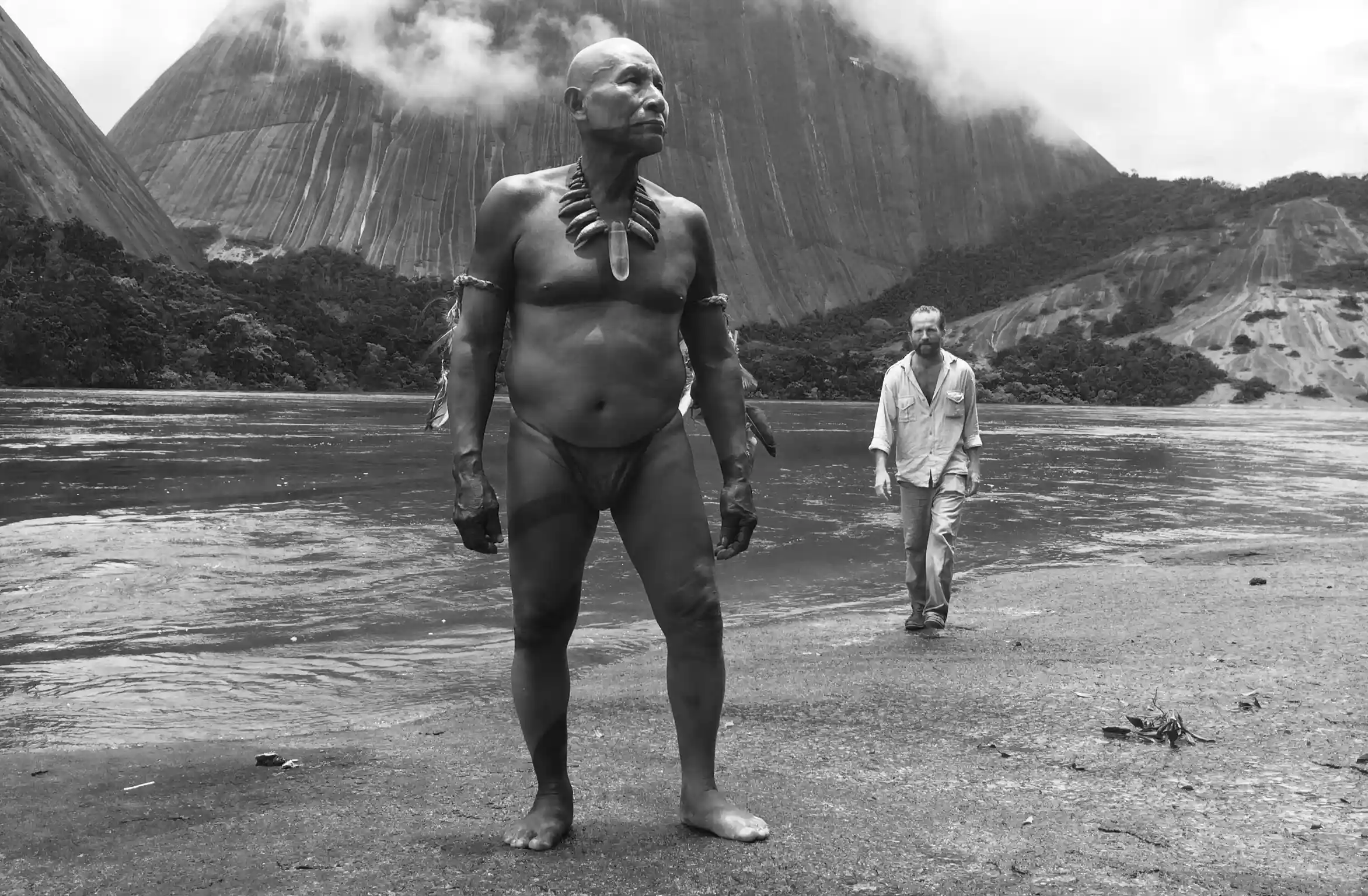
Directed by Colombian filmmaker Ciro Guerra, Embrace of the Serpent is the first fiction feature shot in the Colombian Amazon in more than thirty years. Filmed over seven weeks in the jungles of Vaupés, the production reverses the conventions of Western exploration narratives by becoming the first Colombian film to feature an indigenous protagonist and unfold from his perspective, centering on Karamakate, an Amazonian shaman and the last survivor of his people.
The screenplay is inspired by the real-life journals of two scientists who traveled through the Colombian Amazon over the course of forty years during the last century, German explorer Theodor Koch-Grünberg, whose 1907 diary entries open the production notes, and American ethnobotanist Richard Evans Schultes. As both men search for the sacred and difficult-to-find psychedelic yakruna plant that grows on rubber trees, the narrative parallels their journeys with the violent history of rubber barons who enslaved indigenous communities and committed atrocities at collection centers like La Chorrera, known today as a center for the memory of the Rubber Holocaust.
In his interview included in the official Oscilloscope Laboratories press notes, Guerra explains how indigenous conceptions of time shaped the structure of the screenplay.
"There's an idea in many of the texts that explore the indigenous world that speaks of a different concept of time. Time to them is not a line, as we see it in the West, but a series of multiple universes happening simultaneously. It is a concept that has been referred to as 'time without time' or 'space without space.'"
Guerra notes in the same document that the production is an effort at "rescuing the memory of an Amazon that no longer exists" and expresses hope that "this film will create this image in the collective memory" now that characters like Karamakate, representing "this breed of wise, warrior-shamans," are extinct. Antonio Bolívar Salvador, who plays the older Karamakate and is one of the last survivors of the Ocaina people, alongside Nilbio Torres, an agricultural worker from Vaupés who speaks mostly Cubeo and portrays the younger Karamakate, both emphasize that the film preserves the knowledge of their elders. Shot in stark black and white apart from a brief color sequence near the end, the film exposes the chasm between Western science's impulse to possess and classify the earth and an indigenous cosmology built on ecological equilibrium.
Dersu Uzala (1975) and the Unmappable Wilderness
A similar collision of worldviews anchors Dersu Uzala, directed by Akira Kurosawa in 1975 for the Soviet studio Mosfilm and standing as the only feature Kurosawa filmed outside of Japan. Adapted from the autobiographical writings of Russian explorer Vladimir Arsenyev, the narrative follows topographical military expeditions across the Ussuri region of the Russian Far East at the turn of the twentieth century.
Filmed on 70mm on location in Siberia over nearly a year of demanding weather conditions beginning in May 1974, the story traces the bond between Arsenyev, sent by the state to map the frontier, and Dersu Uzala, a nomadic hunter who lives entirely within the rhythms of the forest. Kurosawa contrasts the educated urban officer's mission to measure the land against Dersu's animist philosophy. To Dersu, the sun, water, fire, and wind are not inanimate phenomena but living equals with their own agency. Taking more game than necessary or failing to leave rice and matches in a forest shelter for the next traveler constitutes a moral failure.
In the second half of the film, as Dersu's eyesight deteriorates and renders him unable to survive alone in the taiga, Arsenyev brings him to his home in the city. Yet Dersu suffocates within four walls, bewildered by a society where water must be purchased and cutting wood is prohibited by law. Kurosawa refuses to romanticize the wilderness, demonstrating through a lethal blizzard on a frozen lake just how indifferent and unforgiving the natural world remains toward human survival.

Leave No Trace (2018) and the Margins of Modern Society
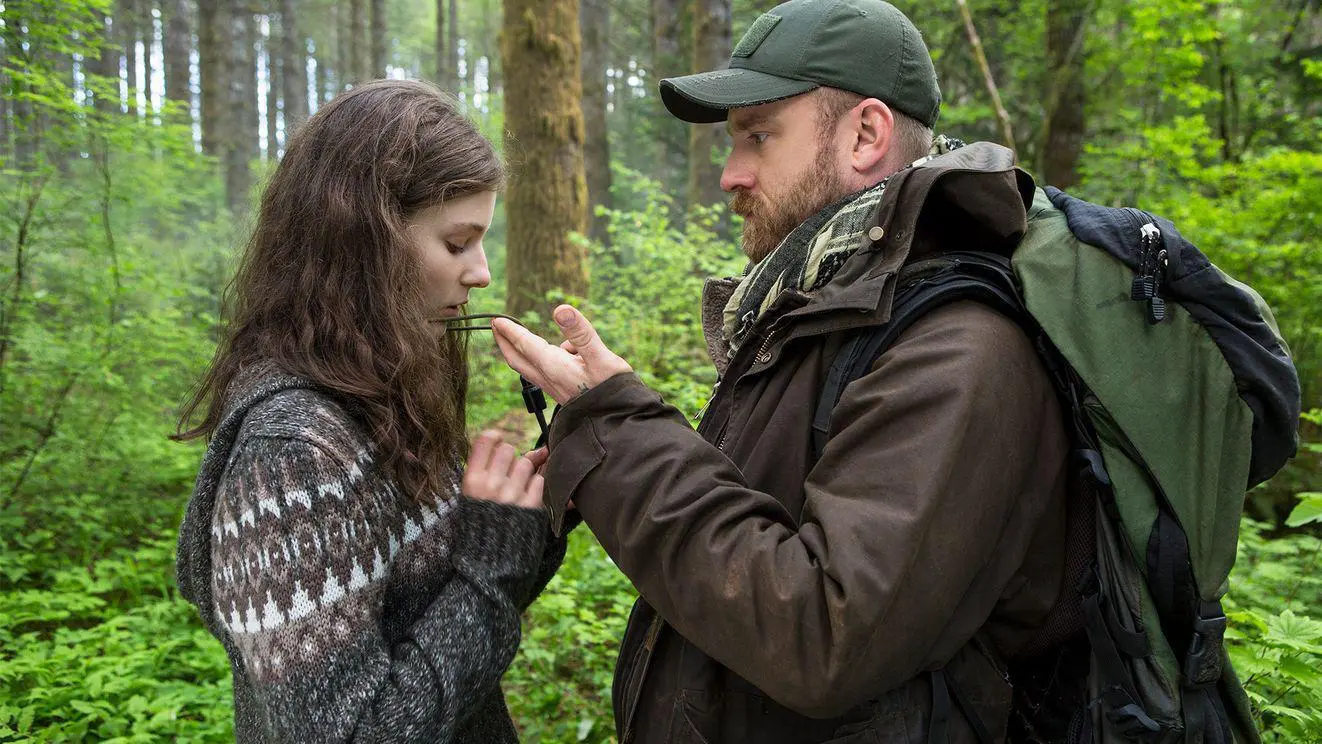
The inability to conform to urban structures moves into a contemporary setting in American director Debra Granik's Leave No Trace. Adapted by Granik and Anne Rosellini from Peter Rock's novel My Abandonment, which grew out of a news report in The Oregonian, the film follows a father and his teenage daughter living undetected in Forest Park, a vast public wilderness on the edge of Portland, Oregon.
Granik deliberately avoids framing their isolation as a romantic or ideological protest against consumer culture. Played by Ben Foster, the father, Will, is an army veteran struggling with post-traumatic stress who cannot psychologically integrate into institutional life. Living conscientiously by harvesting rainwater, educating his daughter Tom, and leaving minimal physical evidence of their camp, their existence is disrupted when authorities discover them and social services place them into housing and employment. Without passing judgment, the film studies the quiet divergence between a father who requires the forest as a mental sanctuary and a daughter who discovers a desire to belong to a human community.
Stalker (1979) and the Failure of Human Control
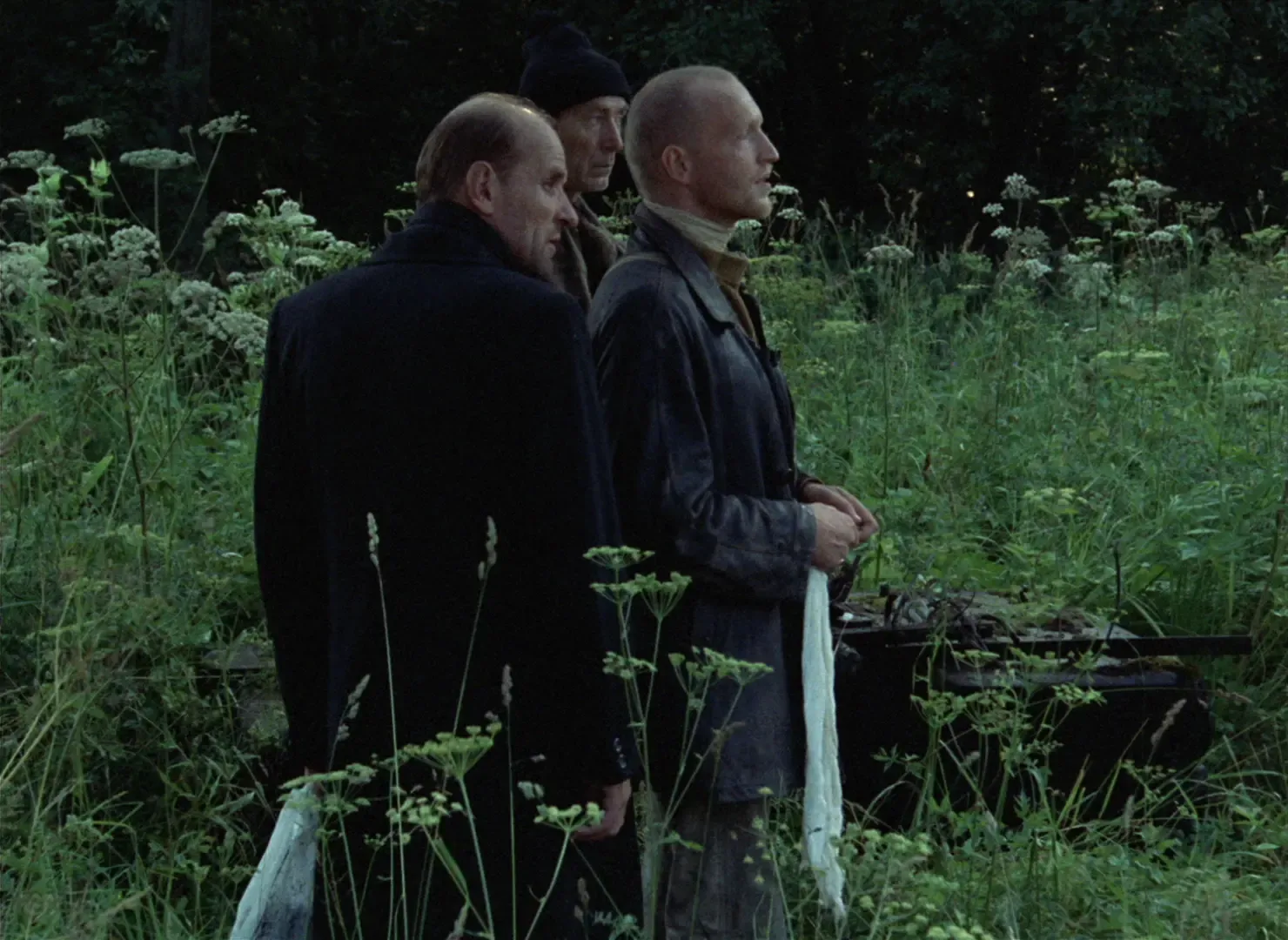
Loosely adapted by Andrei Tarkovsky from the 1972 novel Roadside Picnic by Arkady and Boris Strugatsky, Stalker examines how the earth reasserts its dominion over spaces humanity has been forced to abandon. Opening in a sepia-toned industrial city, the narrative follows a guide known only as the Stalker who leads two men, the Writer and the Professor, into a sealed-off territory guarded by the state and known as the Zone.
Shot in color around the Jägala River in Estonia and among the ruins of an abandoned hydroelectric facility, the scenes inside the Zone reveal a landscape where thick vegetation and flowing water have swallowed rusted military hardware, fallen utility poles, and crumbling concrete. Tarkovsky deliberately leaves the origins of the Zone and the rules of the Room, a chamber rumored to grant a visitor's deepest subconscious desires, entirely ambiguous. Science fiction author Bruce Sterling later coined the term "involuntary parks" to describe contaminated or politically sealed territories like Chernobyl and the Korean Demilitarized Zone that revert to wild states. Tarkovsky captures this exact phenomenon, showing how the earth silently reconstructs its own uncanny architecture the moment human ambition collapses.
Princess Mononoke (1997) and the Price of Progress
The violent friction between industrial expansion and ancient ecosystems takes center stage in Hayao Miyazaki's Princess Mononoke. Set in Muromachi-era Japan during the rise of industrial iron-smelting and the spread of gunpowder weapons, the film follows Ashitaka, a young Emishi prince cursed after defending his village from a demonized boar god driven mad by an iron bullet, as he journeys west to uncover the source of the upheaval.
What elevates Miyazaki's ecological vision is his refusal to reduce environmental conflict to a simplistic fable of good versus evil. Lady Eboshi, who strips entire mountainsides of timber to fuel her smelting furnaces and wages war against the wolf god Moro and her human child San, is not portrayed as a conventional villain. Within her ironworks fortress, Eboshi provides sanctuary, dignified labor, and protection to social outcasts, including lepers who manufacture weapons and women rescued from brothels. Through this contradiction, Miyazaki exposes an uncomfortable truth about ecological devastation. The destruction of the biosphere rarely stems from pure malice, emerging instead from humanity's pursuit of social security, welfare, and technological progress.

First Reformed (2017) and the Paralysis of Eco-Anxiety
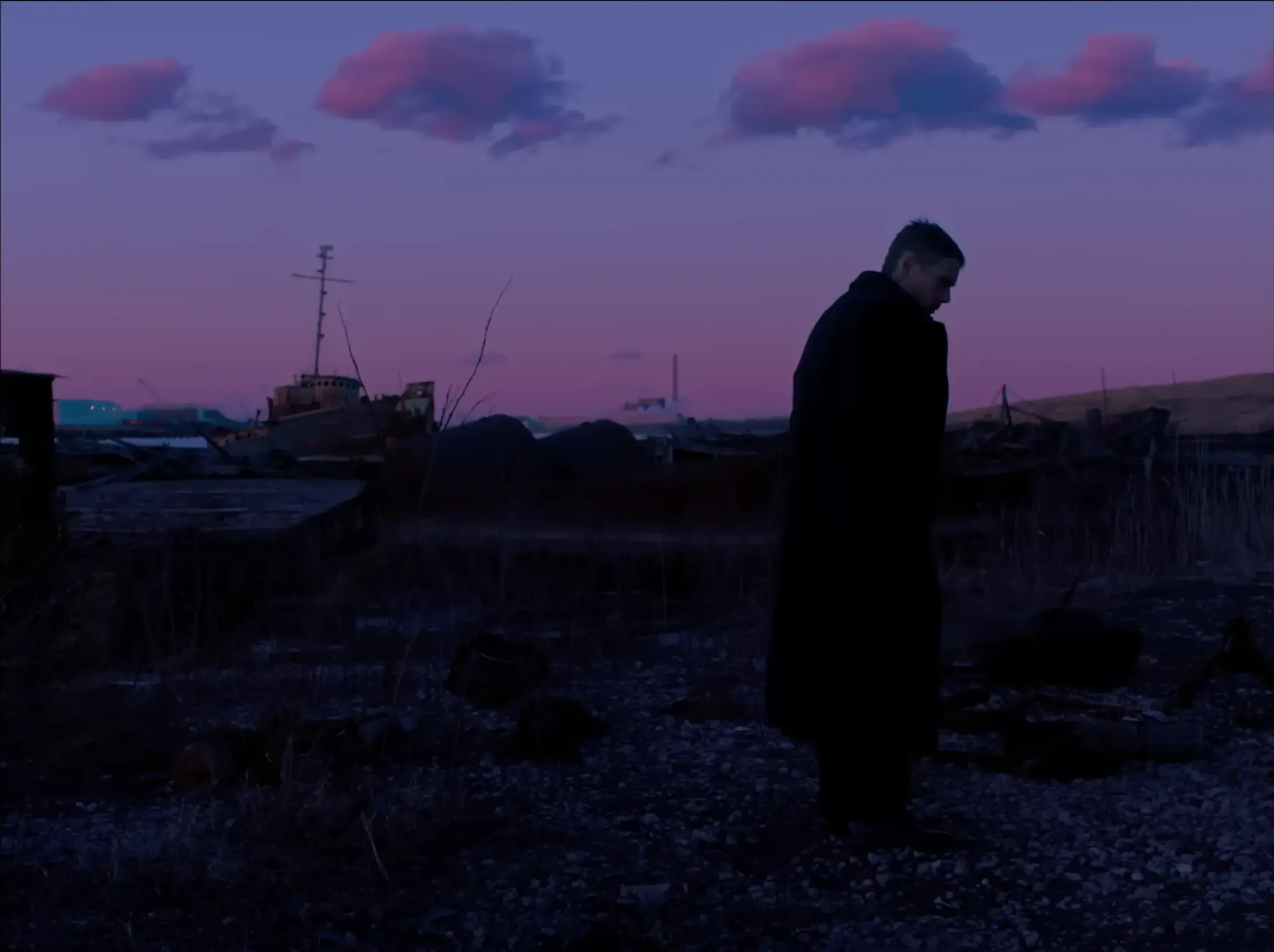
Directed by Paul Schrader, First Reformed confronts twenty-first-century eco-anxiety as both an institutional and spiritual crisis. In upstate New York, Reverend Ernst Toller serves as the pastor of a historic Dutch Reformed church that now operates largely as a poorly attended tourist attraction overseen by a wealthy megachurch. Toller's austere routine fractures when a pregnant parishioner named Mary asks him to counsel her husband, Michael, a depressed environmental activist who has served prison time for peaceful protest.
Confronted with Michael's research on climate collapse and his moral terror over bringing a child into a despoiled world, Toller begins to unravel, particularly after discovering that his own church's upcoming anniversary celebration is being bankrolled by a notorious industrial polluter. Schrader uses a restrained, nearly monochrome visual language to ask whether hope and institutional faith remain morally defensible when the institutions claiming to guard the human soul are funded by the destruction of the planet.
Melancholia (2011) and Cosmic Solitude
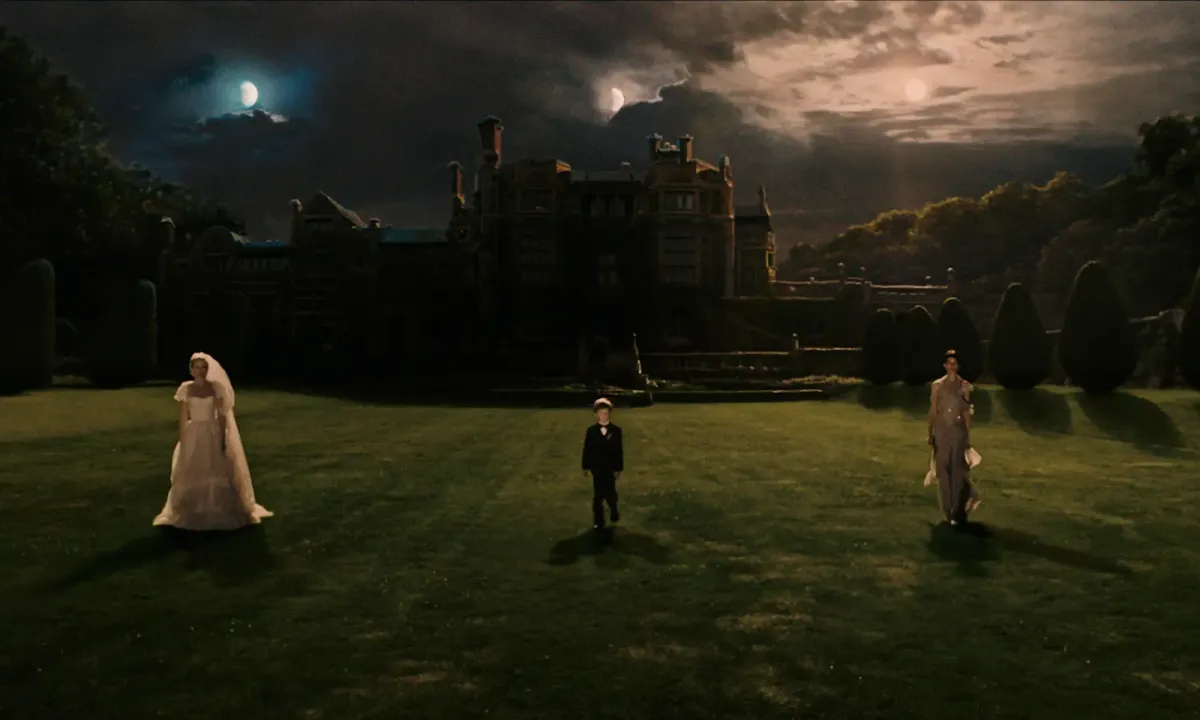
Closing the list, Lars von Trier's Melancholia subjects anthropocentric hubris to its ultimate test, the total annihilation of the Earth. Following a slow-motion overture set to Wagner's Tristan and Isolde, the narrative divides into two parts. The first chapter, titled "Justine," unfolds during a lavish wedding reception at a castle surrounded by a golf course, where the bride sinks into crippling depression. The second chapter, "Claire," tracks her pragmatic sister and her wealthy, rationalist husband as Melancholia, a rogue planet ten times the size of Earth, approaches for a fatal collision.
In an interview with journalist Nils Thorsen published in Zentropa's official press kit, Lars von Trier traces the origin of the screenplay to his own struggle with depression and a clinical observation made by his therapist. Trier recalls that his analyst told him "that melancholiacs will usually be more level-headed than ordinary people in a disastrous situation," noting that this calm emerges "because they have nothing to lose. And that was the germ of 'Melancholia'".
In the universe Trier constructs, humanity is entirely alone in space, meaning the collision erases not only all biological life on Earth, but every trace of human memory, wealth, status, and the empty social rituals used to mask our fragility. When Thorsen asks at the close of the interview whether we are truly alone in the universe, the director rejects humanity's obsession with expansion. "We are," Trier replies, adding, "But no one wants to realize it. They keep wanting to push limits and fly wherever," before concluding with a final directive, "Forget it! Look inward."

From the colonized rivers of the Amazon and the Siberian taiga to abandoned industrial zones and cosmic extinction, these seven works leave the viewer with a shared realization. As long as we continue to treat the natural world as a raw material to be reshaped for our convenience or a passive stage for human ambition, we remain blind to the ecological and psychological ruin we generate. Looking at the quiet testimony preserved in these films, do we truly need another catastrophe to alter our relationship with the earth, or is it enough to finally shift our gaze toward the non-human world to remember the balance we have lost?
— Related Reading: Escaping the Ecological Doomsday Narrative: 7 Documentaries on the Earth's Power of Self-Regeneration