Geographies of Solitude Is a Nature Film With the Trash Left In
For more than half a century, nature documentaries have sold us an untouched paradise. Geographies of Solitude takes a 16mm camera to Sable Island, 160 km into the Atlantic, where naturalist Zoe Lucas has logged ocean plastic for four decades. So where exactly is "away"?
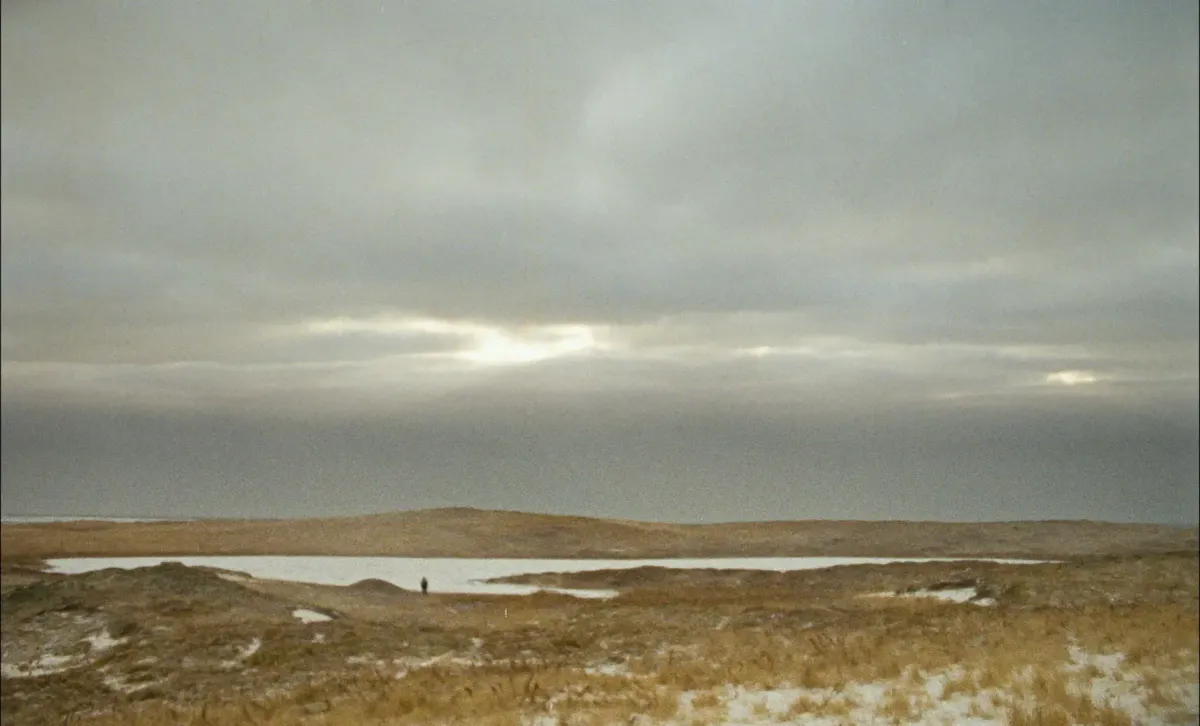
For more than half a century, mainstream media and wildlife filmmaking have relied on a polished visual formula to frame the natural world as an untouched paradise. Built on ultra-high-definition cameras, sweeping helicopter shots, and orchestral scores, these productions offer viewers a comforting illusion. Far beyond our cities and industrial corridors, the narrative goes, a pristine wilderness still exists outside the reach of time and human disruption. Yet in an era when synthetic microfibers and plastic waste circulate through the deepest ocean currents on Earth, presenting nature as an unblemished postcard observed from a distance has increasingly become a form of ecological denial.
What happens, then, when you pull the camera out of this curated display and place it in the middle of the foggy, turbulent currents of the Northwest Atlantic, on a windswept strip of sand 160 kilometers off the mainland?
Filmed on Sable Island off the coast of Nova Scotia, Canada, the documentary Geographies of Solitude, which earned director Jacquelyn Mills three awards at the Berlin International Film Festival, offers a compelling answer. Centering on more than four decades of fieldwork by naturalist and researcher Zoe Lucas, the film strips nature of its status as a passive landscape meant merely for human admiration, revealing it instead as a living archive that speaks through its own biology while confronting us with the material memory of global consumption.
A 42-Kilometer Open-Air Laboratory
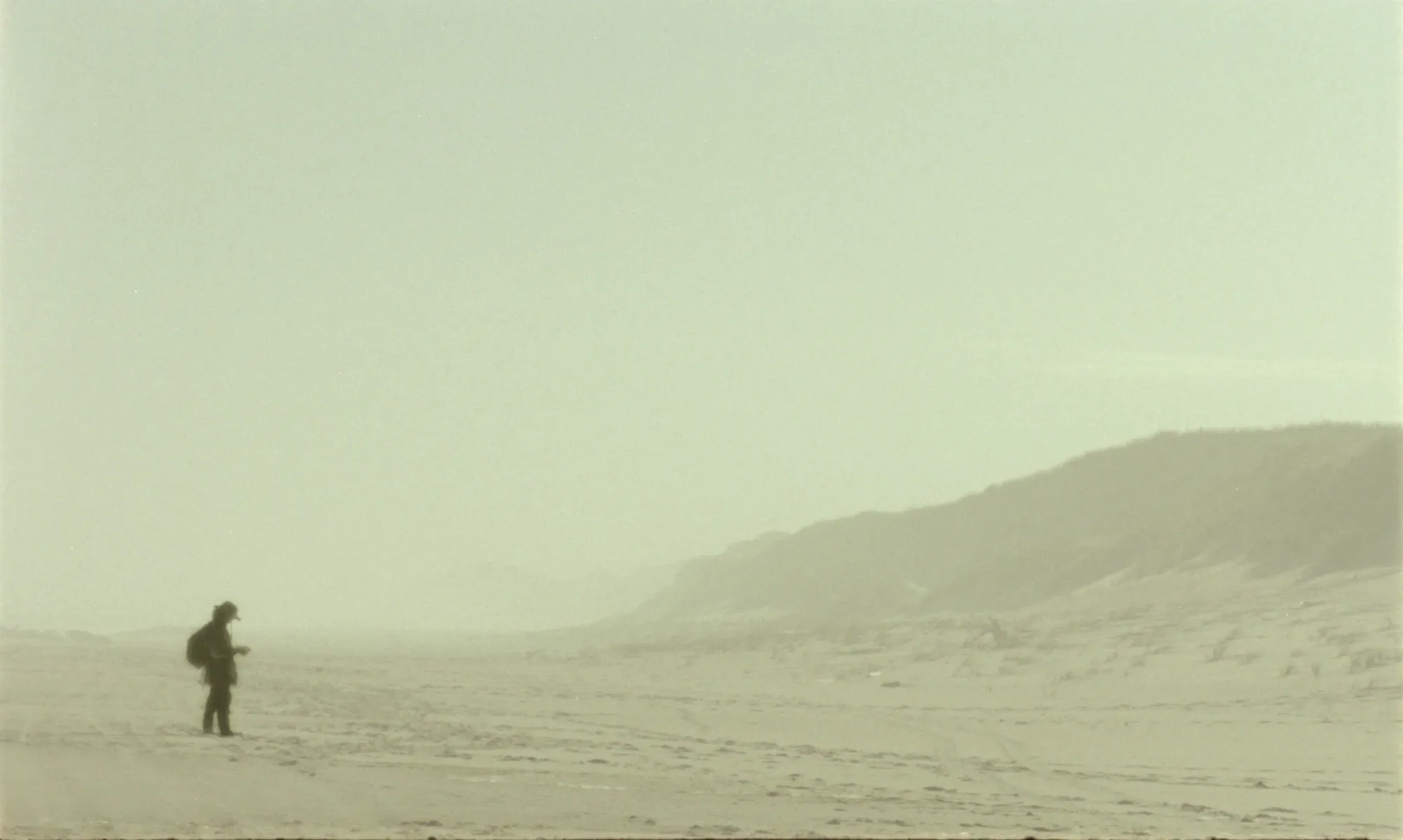
Marked on maritime charts for centuries as the "Graveyard of the Atlantic" due to its dense fog and shifting offshore shoals, Sable Island is a narrow crescent of sand that has claimed more than 350 shipwrecks. Across this relentlessly windswept terrain, not a single tree grows naturally. Of the pines planted decades ago by station staff beside a sheltered pond, only a solitary Scots pine survived, and in the film even this lone trunk, having withered in recent years, serves as a scratching post for the more than four hundred wild horses that roam the island.
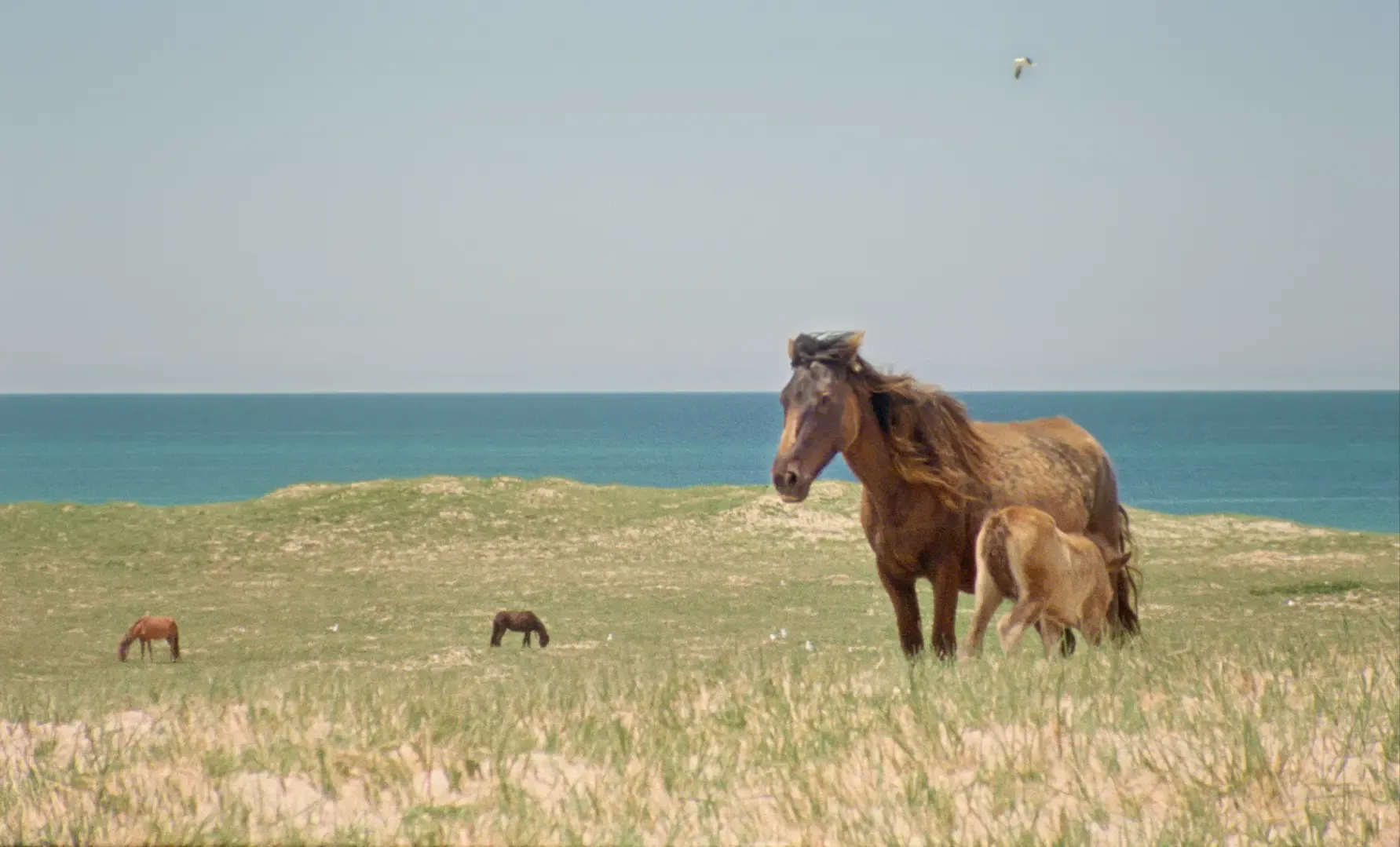
Home since 1801 to a small community of life-saving and weather station personnel without ever developing into a permanent town, this sandbar supports an extraordinary concentration of wildlife despite its harsh conditions. The world’s largest breeding colony of grey seals gathers along its beaches, with numbers reaching around 400,000 during winter, while the Ipswich sparrow, a subspecies of the Savannah sparrow that breeds nowhere else on Earth, depends entirely on these dunes for its survival.
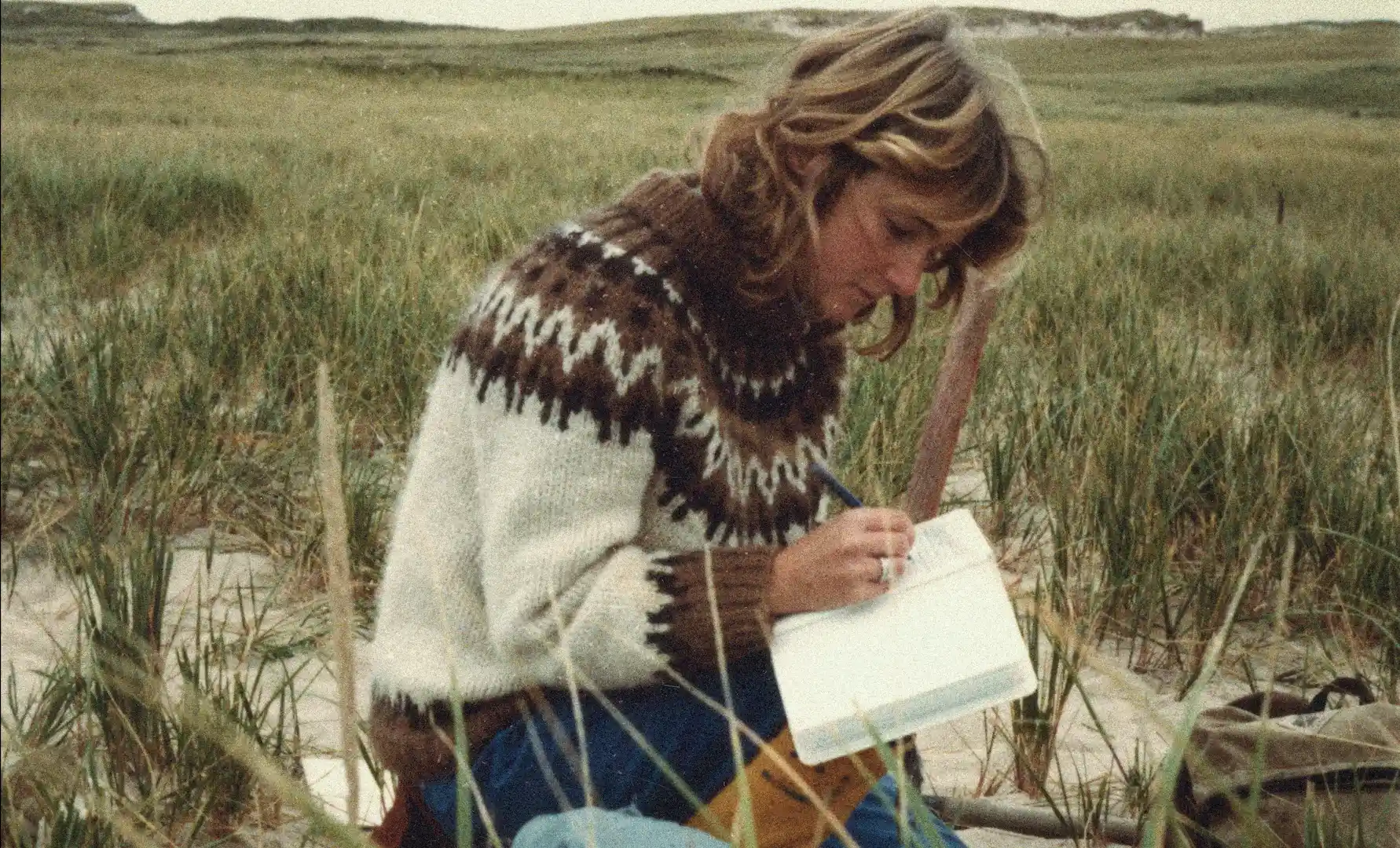
Zoe Lucas first visited the island as an art student in 1971 to see its wild horses and returned in 1974 as a volunteer cook and field assistant for a seal research team, placing this narrow strip of sand at the center of her life ever since. Yet Geographies of Solitude refuses to reduce her presence to the familiar cultural trope of the solitary individual fleeing civilization for spiritual peace in the wilderness.
Summarizing her decision to stay with the understated remark, "Initially, I just wanted to be there. You know, just to be there," Lucas approaches nature as a dynamic field of data that must be recorded anew each day. Conducting her work today as president of the Sable Island Institute, she walks the windswept dunes, measures the skulls and tooth wear of horses that die of natural causes, cleans and numbers bones, and catalogs insect species living inside mounds of manure. This relentless inventory proves that truly knowing an ecosystem requires patiently witnessing its cycles of death, decomposition, and renewal.
The Organic Chemistry of 16mm Film and the Camera as a Living Seismograph
What sets the documentary apart in contemporary cinema is the production ethic adopted by director Jacquelyn Mills. Conventional wildlife filmmaking often surrounds fragile ecosystems from the outside, bringing in tons of equipment and large production crews. Making three trips to the island by small charter plane and working mostly as a one-person team, Mills departed from conventional large-scale wildlife production, shooting primarily on 16mm film while also using a digital camera, particularly for night scenes.
With nowhere on the island to repair equipment or order additional film stock, physical constraint directly shaped the rhythm of her relationship with the landscape. Explaining that she had only enough film to capture ten minutes of footage a day, Mills notes that this limitation prompted her to pause and experience the island before rolling the camera, guided by the principle "to feel first, then film."
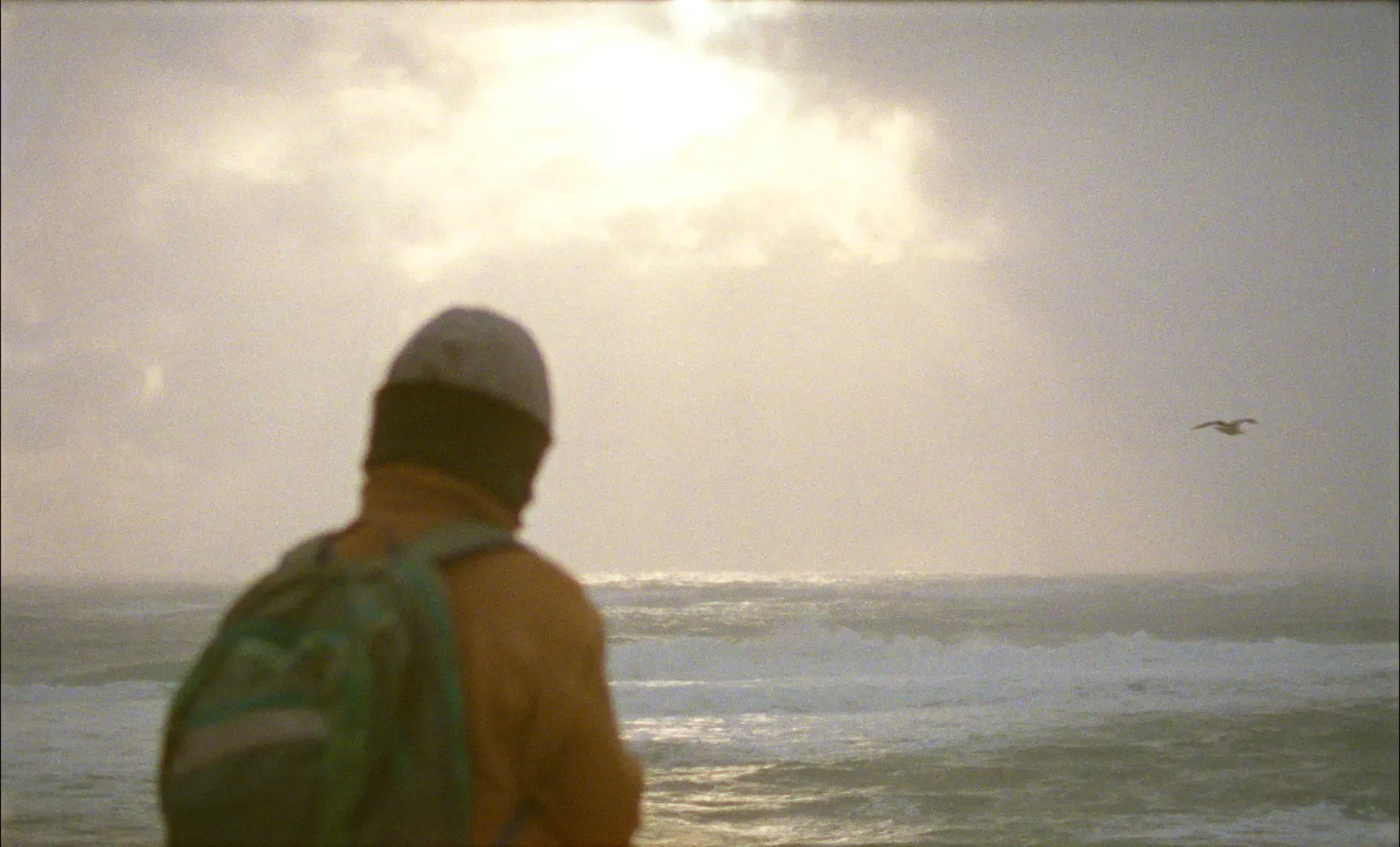
Mills extends this philosophy into the physical chemistry of the medium itself. Inspired by an initial experiment on the island where she and experimental filmmaker Terra Long developed 8mm film in cranberry and seaweed, Mills conducted a series of eco-friendly experiments across three artist residencies in Iceland using specimens sent by Lucas from the Sable Island Institute. Rather than relying solely on standard laboratory chemicals, she hand-processed film in organic solutions made from seaweed and yarrow, buried strips in horse manure to allow microorganisms to leave their traces across the emulsion, painted film with non-toxic emulsion, and exposed horsehair, bones, and washed-up marine litter directly onto the celluloid under moonlight and starlight.
The same approach carries into the auditory world crafted alongside sound designer Andreas Mendritzki. In her April 2022 interview with Film International, Mills describes how she captured the frequencies of the island that usually remain beyond human hearing.
"I recorded footsteps of bugs and gave a bee a microphone. A snail crawled across the surface of my recorder. I placed hydrophones in ocean and pond water, and in buckets of plastic Zoe cleaned. I used electrodes to translate the living patterns in plants and bugs into music."
This methodology shifts the director from a detached observer into a seismograph recording the biological vibrations of the terrain. Moving beyond an external account of Sable Island, the film becomes an organic document produced directly through the soil, flora, and acoustic memory of the place itself.
The End of Distance and the Washed-Up Archaeology of Consumption
For modern urban populations, throwing something away implies removing it from sight and erasing it from history. We inhabit a conceptual comfort zone where waste is assumed to vanish the moment it leaves our immediate surroundings. On Sable Island, situated at the intersection of major North Atlantic currents, that illusion shatters.
Since the 1980s, Lucas has walked the island’s beaches collecting the remnants of the global economy. Fishing gear, ropes, plastic bottles, styrofoam cups, and helium balloons released at celebrations hundreds of kilometers away wash ashore with grim regularity. Drawing on her initial comprehensive surveys from the mid-1980s, Lucas’s 1992 study in Marine Pollution Bulletin revealed that plastic accounted for 92 percent of the 11,183 persistent litter items recorded along the shore. A subsequent 2014 scientific study co-authored by Lucas examined dead seabirds washed up on the island and found plastic in the digestive tracts of more than 72 percent of sampled northern fulmars, sooty shearwaters, and great shearwaters.
A brand audit project designed to trace single-use packaging back to its manufacturers exposes the contemporary archaeology of this ecological crisis. According to field notes published by Lucas in May 2020, nine months of collection yielded 1,005 labelled plastic containers weighing a total of 76 kilograms. Although most containers washing ashore have already lost their labels in the surf, this identifiable fraction alone, with its manufacturer and country of origin still legible, equals the weight of roughly 6,300 single-use plastic water bottles.
Sable Island reminds us of a physical law the modern world prefers to ignore. Within the ecological cycles of the planet, there is no such place as "away." When a protected wildlife reserve without a permanent town population becomes an open-air repository for the global supply chain, the notion of an isolated wilderness has already lost its meaning.
The Ethics of Witnessing Beyond the Rhetoric of Rescue
Struggling at the threshold of climate disruption and plastic pollution, contemporary culture often swings between the desire to bring the planet under control through vast engineering projects and a paralyzing fatalism that assumes everything is already lost. Geographies of Solitude points toward a quieter and far more demanding stance that steps away from both extremes through the ethics of witnessing.
Such sustained devotion carries an undeniable human weight. Near the end of the documentary, as Lucas sums up her decades of work with the reflection, "It appears that my life is Sable Island," she does not hide the sense of solitude and sacrifice that comes with wondering whether she should have left the island long ago.
Yet that very cost is what makes her lifework one of the most compelling ecological records of our time. The field notebooks Lucas has filled over decades, the film strips Jacquelyn Mills washed in seaweed, and the hydrophone recordings captured inside buckets of plastic cleaned by Zoe all point toward the same truth. The most honest bond we can form with the planet lies not in loud promises of salvation, but in the quiet discipline of walking a windswept beach, listening to the footsteps of the smallest insect, and keeping an exact account of every piece of plastic we leave behind in the ocean.
Official trailer, The Cinema Guild
— Related Reading: The Anatomy of Ash and an Absolute Surrender to Destruction