The 2026 Wildlife Photographer of the Year Winners Reveal the Silent Truths of the Wild
We often treat the planet as a passive landscape meant only to be observed. Yet the 2026 Wildlife Photographer of the Year winners shatter this illusion, confronting us with the heavy psychological weight of animal loss and the reality of our changing climate.
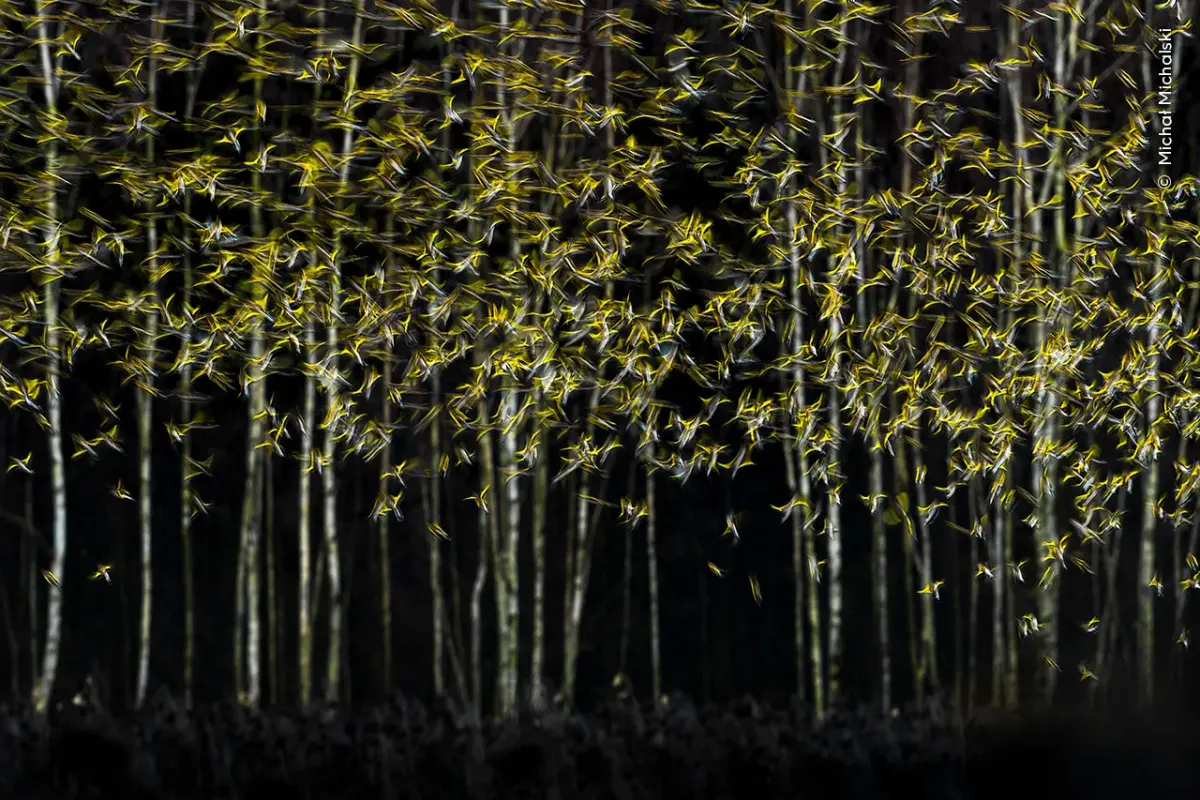
The illusion of human exceptionalism quietly shatters the deeper we look into the wild. We often succumb to the hubris of our constructed worlds and treat the planet as a passive landscape meant only to be observed. Yet every year the Wildlife Photographer of the Year competition organized by the Natural History Museum in London confronts us with works that dismantle this fallacy.
Selected from over 65,000 entries across 121 countries and territories, the 2026 winners transform photography into an editorial manifesto addressing the most urgent crises of our planet. Moving far beyond mere aesthetics, these images document climate breakdown, vanishing ecosystems and the profound inner lives of animals.
The Weight of Grief and Cognition
Italian photographer Federico Veronesi claimed the top honor with a black and white photograph that deeply challenges the notion that death and mourning are exclusively human experiences. Captured in the Huab River Valley of Namibia, "The Aftermath" shows a female elephant carrying her deceased calf wedged between her tusk and trunk. The rituals elephants perform around death have long been a focal point of scientific research. Many researchers interpret these behaviors as a direct expression of mourning and a cognitive understanding of mortality.
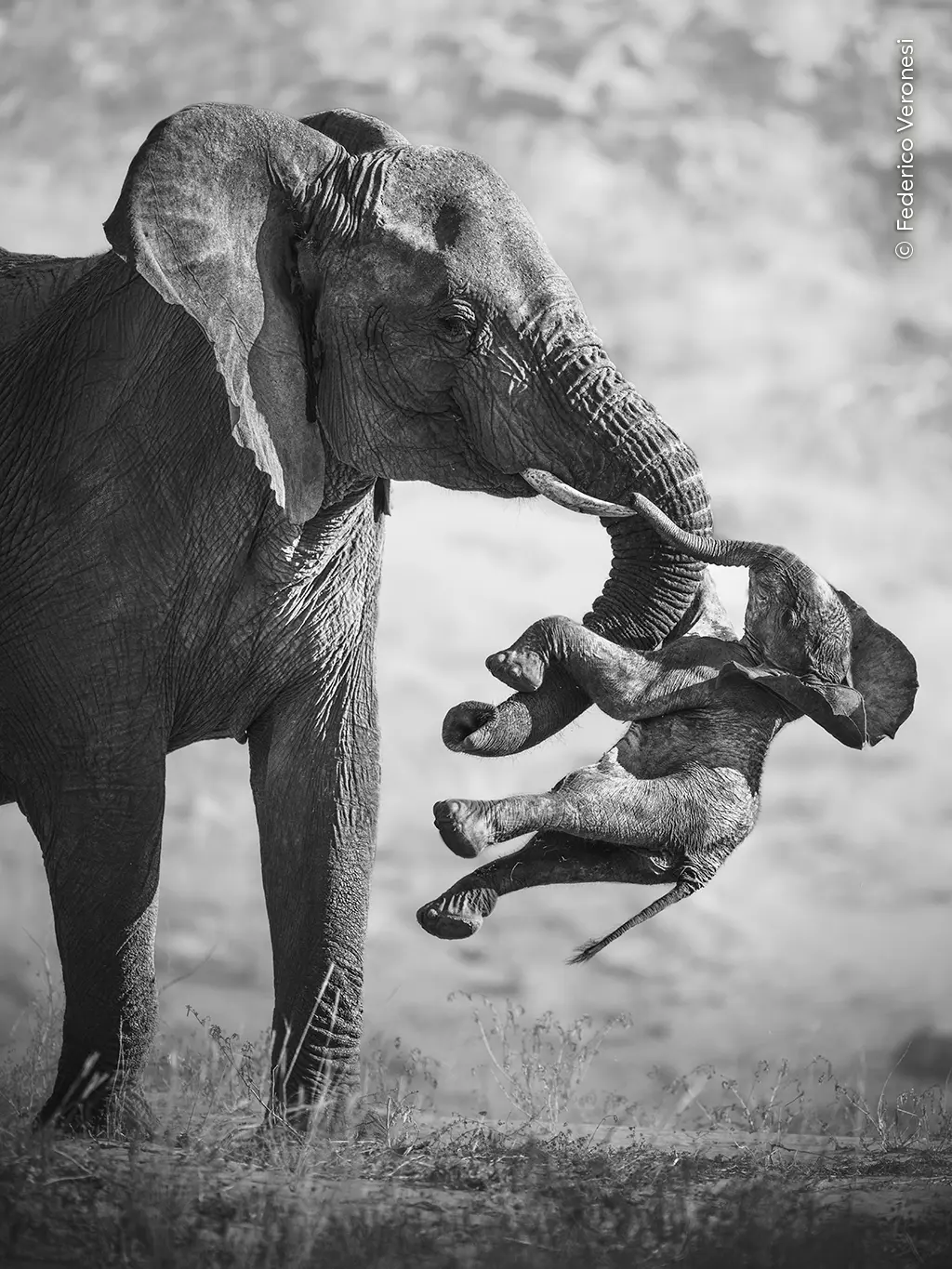
Kathy Moran, Chair of the Wildlife Photographer of the Year Jury, summarizes the profound editorial and emotional impact of this moment.
"This photograph works on so many levels. Emotionally it's a gut punch, heartbreakingly poignant. Intellectually it's proof that animals have cognition. This photograph says it all." (Kathy Moran)
Unseen Worlds and Ecosystem Resilience
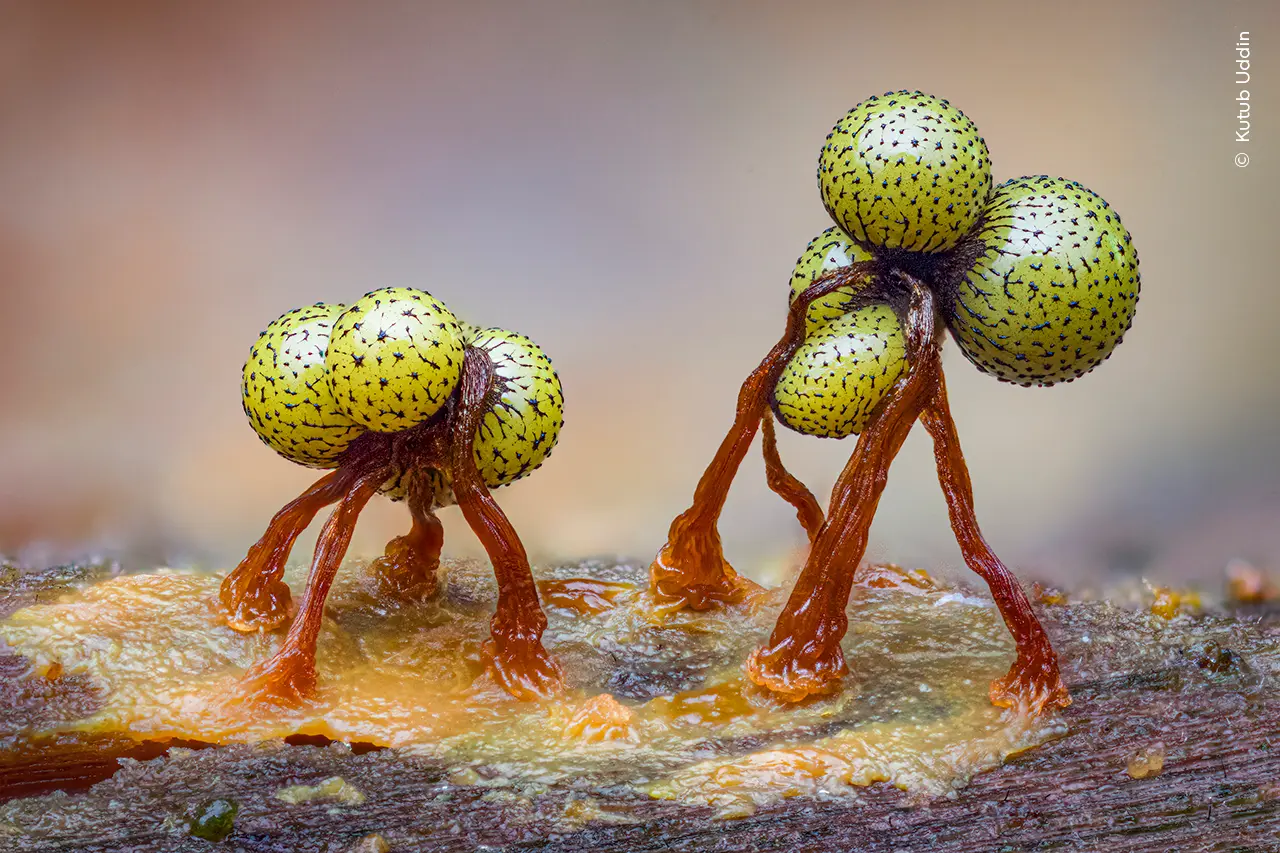
Images detailing the mechanics of microscopic and often overlooked details form some of the most compelling parts of the exhibition. "Tiny Dancers" by Kutub Uddin, photographed on a forest floor in England, is a perfect example of this. Slime molds, known for their flawless problem-solving abilities that can replicate complex subway networks in a laboratory setting, present a visual wonderland here. The vital recycling duties these microscopic organisms perform on the forest floor remind us of the massive architecture nature builds even in the smallest details.
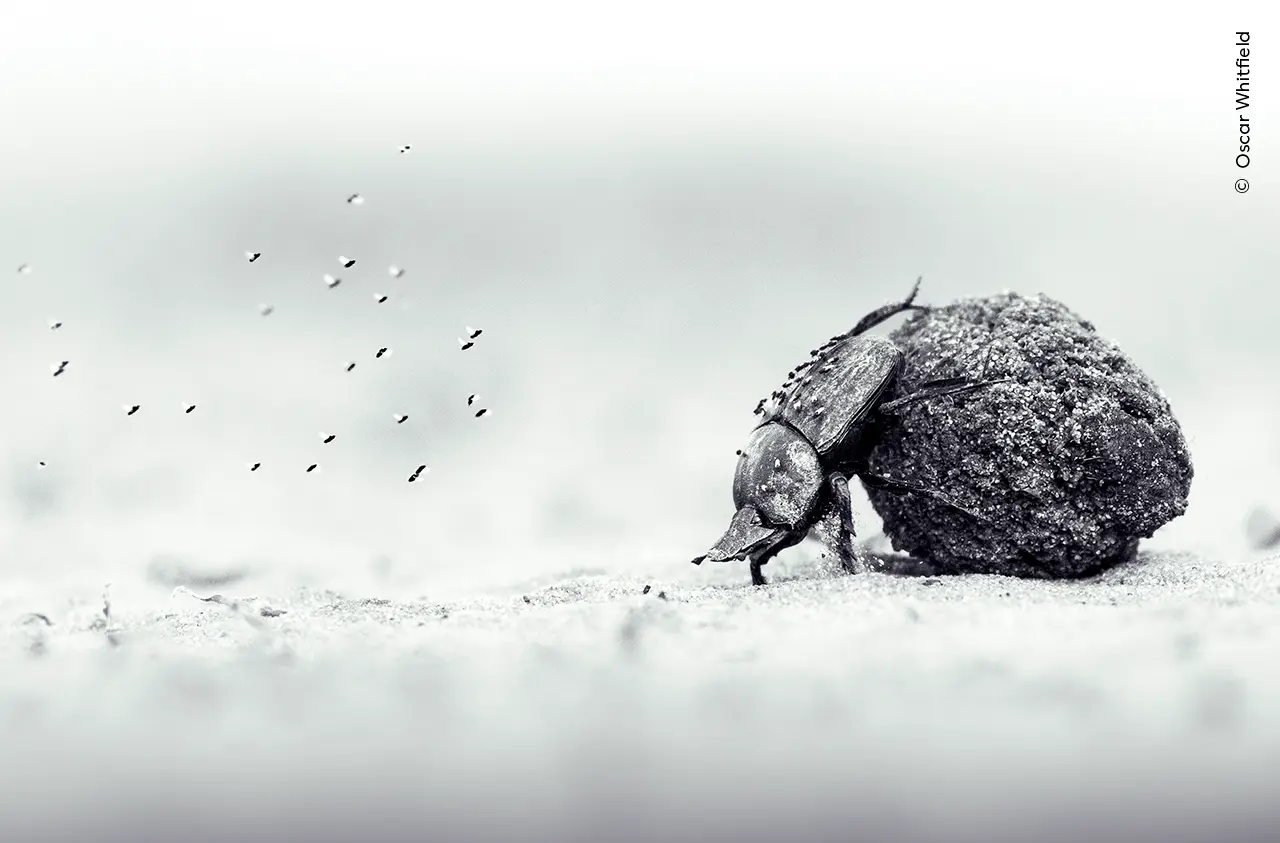
On the other end of the spectrum is "Labour of Love," captured in Zimbabwe by Young Wildlife Photographer of the Year Oscar Whitfield. Centering on the immense physical burden carried by a dung beetle, this work illustrates how seemingly ordinary insects actually sustain the world. By burying dung, these small creatures prevent the conditions required for methane production and reduce greenhouse gas emissions, quietly enduring as nature's frontline defenders against the climate crisis.
The Destructive Footprint of the Anthropocene
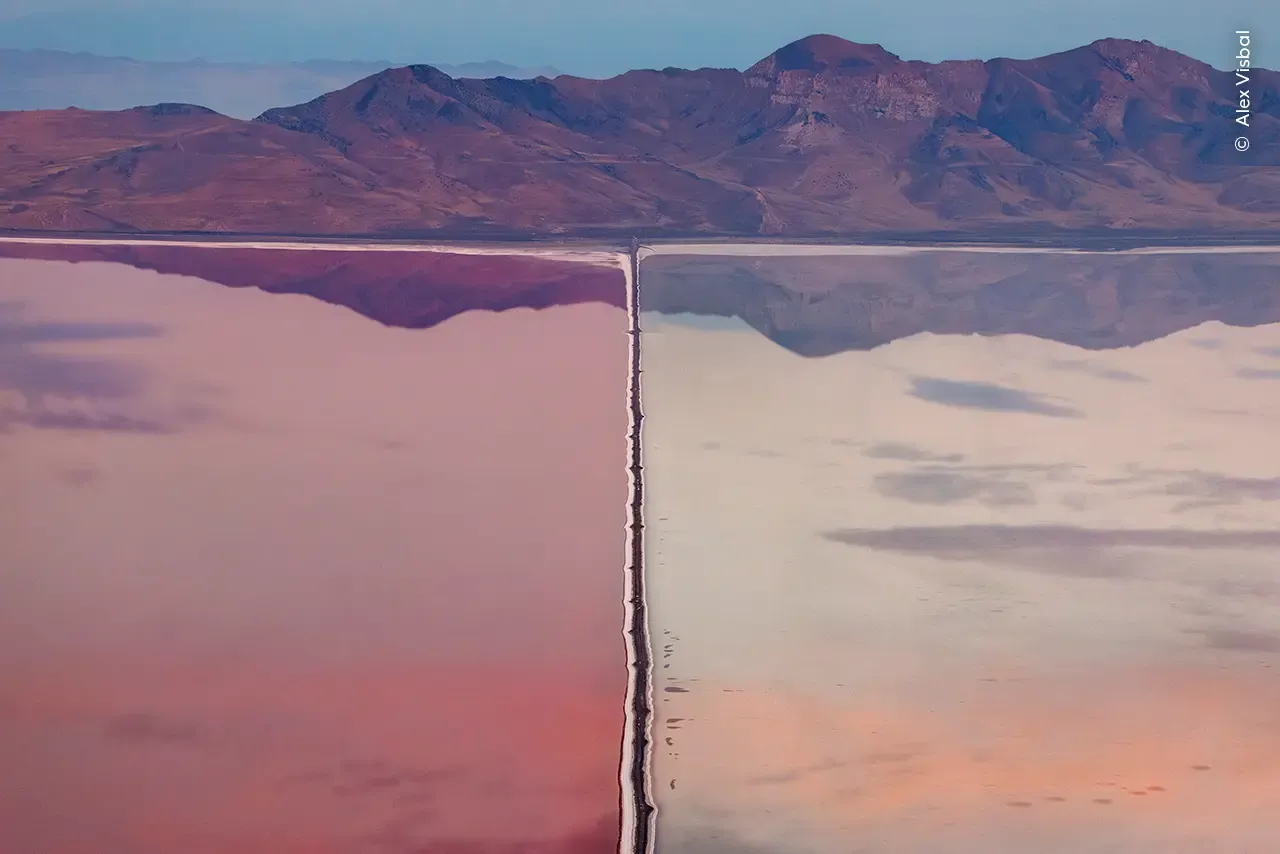
The competition selection does not shy away from documenting the irreversible impacts of human activity on the planet. Colombian photographer Alex Visbal's "The Great Divide," taken at the Great Salt Lake in Utah, exposes a surreal landscape created by pink microbes thriving in extremely saline water after a fresh water supply was cut off. This frame stands as one of the most tangible visual proofs of how unchecked industrial use and climate change are eradicating wetlands that have existed for millennia.
Another harrowing reality is hidden in "Warning Sign," captured in Patagonia by Chilean photographer Francisco Negroni. A dead puma tied to a fence and displayed as a hunting trophy represents the most ruthless face of human and wildlife conflict. Revealing how illegal persecution and agricultural land defense turn animals into mere trophies, this work transcends traditional nature photography to become a stark piece of environmental journalism.

Our Final Responsibility to Nature
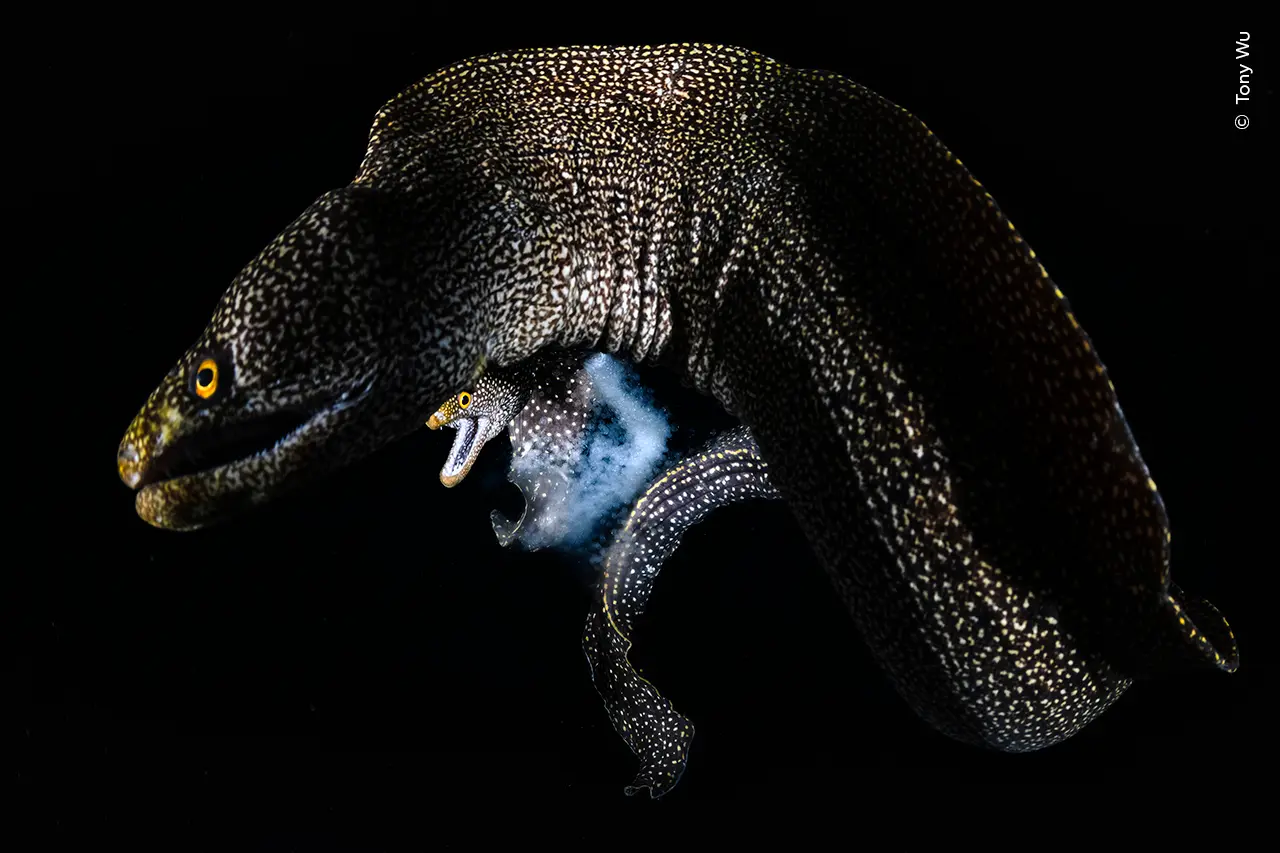
Mysteries that science has yet to fully unravel also find a place within these frames. American photographer Tony Wu's "Making Morays" provides the first visual data to scientific literature by documenting the spawning ritual of Abbott's moray eels deep in the ocean. This proves how wildlife photography can do much more than freeze an aesthetic moment, actively shedding light on academic research.
Each of these images forces us to question how the planet does not belong solely to us and how natural systems are being driven to the brink by human hands. It is no longer enough to appreciate the aesthetics; we must confront the uncomfortable reality of the wild. Listening to these striking stories presented by nature goes beyond artistic appreciation and becomes a fundamental part of our responsibility to survive.
The real question we must ask ourselves is this. Will understanding the grief of an elephant or the ecological resilience of a beetle be enough to compel us into action to restore the natural balance we are losing?
"Wildlife Photographer of the Year is developed and produced by the Natural History Museum, London."
(To explore all the 2026 winning photographs and find detailed information about the exhibition now open in London, visit the official website of the Natural History Museum.)