How Air Pollution Erases the Invisible Maps of Insect Navigation
We humans navigate the world through vision. But for wildlife, the atmosphere is a critical compass. Today, ozone and nitrate radicals are silently degrading the chemical signals flowers release into the air, blinding bees and moths in their own homes and threatening global food security.

We can see a forest fall, a river dry up, or a glacier melt with our own eyes. Physical destruction is always tangible and comprehensible to human perception. But how do we notice a vanishing scent?
We humans are so accustomed to reading the world primarily through visual stimuli that we struggle to imagine the degradation of an ecosystem built entirely on scent. To understand this, imagine being behind the wheel on a pitch-black, entirely unfamiliar highway. Suddenly, all the lane markers, directional signs, and streetlights vanish. You know your destination lies somewhere ahead, but your sense of navigation is instantly blinded.
For wildlife, the erasure of scent-drawn maps is akin to those vanishing lanes on a dark highway. The crisis unfolding in our ecosystems today is not that animals are physiologically losing their sense of smell; rather, it is the chemical degradation of scent signals in the air itself.
Chemical Navigation and Vital Compasses
To grasp how this invisible architecture works, we can look to the most familiar example of all, our dogs. An ordinary street that appears completely empty and transparent to us is, for a dog, a multi-layered chemical text detailing exactly who passed by and when. Yet for insects and pollinators, which form the foundation of our ecosystems, this olfactory network is far more than an ordinary text to be read. This chemical architecture is one of their most critical compasses for survival.
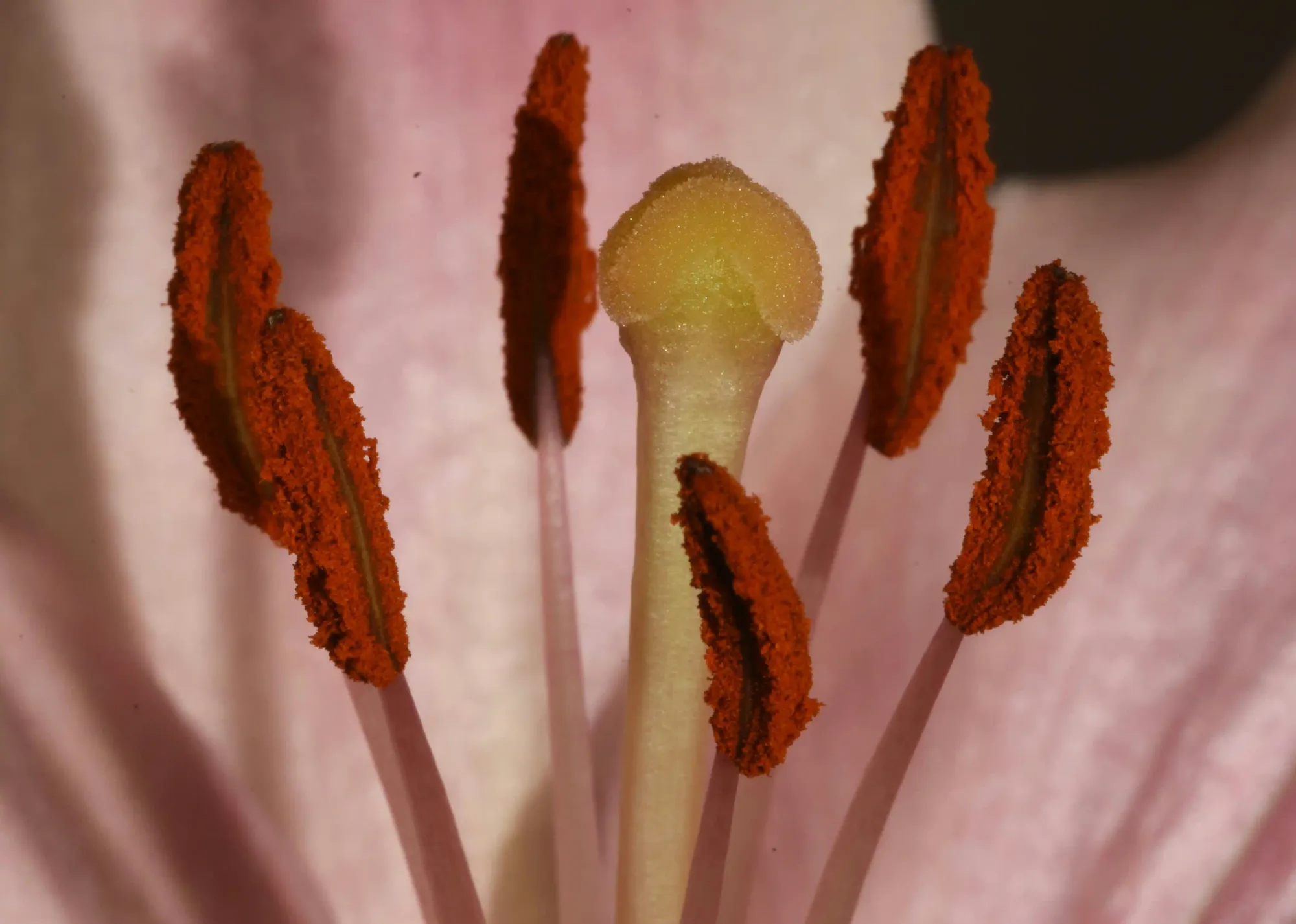
To a bee or a nocturnal moth, a forest is not merely a collection of tree trunks but a web of scent trails carried by the wind. Flowers release delicate chemical signals called volatile organic compounds (VOCs) into the air to attract pollinators. The receptors on insect antennas recognize the shape of these specific molecules much like a key fitting into a lock, guiding them precisely to their target.However, the emissions we have pumped into the atmosphere since the industrial revolution are silently destroying this ancient lock.
Daytime and Nighttime Chemistry of Ozone and Nitrate Radicals
Pollution rising from vehicle exhausts, power plants, and industrial facilities triggers different destructive mechanisms in the air depending on the time of day. During daylight hours, emissions reacting with sunlight create ground-level ozone pollution. When the sun sets, nighttime chemistry takes over, and nitrate radicals emerge.
What these reactive pollutants do in the air is not merely create a confusion of scents. Ozone and nitrate radicals collide with the volatile molecules that make up floral scents, oxidizing them and irreversibly altering their chemical structure. When the shape of the molecule is degraded through oxidation, the receptor on the insect's antenna can no longer recognize that scent as a flower.
Research published in the journal Science in 2024 by researchers at the University of Washington points to the danger posed by nitrate radicals active in the dark of night. Based on laboratory and field experiments alongside computer modeling, this study found that moth visits decreased by up to 70 percent when faced with scents degraded by nitrate radicals. Models suggest that in some urban areas, the flower-detecting range of moths may have plummeted from over five kilometers in the pre-industrial era to under 400 meters today.
For a creature flying while relying solely on scent, this perceptual narrowing means losing its way in its own home.
Evidence from the Laboratory
The impact of ozone pollution on daytime pollinators is also crystallized through wind tunnel experiments. Research jointly conducted by the UK Centre for Ecology & Hydrology and the Universities of Reading and Surrey, published in the journal Environmental Pollution in 2023, demonstrates this effect.
Researchers trained honeybees to recognize a specific scent blend and then tested them with ozone-altered scent samples. In a sample taken from the center of the scent plume six meters away from the flower, only 52 percent of the bees recognized the scent. In samples taken from the edge of the plume where degradation was higher, this rate dropped to 32 percent. These findings indicate that insects in their natural habitats may be forced to fly for longer periods and expend significantly more energy to find food.
This chemical degradation affects not only foraging but also the reproductive bonds of species. According to research published in Nature Communications in 2023 by the Max Planck Institute for Chemical Ecology, ozone gas oxidizes the mating pheromones of fruit flies. In this laboratory experiment conducted with an ozone concentration above typical ambient levels, females delayed their acceptance of ozone-exposed males, and courtship behaviors between males increased. This degradation disrupts mating because the pheromones on the flies themselves become oxidized.
Agriculture, Food and a Silent Crisis
The erasure of scent maps may also raise concerns regarding global food security. As clearly stated in the 2016 thematic assessment report on Pollinators, Pollination and Food Production by the Intergovernmental Science-Policy Platform on Biodiversity and Ecosystem Services, approximately 75 percent of the leading global food crops and nearly 90 percent of wild flowering plants worldwide depend at least in part on animal pollination. The same report notes that the agricultural crops falling into this category account for about one-third of global crop production volume.
When pollinators cannot find their targets, the seed production of plants may decline. When plants fail to produce sufficient seeds, the food sources for birds or small mammals that feed on them can diminish. Demanding clean air is necessary not only to protect our own respiratory health but also to sustain this ecological infrastructure that forms the foundation of our food chain.
Redrawing the Lanes on the Highway
Halting the erasure of invisible maps requires highly concrete urban planning and environmental policies. When setting air quality standards, policymakers must consider not just human health but also pollinator ecology and insect olfactory navigation.
Creating low emission zones in city centers and reducing fossil fuel reliant traffic burdens is a crucial first step. However, because ozone is a wind-transported secondary pollutant, it often reaches higher levels in rural areas outside the city. Therefore, to protect the regions where pollinators actually live and where agriculture takes place, we must strictly limit nitrogen oxide and volatile organic compound emissions on a regional scale.
The solution is to step away from merely observing what is happening and take action. Whether or not we reignite the guiding lights for countless creatures whose navigation has been blinded depends entirely on our collective decisions. We still have time to redraw the vanished lanes on that dark and unfamiliar highway.
— Related Reading: How We Deafened an Entire Ocean While Mourning the Loneliness of a Single Whale