The Anatomy of Ash and an Absolute Surrender to Destruction
When the 1991 Mount Unzen eruption began, volcanologists Katia and Maurice Krafft did not run. Sara Dosa's Fire of Love documentary analyzes their fatal transition from safe red volcanoes to deadly grey ones. Their archival footage reveals an absolute surrender to the planet's wildest force.
On June 3, 1991, when a massive cloud of ash and gas began descending the slopes of Mount Unzen in southern Japan at hundreds of kilometers per hour, two French volcanologists did not attempt to flee. Katia and Maurice Krafft were at the very heart of that ultimate and inevitable moment they had sought across the globe for two decades. By transforming their own lives into a fragment of the natural phenomenon they studied, they were erased from the face of the Earth.
Today, the documentary Fire of Love (2022), presented by National Geographic Documentary Films and directed by Sara Dosa, brings the colossal visual archive left behind by these two scientists into the light. Yet this production does not confine itself to the boundaries of a traditional biography or a standard nature documentary. The film cinematically interrogates the limits of the human relationship with nature, the survival instinct, and the obsessive devotion to the uncontrollable forces of the planet.
Physical Exploration Before the Age of Remote Sensing
Modern volcanology technology currently monitors seismic activity through infrared satellites in orbit, remote sensor networks, and gas measurement drones sent directly into craters. Scientists can now profile the behavior of an active volcano on high-resolution screens in secure laboratories miles away from the danger zone. However, during the 1970s and 1980s, there was only one way to unlock the geological secrets of the planet. You had to approach the ground zero of a seismic eruption physically.
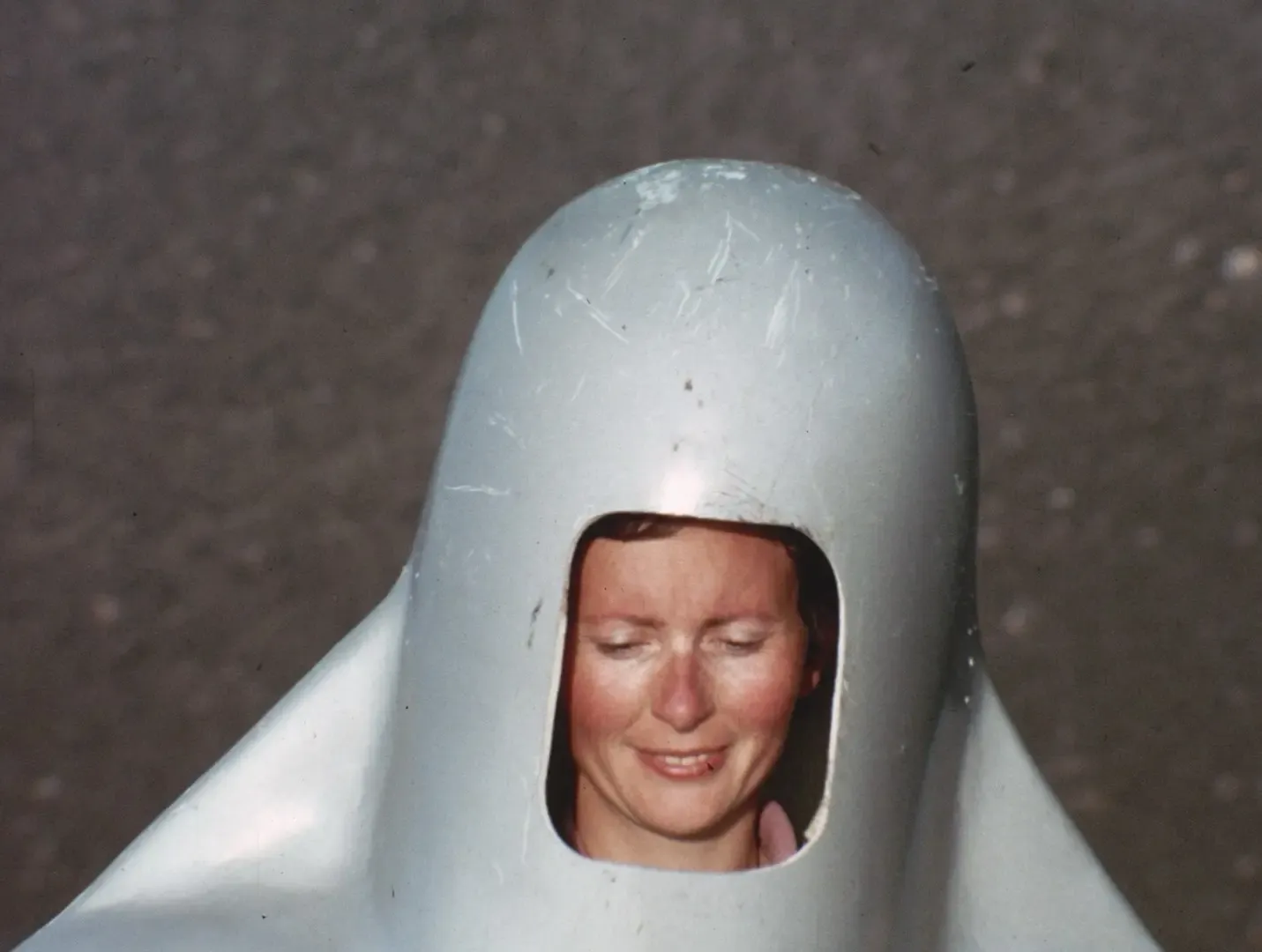
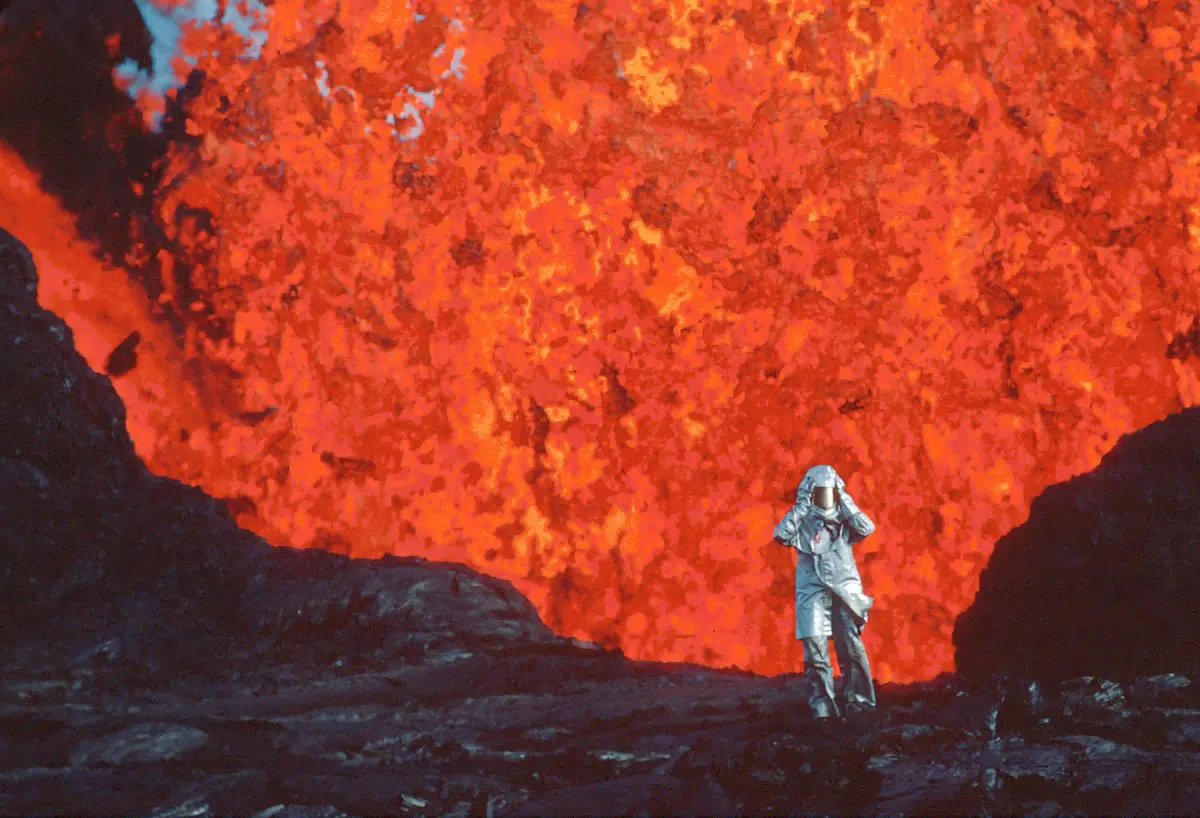
Katia and Maurice Krafft filled this perilous void precisely. In an era devoid of unmanned vehicles, they stood mere steps away from 1,200-degree Celsius lava rivers. In one of the most striking frames of the film, Katia Krafft is seen standing entirely alone in front of a colossal wall of crimson lava, wearing her heavy silver aluminum protective suit and asbestos helmet. To protect their cameras from melting during that period, they insulated their equipment with asbestos and aluminum. Their work was not merely about gathering academic data. They were simultaneously authoring a history of extreme photography based entirely on human effort, entirely free of synthetic or digital intervention.
Today, thermal fluctuations are recorded in seconds by drones. The Kraffts documented those same forces with their 16-millimeter analog cameras by thrusting their own bodies directly into the line of fire.
The Fatal Difference Between Red and Grey Volcanoes
The two-decade career of the Krafft couple reveals how their perception of danger evolved over time. The duo categorized the volcanoes they studied into two primary groups. The first group consisted of the "red" volcanoes, which featured slowly flowing, aesthetic rivers of lava. For the Kraffts, these mountains were friendly and predictable enough to allow them to set up camp right on the crater's edge.
Over time, however, they shifted their primary focus to the significantly more lethal "grey" volcanoes of the planet. Instead of aesthetic lava flows, grey volcanoes were destructive structures that boiled internally, accumulated immense pressure, and suddenly erupted to send pyroclastic flows of ash and gas hurtling down their slopes. It was exactly this type of grey volcano eruption that claimed the couple's lives at Mount Unzen.
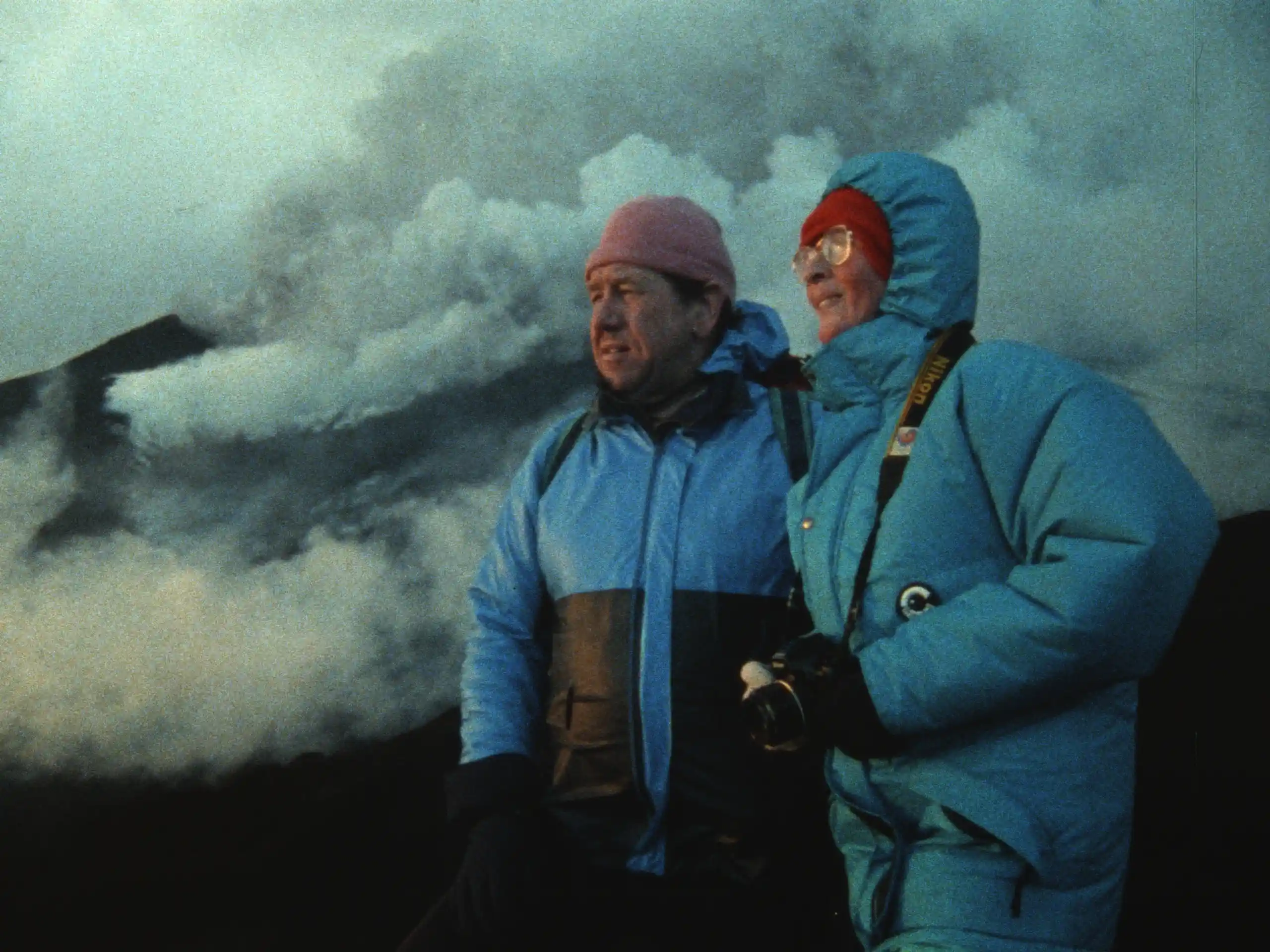
Maurice Krafft was a scientist who had accepted their ultimate fate from the very beginning. He articulated his relationship with danger in front of the cameras with absolute clarity:
"It will kill me one day, but that doesn’t bother me at all."
This acceptance forms the foundational philosophy of the film. Director Sara Dosa defines this extraordinary bond in her interview included in the official press kit:
"It wasn’t just Maurice and Katia in a relationship; it was almost a love triangle between the two of them and the volcanoes. There is no Maurice and Katia without volcanoes."
Beyond Observation and Lives Saved
While the Kraffts' obsession with danger is occasionally interpreted by critics as a kind of death cult, the risks they took yielded a massive and tangible impact on human history. They personally documented the deadly mudflows caused by the eruption of the Nevado del Ruiz volcano in Colombia in 1985. The bureaucratic negligence and the 23,000 lives lost following that eruption shook the couple deeply. From that moment on, they dedicated a significant portion of their work to creating educational visual materials about volcanic hazards.
Years later, when Mount Pinatubo in the Philippines began showing signs of a massive eruption in 1991, scientists from the United States Geological Survey and local authorities utilized the Kraffts' harrowing footage to convince a skeptical public and reluctant government officials to evacuate. The visual evidence was a crucial tool in breaking the bureaucratic inertia.
However, the true tragedy of their story lies in a devastating historical detail. Katia and Maurice Krafft did not travel to Mount Unzen merely for academic curiosity. According to their colleagues from the era, the couple was actually preparing to head to Pinatubo. They stopped at Unzen in Japan specifically because they felt their existing archives lacked sufficiently convincing footage of pyroclastic flows. They wanted to capture newer, more terrifying visuals to show the populations in the Philippines exactly what they were facing.
They miscalculated the behavior of the Japanese mountain and were consumed by the very phenomenon they were trying to document. Just days after their deaths at Unzen, the mass evacuation order at Pinatubo was finalized, ultimately saving tens of thousands of lives. Katia and Maurice Krafft did not just die studying volcanoes. They died in the active pursuit of saving others, transforming their own demise into their final, irrefutable warning to the world.
The Silence of the Archive and Cinematographic Choices
The cinematographic construction of the film perfectly matches the gravity of the subject matter. Director Sara Dosa and her editing team make the bold decision to omit any modern interviews from the documentary. There are no experts or academics on screen looking back and offering commentary. The entire narrative is forged from 200 hours of original 16-millimeter archival footage extracted from the Image'Est archive house in Nancy, France, which had remained untouched for nearly thirty years.
The fact that the original 16-millimeter recordings lacked synchronized sound compelled the film crew to invent an entirely new auditory world. The roars accompanying the hypnotizing flow of lava on screen were meticulously recreated in the studio by foley artists and sound designers to match the rhythm of nature. The musical score, composed by Nicolas Godin of the French electronic music duo Air, transforms a scientific inquiry into a poetic journey.
The voice of Miranda July, selected as the film's narrator, is far removed from the omniscient documentary voice to which audiences are accustomed. July's delivery offers an inquisitive and philosophical tone that wonders about the gaps left in the archive, attempting to decipher the motivations of the characters long after they have passed.
The Illusion of Taming Nature
We live in an anthropocentric world, and for centuries we have built a colossal illusion that we can tame nature with the help of technology and completely protect ourselves from its potential hazards. Fire of Love shatters this modern illusion at its roots. The Krafft couple did not attempt to dominate or conquer nature. They chose instead to submit to the most primal and uncontrollable force on Earth and to exist within the absolute limits of that power.
The legacy they left behind consists of far more than just seismic data to be analyzed in laboratories. They left a philosophical challenge regarding the boundaries of the bond humanity forms with the Earth. Now, as we observe the unparalleled imagery they left behind amidst molten rock and ash clouds, only one question remains for us to answer.
In order to fully comprehend the most savage reality of the Earth and truly make contact with it, is it ultimately necessary to risk burning?
— Related Reading: 7 Documentaries on the Earth's Power of Self-Regeneration