The Planet’s Thermostat: Is Filtering Sunlight an Emergency Brake or a Delay?
As carbon emissions remain high, the world is debating a radical question: Can we replicate volcanic cooling to lower global temperatures? An inquiry into the side effects, geopolitics, and termination shock risks of Solar Geoengineering.
Could the sky you look up at today one day be artificially adjusted to cool the planet? Slow global progress in cutting carbon emissions and a growing distance from climate targets are pushing scientists and policymakers to debate direct climate intervention. Among the most contested methods researched to avoid the severest impacts of greenhouse gas warming is reflecting sunlight.
Examined under the umbrella of Solar Radiation Modification (SRM), the most extensively studied of these approaches is Stratospheric Aerosol Injection (SAI). The theoretical starting point of the method relies on nature’s own mechanism. When Mount Pinatubo erupted in the Philippines in 1991, it ejected roughly 14 to 20 million tons of sulfur dioxide (SO₂) into the stratosphere. The layer of sulfate aerosols formed by this gas reflected close to 1 percent of incoming sunlight back into space for about a year and temporarily lowered global temperatures by roughly 0.5 degrees Celsius. Climate researchers are using computer models to investigate whether this volcanic cooling mechanism can be replicated artificially.
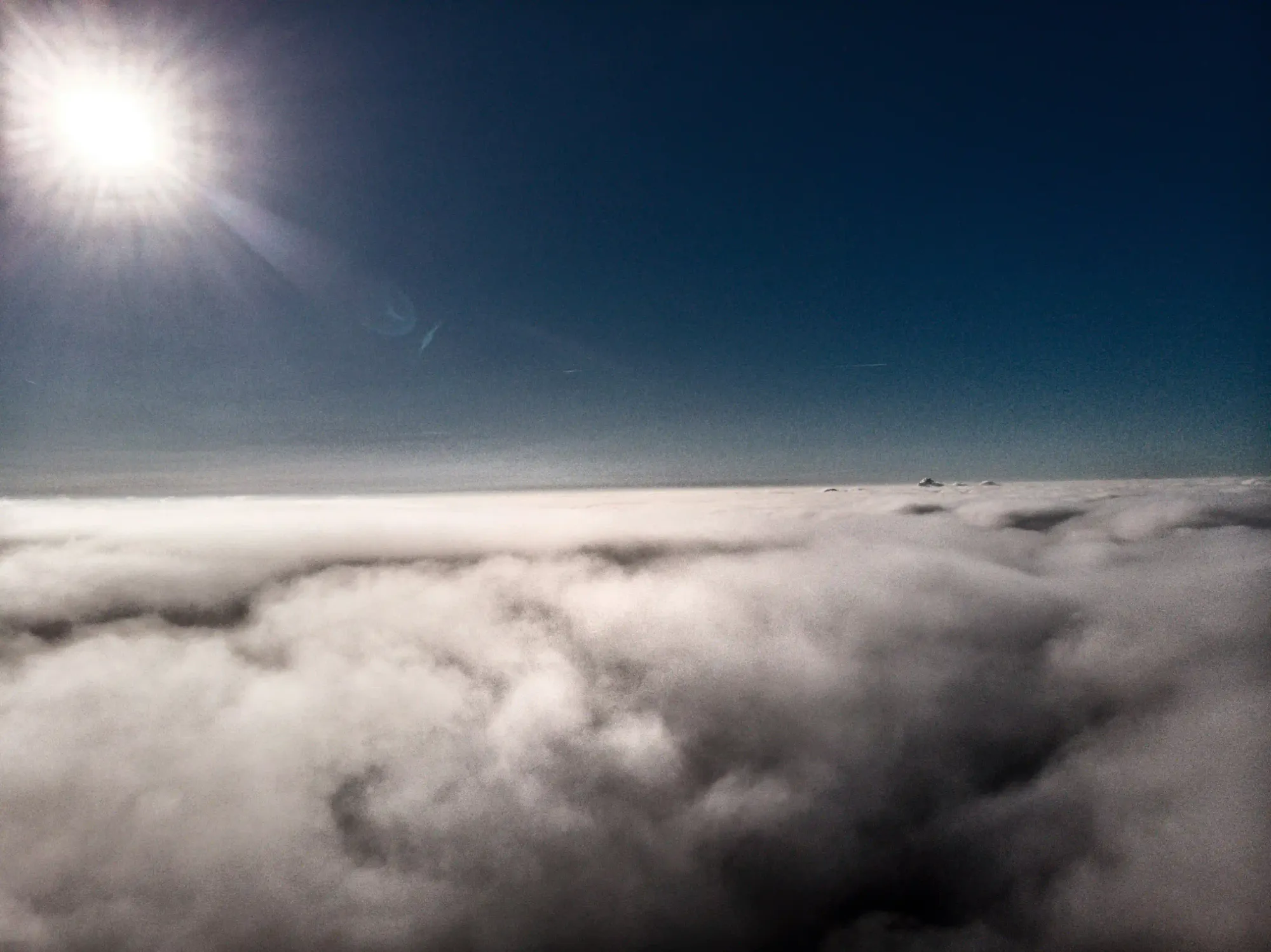
The theoretical scenario envisions regularly releasing sulfur dioxide or alternative reflective particles into the stratosphere, roughly 20 kilometers above the Earth’s surface. Depending on climate sensitivity and the model used, reflecting roughly 1 to 2 percent of incoming sunlight back into space is calculated to offset 1 degree Celsius of global warming. According to a 2018 study by Wake Smith and Gernot Wagner of Harvard and Yale universities, no existing commercial or military aircraft is capable of continuously carrying a payload of this weight at an altitude of 20 kilometers; however, designing a purpose-built fleet of high-altitude tankers using current aviation technology is considered neither technically difficult nor prohibitively expensive.
A Bridge to Buy Time? The Two Sides of Cost
Scientists who support this research explicitly emphasize that stratospheric aerosol injection cannot replace decarbonization. As outlined in the program definition of the UK-backed Advanced Research and Invention Agency (ARIA), researchers examining these approaches state that the method is not a permanent solution; rather, it could serve as a temporary bridge to buy humanity time by delaying or preventing the planet from crossing climate tipping points while emissions are brought down.
One of the main factors placing the method at the center of debate is its direct deployment cost. According to Smith and Wagner’s 2018 study, the average cost over the first 15 years of an initial-scale program aimed at halving the rate of warming is roughly $2.25 billion per year. In a 2020 cost analysis by Wake Smith, the direct cost of suppressing global temperatures by 1 degree Celsius is calculated at roughly $18 billion annually.
Compared to the heavy costs that climate-related disasters impose on the global economy, this figure remains remarkably low. Yet in his 2020 study, Smith points to a critical geopolitical distinction: an annual bill of $18 billion is far beyond the financial reach of individuals, non-state actors, or small states, placing it instead within the exclusive domain of major national economies or coalitions containing at least one major power.
Termination Shock: The Imperative of an Unbroken Loop
Intervening in the planet’s energy balance carries serious climate risks. Because sulfate particles released into the stratosphere remain in the atmosphere for only one to two years, sustaining the cooling effect requires the operation to continue in an uninterrupted loop.
If greenhouse gases continue to accumulate in the atmosphere and this intervention is abruptly halted due to war, political crisis, or technical failure, the masked warming will emerge far more rapidly and destructively. Known in the scientific community as "Termination Shock," this scenario could, according to model studies, cause warming that would normally unfold over several decades to occur within just a few years, stripping ecosystems of their chance to adapt.
Will the Sky Change Color? Side Effects and the Oceans
The atmospheric side effects of such an intervention involve significant uncertainties. Depending on the deployment scenario, climate models indicate that stratospheric aerosols could affect the global water cycle, alter regional precipitation patterns, weaken South Asian monsoons, and delay the recovery of the ozone layer if sulfates are used.
Regarding visual impacts, a 2012 modeling study by Ben Kravitz and colleagues showed that an aerosol injection blocking 2 percent of sunlight would leave the sky blue while shifting it toward a hue 3 to 5 times brighter and more whitish, as well as increasing the afterglow at sunset. A 2025 study by Lemon, Keith, and Albers published in Environmental Research Letters tested this effect against the perception thresholds of the human eye. According to the research, the daytime whitening caused by a moderate intervention (−1 to −2 W/m²) would remain imperceptible to roughly half of randomly selected observers, whereas the change could be more noticeable in regions with naturally pristine skies.
Another core reservation raised by critics is the debate over "moral hazard." Some climate scientists and civil society organizations worry that the prospect of a technological intervention could weaken the difficult political will required to phase out fossil fuels. Furthermore, filtering sunlight does not eliminate carbon dioxide accumulation, the root cause of the problem. Because oceans absorbing excess atmospheric carbon will continue to acidify, marine ecosystems and coral reefs will keep suffering from the carbon load even if surface temperatures are lowered.
The Governance Vacuum and Research in the Field
There is still no binding international legal framework to govern a climate intervention that would affect the entire planet. Adopted in 2010 under the United Nations Convention on Biological Diversity (CBD), Decision X/33 serves only as a non-binding "de facto moratorium" against geoengineering activities other than controlled, small-scale scientific research until an adequate scientific basis and global regulatory mechanisms are established. This legal vacuum fuels concerns that a major economy or coalition severely hit by the climate crisis could initiate a unilateral deployment without seeking global consensus.
While no government-run, planetary-scale deployment program exists in the world today, research funding and private sector initiatives are growing. Through its £56.8 million Exploring Climate Cooling program, the UK-backed ARIA supports 22 projects across multidisciplinary fields including atmospheric physics, climate modeling, governance, and ethics. According to ARIA’s April 10, 2026 update, no outdoor experiment site has yet been finalized in the United Kingdom; of the five planned small-scale outdoor experiments, one focuses on sea ice thickening, three on marine cloud brightening, and the sole stratosphere-related experiment involves lifting tiny mineral samples inside an enclosed container into the stratosphere on a balloon platform and retrieving them without releasing anything into the atmosphere. In the private sector, the US- and Israel-based startup Stardust Solutions, which raised $60 million in venture capital in October 2025, announced intentions to conduct field trials starting in 2026; however, according to the Center for International Environmental Law (CIEL), an organization that opposes solar geoengineering, the company stepped back from its spring 2026 outdoor experiments.
Today, we are debating whether to reflect sunlight to cope with a warming of our own making. Is re-engineering the sky an emergency brake to prevent climate disasters and buy humanity time, or a way to delay cutting carbon emissions? The answer to this question depends on the extent to which scientific uncertainties are resolved in the coming years, and on who will hold a say over the sky, and under what rules.
Words by Enes Coşkun
— Related Reading: The Myth of Design and What Nature's Tinkering Intelligence Teaches Us