How a Common Weed Mastered the Sky: The Invisible Aerodynamics of Dandelion Seeds
The fragile dandelion seed we scatter into the wind is a flawless flight engine that fluid dynamicists are only just beginning to understand. Behind how this common weed masters the sky with a separated vortex ring lies a profound intersection of evolutionary mathematics and physics.

It is one of the most familiar and innocent rituals of childhood: plucking a white, feathery globe that has emerged among the spring grass, taking a deep breath, and watching hundreds of seeds scatter into the wind. To the human eye, this moment of dispersal feels like the ultimate display of fragility. It appears to be a seemingly helpless piece of flora, entirely at the mercy of the slightest draft, lost in the colossal chaos of nature.
Yet, our observations deceive us. While we believe we are simply blowing a fragile weed apart, we are actually setting into motion one of evolution’s most flawless flight engines—a marvel of biological engineering that fluid dynamicists and modern physicists are only just beginning to truly understand in laboratory settings. The drifting of those white bristles is not an act of surrender; it is a calculated manipulation of the atmosphere, allowing the seed to remain airborne for hours.
How did a micro-flight technology, one that operates with far greater efficiency than the most advanced parachutes designed in human laboratories, end up concealed within a common weed?
From Yellow Bloom to Flight Capsule: The Biological Incubation
The story of the dandelion (Taraxacum officinale) begins long before those famous white tufts take to the wind. The vibrant yellow petals that carpet meadows in early spring represent only the first phase of the plant's life cycle. Once pollination is complete, the flower does not simply die; instead, it retreats into a silent, meticulously calculated period of architectural transformation—a biological incubation.
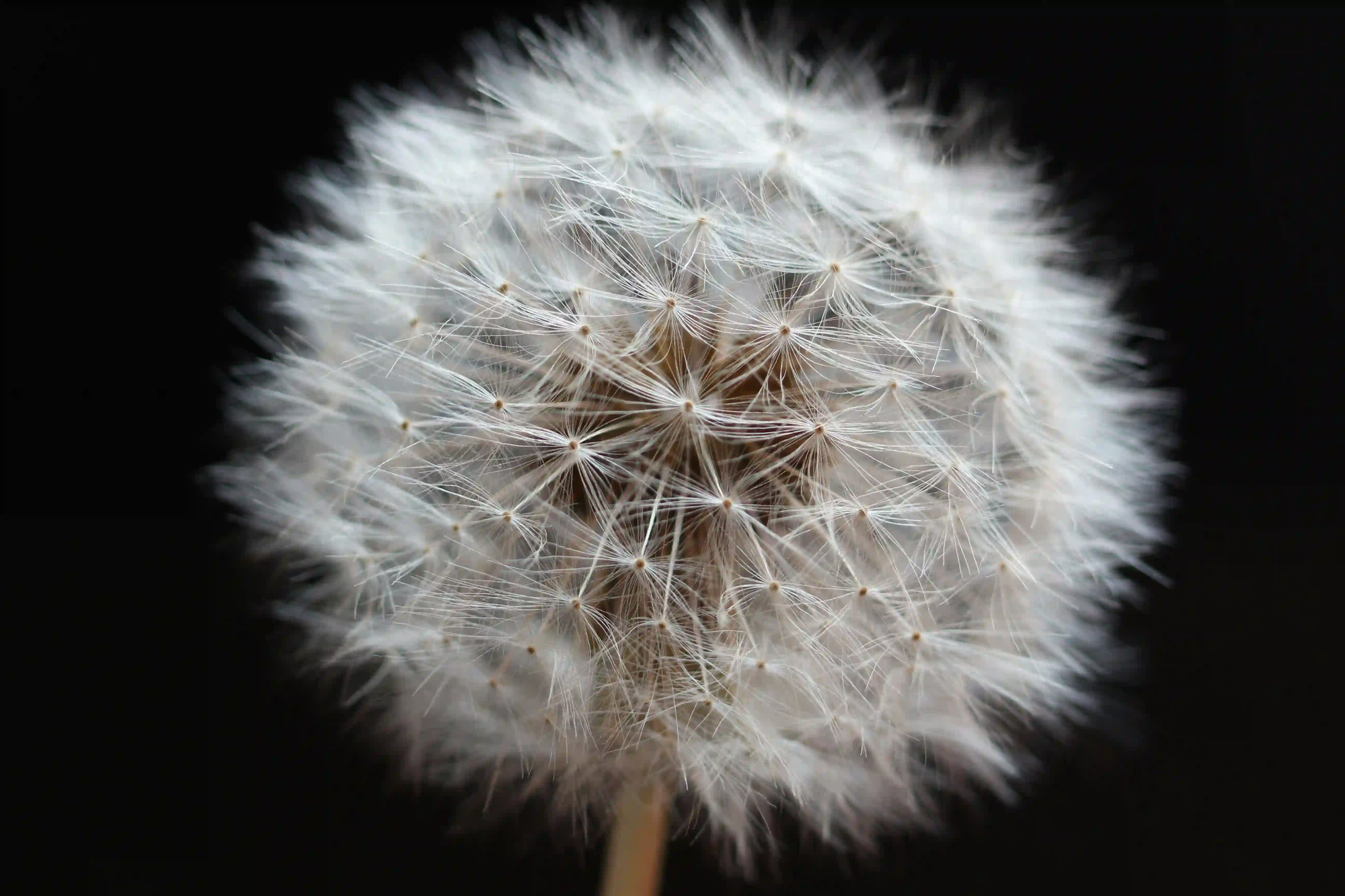
As the yellow petals wither and fall away, the green outer bracts tightly close. Inside this sealed environment, a feverish construction process occurs. When the bud reopens days later, the flower is gone. In its place stands a mathematically astonishing sphere of white, composed of hundreds of individual seeds extending outward in perfect symmetry.
Each seed is tethered to a bundle of fine, bristly filaments designed to catch the wind. Known in botany as a pappus, this umbrella-like structure is the hardware that holds the secret to the dandelion’s flight. However, when scientists first examined the pappus under a microscope, they encountered a structural paradox that defied conventional aerodynamic logic: this natural parachute is composed of nearly 90 percent empty space.
The Engineering of Empty Space and the Power of Porosity
In traditional aeronautical logic, the primary function of a parachute is to trap air and slow a descent. Human-made parachutes create drag by blocking the air that pools beneath the fabric. If you were to tear massive holes into a standard parachute, the air would rush through, and the entire system would catastrophically fail.
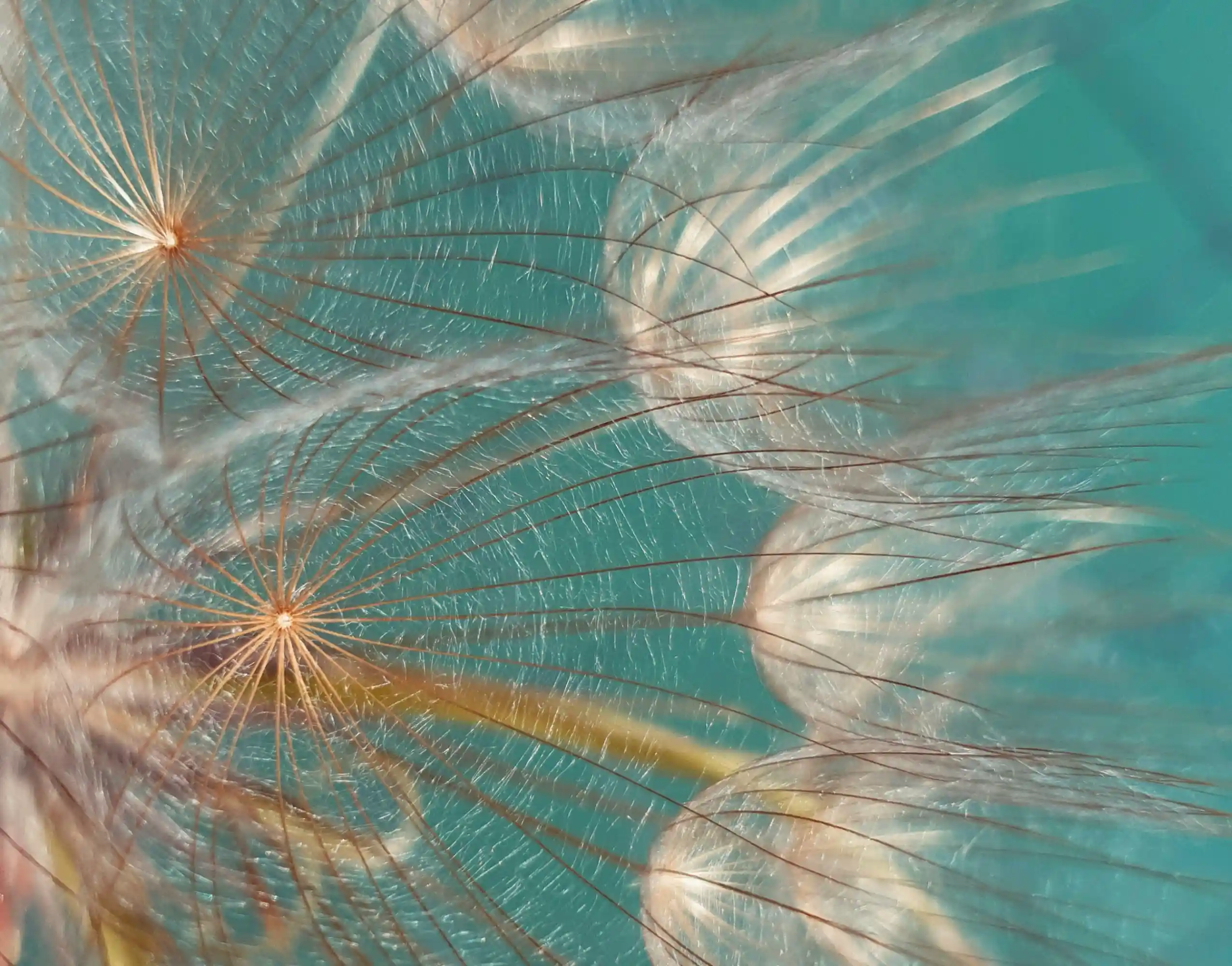
The dandelion’s pappus, however, is a highly porous structure. The filaments are spaced so widely that when the wind blows, the air does not flow around the bristles—it passes directly through them. This is the exact paradox that baffled fluid dynamics experts for decades: How can a heavily perforated structure that fails to trap air remain suspended aloft far longer than a solid parachute?
The answer was finally unveiled through a comprehensive laboratory study conducted at the University of Edinburgh, with the groundbreaking findings published in the journal Nature. When researchers placed dandelion seeds in a vertical wind tunnel and observed the airflow using lasers and high-speed cameras, they witnessed a physical phenomenon that had never before been observed in the natural world.
The dandelion seed does not resist the wind. By filtering air directly through its bristles, it generates an invisible, swirling atmosphere immediately above itself, effectively constructing its own localized flight engine.
A Rare Phenomenon in Physics: The Separated Vortex Ring
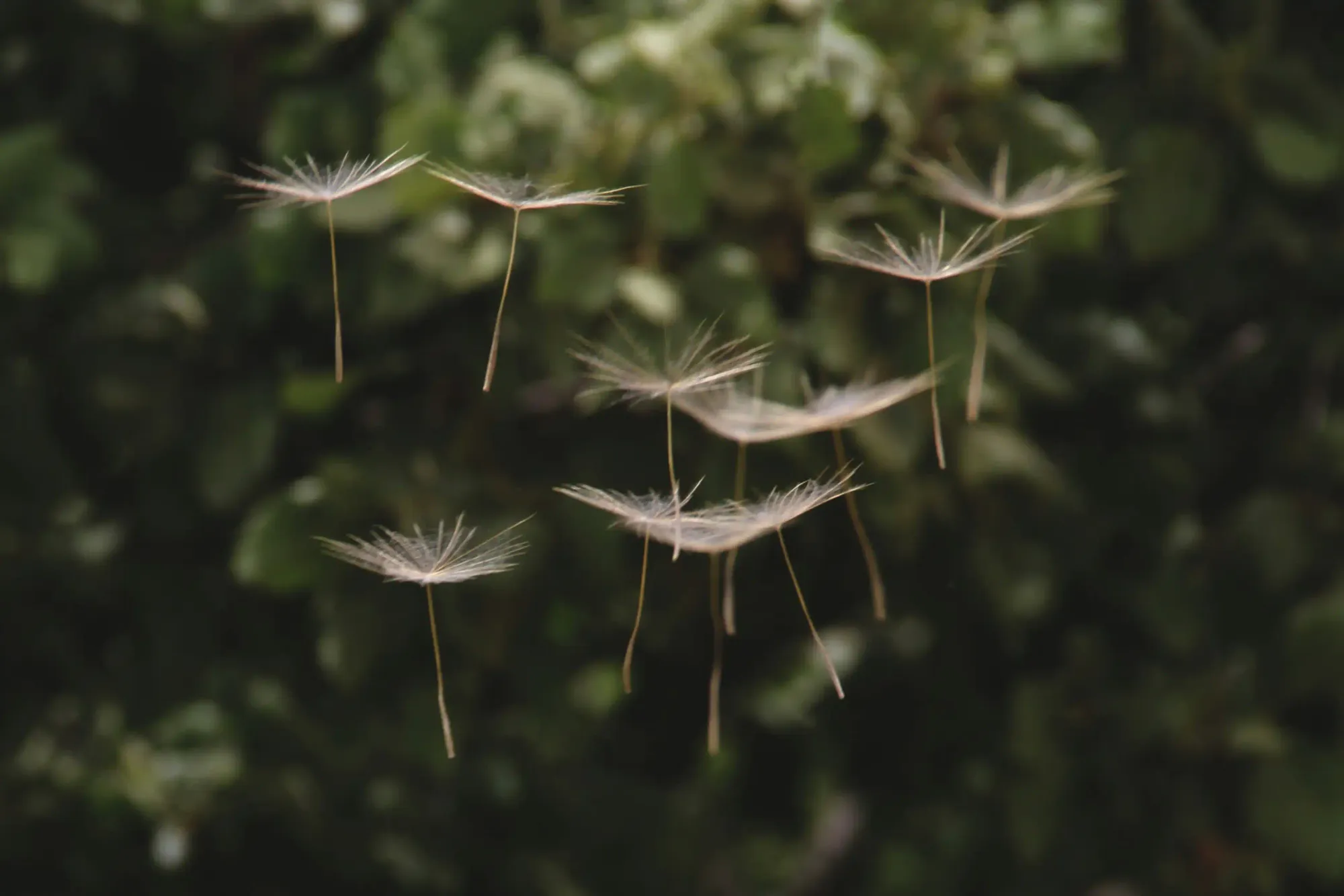
As air travels through the narrow gaps between the filaments of the pappus, something extraordinary happens. The airflow fractures, creating an invisible, swirling bubble of low pressure hovering just above the seed's canopy. In physics, this fluid dynamics structure is known as a Separated Vortex Ring.
Vortex rings are not inherently rare in nature; the air rings blown underwater by dolphins or the smoke rings expelled by an erupting volcano are classic examples. But what makes the dandelion’s vortex revolutionary to the scientific community is its unprecedented stability—the ring does not detach and drift away from the seed.
If you hold a solid disk or a non-porous parachute against the wind, the vortices that form behind it become highly unstable, constantly breaking off and creating violent turbulence. The dandelion, however, utilizes its 90-percent-empty structure to allow a precise, highly controlled leakage of air. This subtle upward draft stabilizes the vortex ring, tethering it steadily right above the seed.
As the seed drifts through the air, this microscopic, hovering tornado acts as a constant upward pull, generating substantial lift. Thanks to this phenomenal mechanism, the dandelion seed achieves a flight efficiency four times greater than that of a conventional parachute of the same size.
Evolutionary Drift and the Future of Biomimetic Technology

The dandelion developed this complex physics over millions of years of evolution with a singular goal: the survival of the species. Because plants cannot uproot and walk, they must rely on atmospheric currents to transport their genetic legacy to new, fertile grounds.
Consuming absolutely zero energy of their own, these micro-flight capsules can launch in the gentlest of breezes. When they are caught in thermal updrafts—warm air rising from the sun-heated earth—they can remain airborne for hours, sailing miles away from their parent plant. It is no coincidence that dandelions are often the first botanical pioneers to repopulate barren landscapes or lands scarred by wildfires; their invisible aeronautical networks silently envelop every corner of the planet.
This biological revelation does more than deepen our awe of the natural world; it is actively inspiring the future of human engineering. Space agencies and robotics experts are currently studying the dandelion’s separated vortex ring to design passive, floating micro-drones. These biomimetic devices could one day monitor atmospheric pollution or track climate data by gliding on wind currents for days without the need for a battery or motor. In the future, the probes sent to analyze the atmospheres of distant planets might borrow their design not from heavy rockets, but from the unassuming weed growing quietly beneath our feet.
The Invisible Mechanics Beneath the Surface
Living amid the rapid blur of modern life, surrounded by colossal skyscrapers, concrete, and asphalt, we tend to perceive the Earth strictly by its most visible surfaces. Yet nature continues to execute a dizzying display of mathematics and physics at microscopic scales, entirely indifferent to human observation or validation.
Those delicate white seeds we assume are drifting helplessly in the wind are, in reality, embracing fluid dynamics, organizing chaos, and mastering the sky. The extreme porosity that we interpret as weakness and fragility sits at the very heart of the planet's most resilient dispersal strategy.
Watching those seeds dissolve into the air invites a profound realization: If a seemingly fragile and common weed can manipulate the atmosphere with such flawless precision, what other invisible mechanics are operating quietly beneath our feet, in the depths of our forests, or within the dark abyss of the oceans?
— Related Reading: The Scent of Rain: Petrichor and the Echoes of Our Genetic Memory