7 Extraordinary Museums That Chose to Disappear into Nature
For centuries, human structures aggressively occupied the skyline. Today, a radical shift is occurring. Through underground museum architecture, visionary creators are proving that buildings that blend into the landscape offer a much more profound legacy than those that dominate it.
For centuries, architecture has served as a tool to assert human dominance over the planet. We have engineered steel skyscrapers that pierce the clouds, poured massive concrete blocks, and erected monuments that aggressively occupy the skyline. However, as our relationship with the earth undergoes an irreversible shift, the definition of the physical legacy we leave behind is also transforming. Today's visionary architects are choosing to surrender to the topography rather than erecting arrogant monuments upon it.
This radical approach dictates that buildings should be consumed by the landscape rather than merely sitting on top of it. Across the globe, a new wave of structures refuses to rise. They become organic extensions of the terrain, remaining silent in the face of nature's grandeur. We examine seven extraordinary art and cultural spaces where the human ego steps aside, choosing to become a living part of the environment rather than invading it.
01 UCCA Dune Art Museum (Qinhuangdao, China)
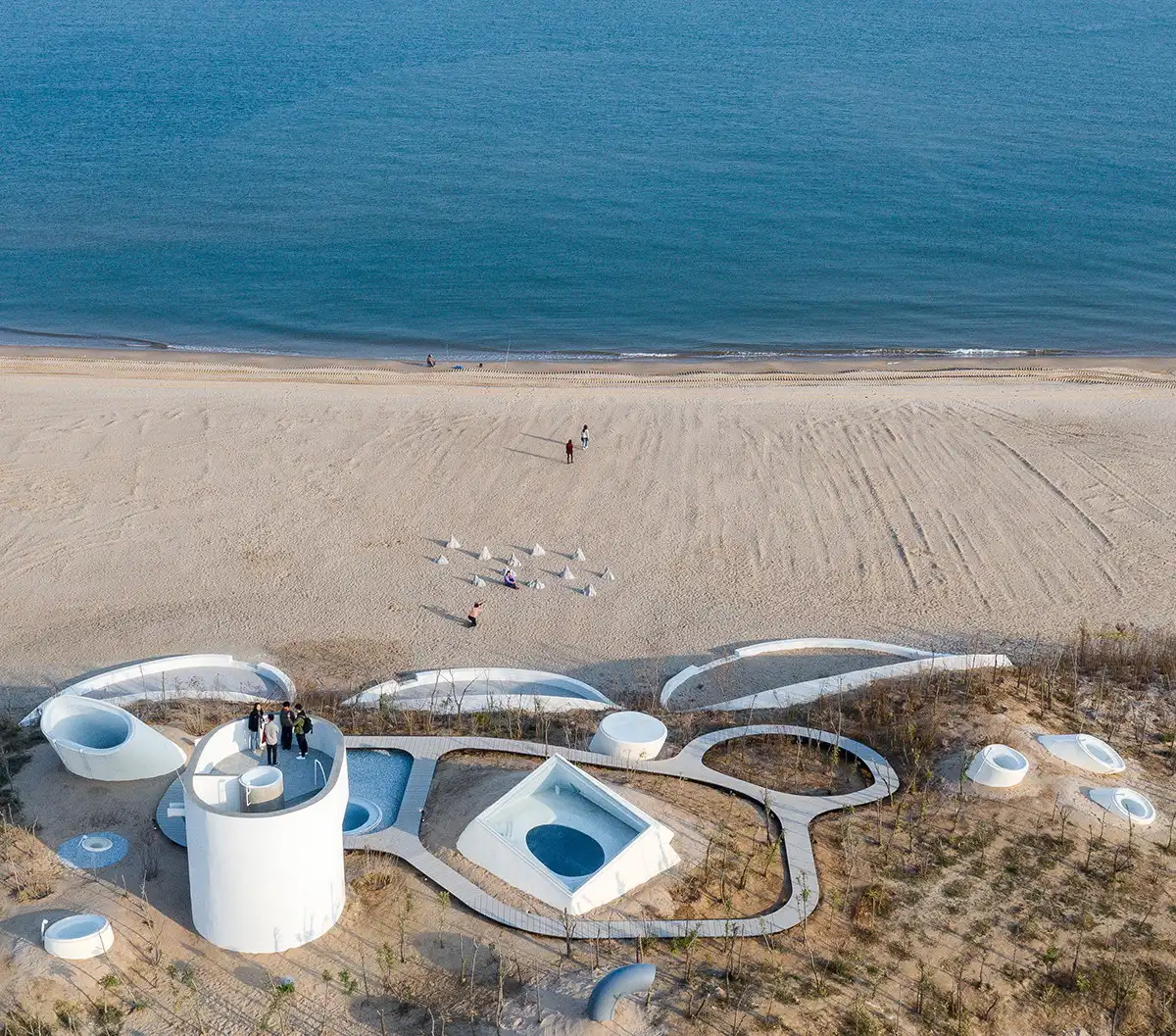
Designed by OPEN Architecture, the UCCA Dune Art Museum breathes just beneath the sand on the coast of the Bohai Sea. Instead of building a massive gallery on the shoreline and disrupting the horizon, the architects chose to hide the structure within the dunes by mimicking the organic forms of humanity's earliest cave shelters. From the outside, the natural topography of the beach appears almost entirely untouched. Inside, a complex concrete shell is revealed, shaped entirely by hand in formwork made of small wooden strips by local workers, some of whom are former shipbuilders. As visitors walk beneath the dune, they are left alone with both the artwork and the heavy silence of geological time. The natural light filtering through geometric openings at the top of the dune establishes a flawless balance between art and primordial nature.
02 Messner Mountain Museum Corones (Kronplatz, Italy)
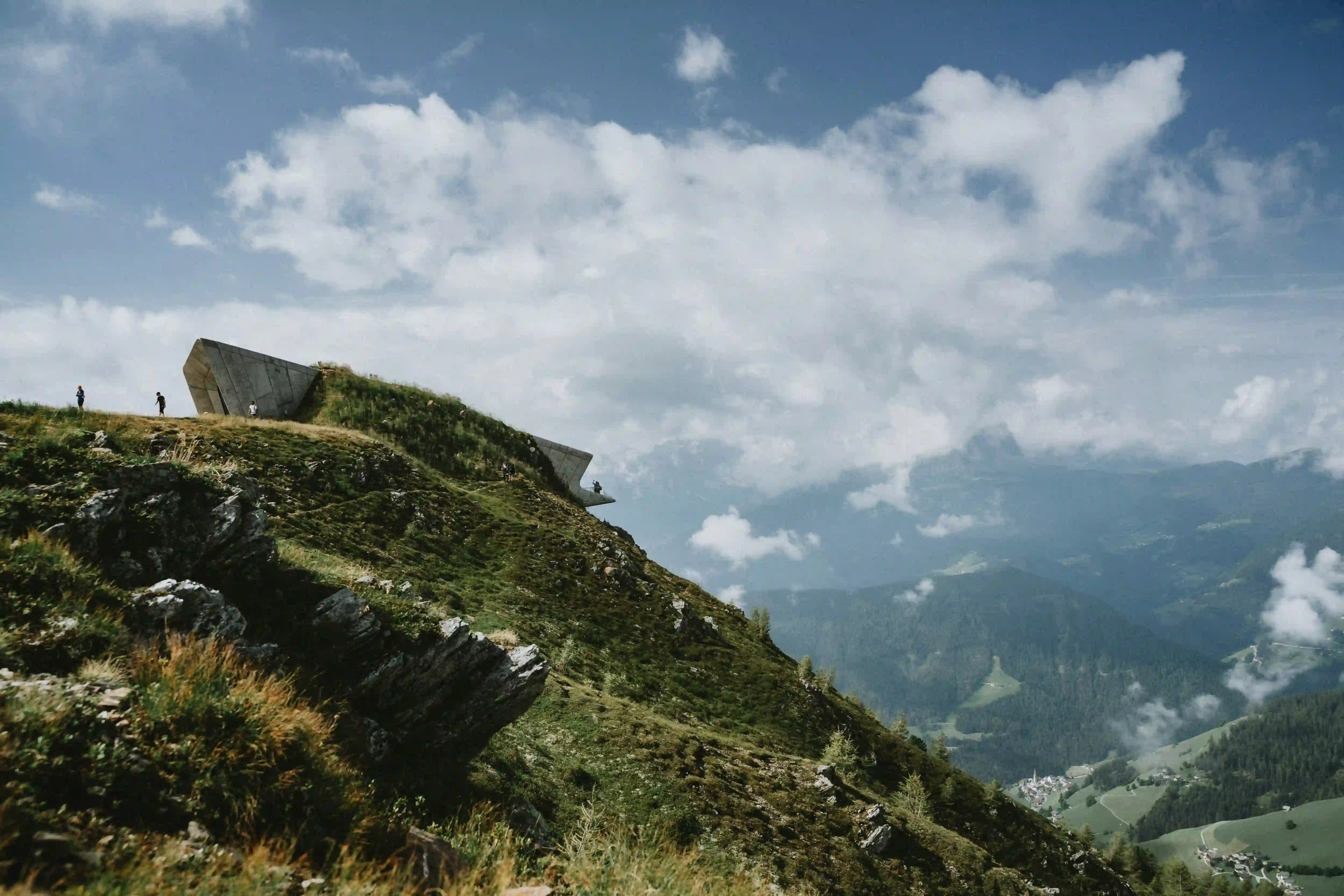
Born from the vision of mountaineering legend Reinhold Messner and the engineering brilliance of Zaha Hadid Architects, this structure is buried deep within the heart of the 2,275-meter Kronplatz summit. Constructing a facility of this scale at the top of a popular ski resort carried the risk of permanently ruining the mountain's natural silhouette. The design team solved this problem by placing the building directly into the rock. During construction, four thousand cubic meters of excavated earth and rock were put back over the finished structure. Today, only cantilevered concrete viewing windows and a small terrace emerge to observe the surrounding valley. Advocating that mountains are not targets to be conquered but ancient entities to be respected, the museum aligns its physical presence with this philosophy, retreating into the role of a humble observer.
03 Tirpitz Museum (Blåvand, Denmark)
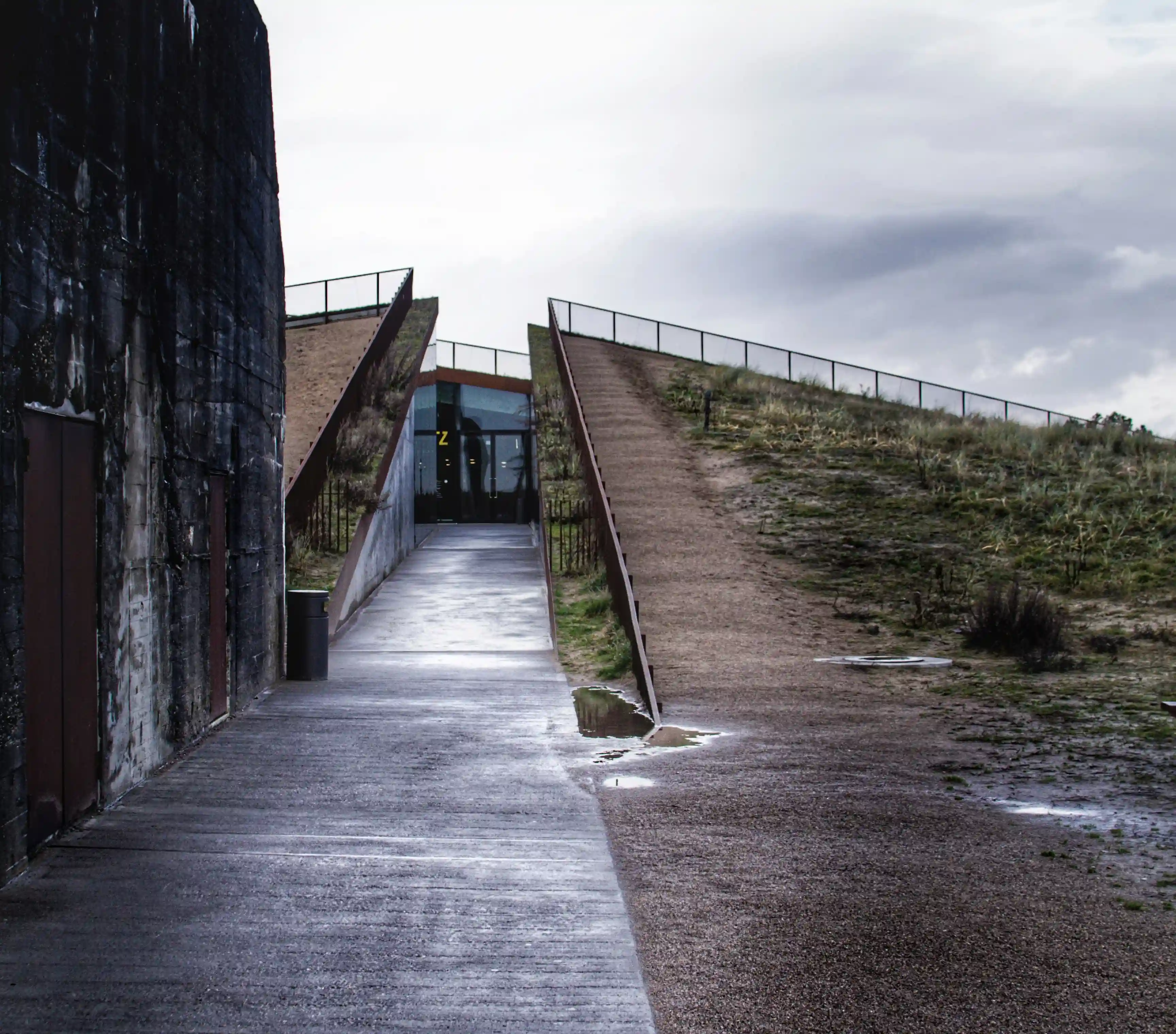
Constructing a new museum beside a massive concrete bunker that harbors the dark memories of World War II demands a heavy historical responsibility. Rather than competing with this visual and historical weight, BIG (Bjarke Ingels Group) chose to speak an entirely different architectural language. Instead of imposing an external building onto the site, they created a light-filled sanctuary underground by cutting intersecting slits directly into the dunes. Designed as four intersecting voids, the museum forms a complete contrast to the closed and brutal mass of the historical bunker. The lead architect of the project, Bjarke Ingels, explains this design choice with the following words:
"Tirpitz is the strict antithesis to the concrete monolith of the World War II bunker next door. Against the heavy and closed mass of the bunker, the museum offers an inviting sense of lightness and open space."
This approach balances history with transparency instead of erasing it. Visitors step away from the suffocating weight of the war and step into bright, hopeful galleries beneath the earth.
04 Chichu Art Museum (Naoshima, Japan)
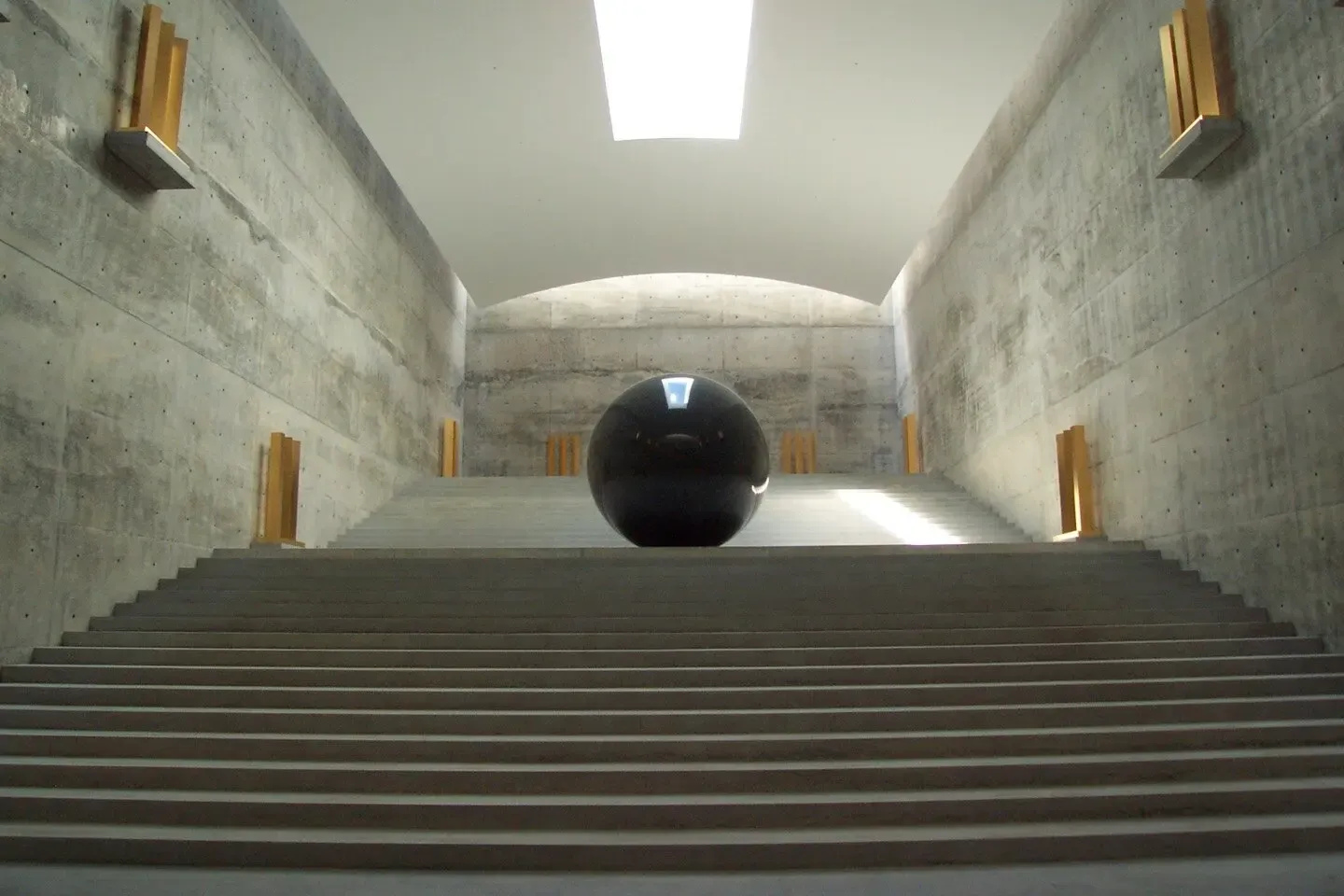
Tadao Ando's masterpiece, the Chichu Art Museum, is located entirely within the earth. To preserve the beautiful scenery of the Seto Inland Sea, the building has no traditional exterior facades. Hosting some of the most important artworks in the world, this temple breathes solely through geometric voids that open to the sky. The Claude Monet paintings and Walter De Maria installations exhibited inside are illuminated not by artificial lighting, but by natural light and shadows that shift with the passing hours. The human design ego is completely removed from the equation. Visitors are simply left to watch how the artworks establish a silent dialogue with nature.
05 Lascaux IV (Montignac, France)
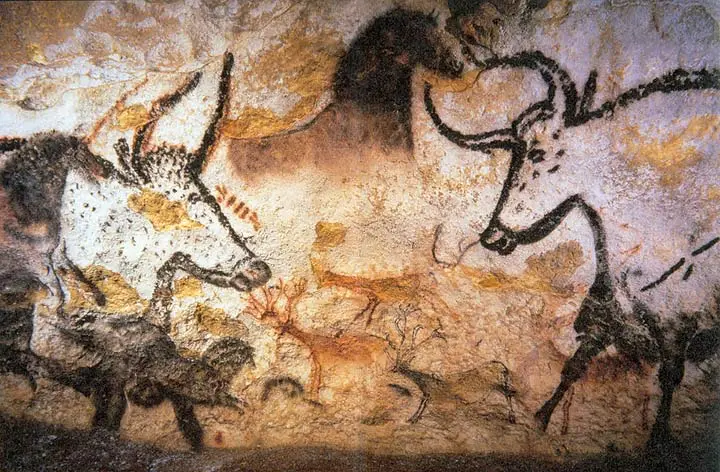
Lascaux, one of the oldest and most important painted caves in human history, was closed to the public years ago for preservation purposes. The Lascaux IV building, designed by Snøhetta, makes this shared cultural memory accessible again with a full-scale and meticulous replica. Settling into the terrain like a delicate incision exactly where the hill meets the valley, the museum looks more like a natural geological layer than a modern building. Visitors step into a carefully choreographed experience, moving from a rooftop view over the hillside down into the recreated depths of our cultural memory. Instead of putting on an architectural spectacle, the structure guides visitors on a respectful journey directly beneath the surface toward our shared origins.
06 Biesbosch MuseumEiland (Werkendam, Netherlands)
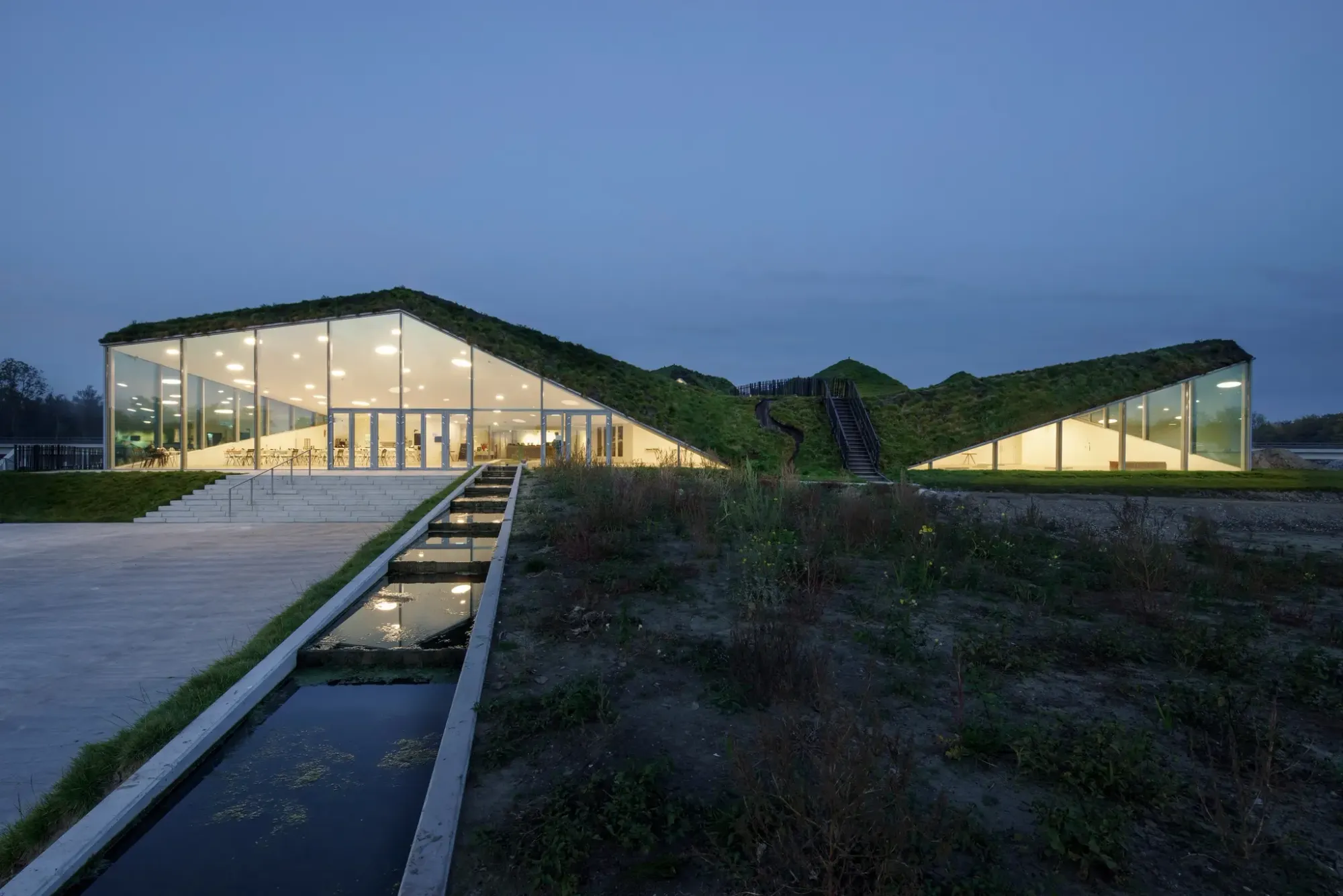
The Biesbosch MuseumEiland, designed by Studio Marco Vermeulen, offers a completely new perspective on what it means to live with water. Instead of erecting concrete barriers against the rising waters, the structure completely surrenders to the natural flow. To minimize waste, the architects did not start from scratch; the structure was expanded by preserving the museum's original pavilions. The building is now topped with a massive green roof covered in local grasses and herbs. Waterways were intentionally carved around the building for flood safety. When the waters rise, the structure turns into a true island and becomes a living, breathing extension of the wetland ecosystem. Eco-friendly architecture transforms from a concept on paper into a physical reality here.
07 Moesgaard Museum (Aarhus, Denmark)
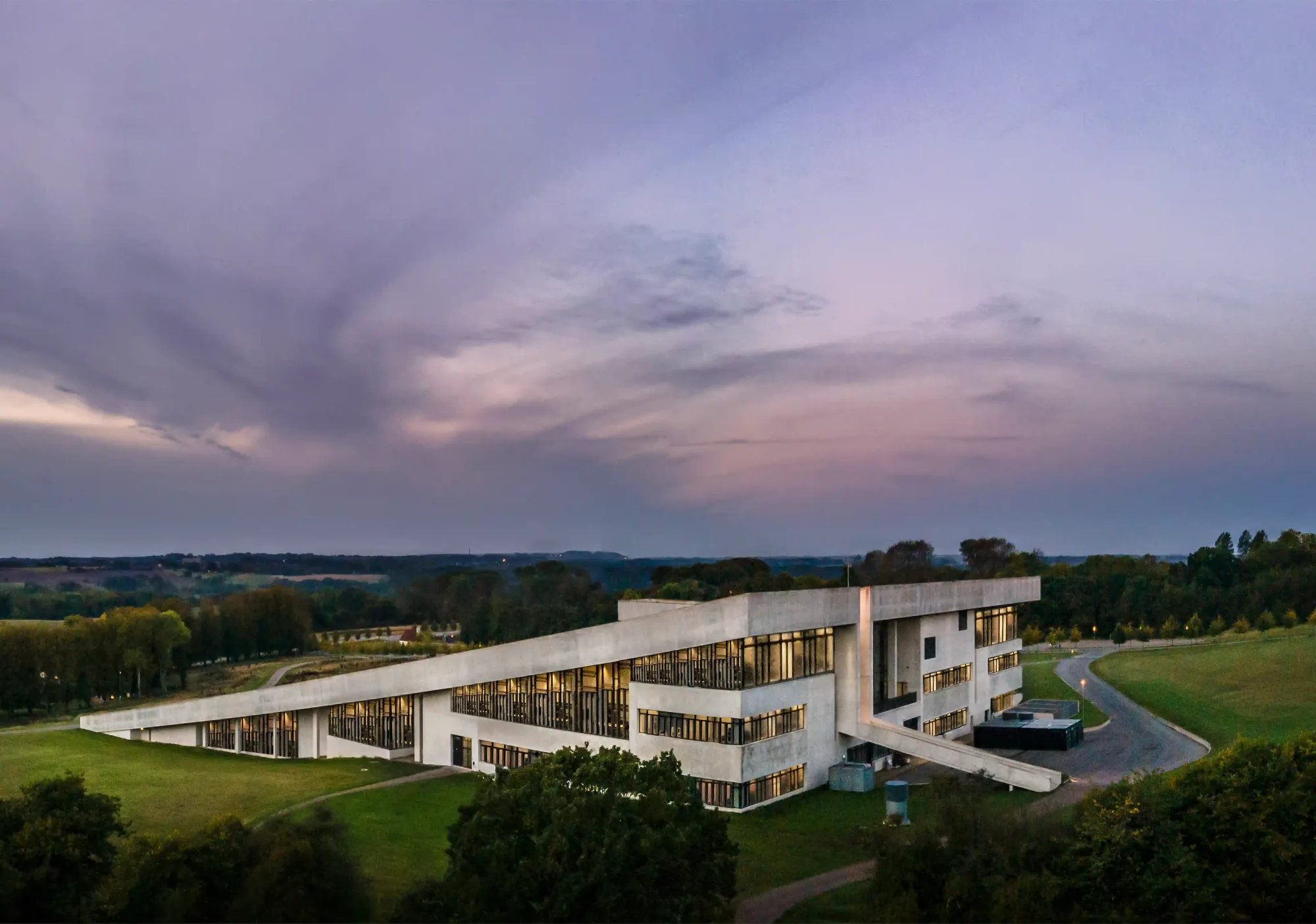
Designed by Henning Larsen, the Moesgaard Museum fundamentally changes our perception of where the boundaries of a building end and where nature begins. The structure refuses to rise in any traditional sense, instead emerging directly from the terrain to become a hill itself. Intended by its architects to be a strong visual landmark visible even from the sea, this museum does not steal the spotlight from nature. Visitors picnic on this massive angled grass roof in the summer, and when the snow falls in the winter, the roof completely transforms into a sledding slope. Moesgaard proves that buildings can be more than just closed boxes you enter, acting as a living and continuous extension of the topography.
In an era where we are thinking more than ever about the physical future of the planet, the role of architecture is also shedding its skin. Designs that challenge nature are giving way to spaces that follow the rules of topography and have their boundaries determined by the earth. The seven unique museums listed above prove that it is not necessary to fight the earth while preserving the cultural heritage of humanity. Perhaps the essential question we must all ask in our respective fields is this: Will the most valuable legacy we leave to future generations be massive concrete monuments that attempt to conquer the earth, or these quiet structures that have masterfully learned to disappear within it?
— Related Reading: The Museum That Bent Its Architecture to the Will of a River