The Architecture of Silence: 7 Sanctuaries of Absolute Isolation Hidden in Megacities
Today, more than half of the global population resides in metropolises that never truly sleep. As chronic urban noise fatigue becomes a modern crisis, these 7 sanctuaries prove that absolute isolation isn't about geography—it’s about mastering acoustic design and physical space.
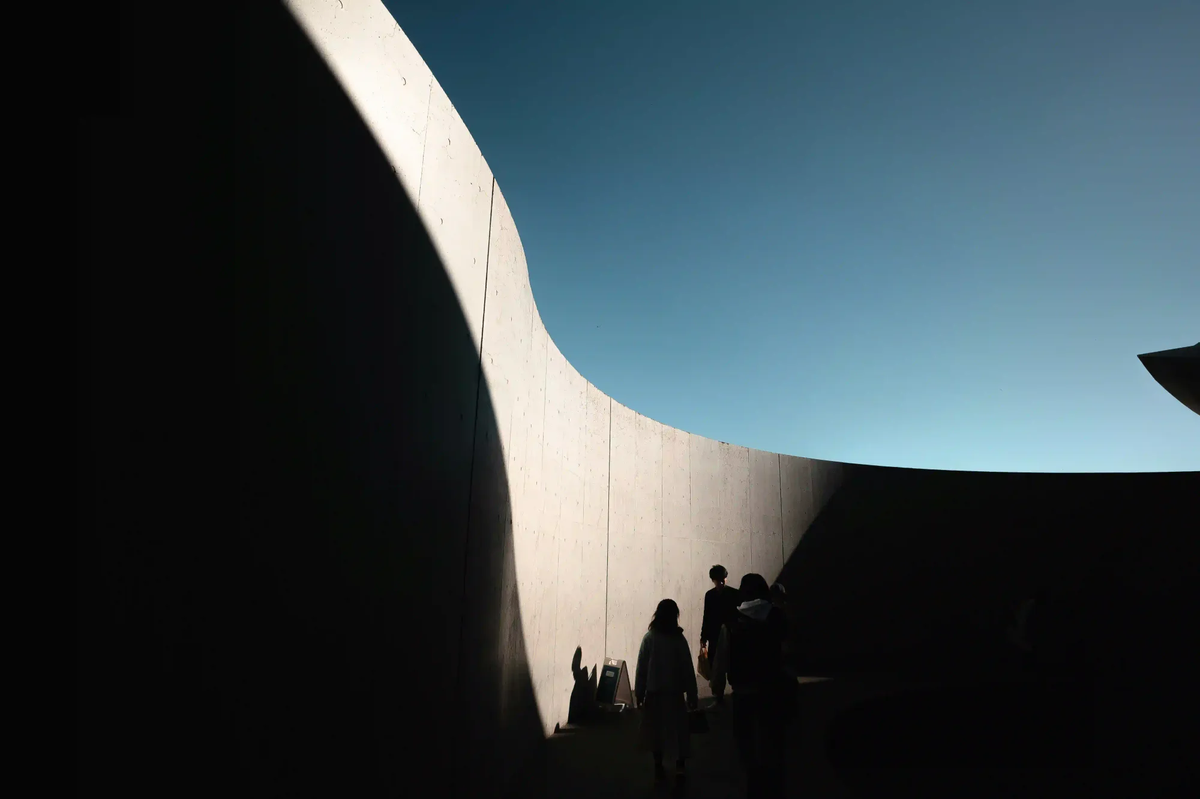
Silence is the rarest, most expensive, and unreplicable commodity of the 21st century.
Today, more than half of the global population resides in sprawling metropolises that never truly sleep, engulfed in a relentless 24/7 mechanical and digital hum. As the World Health Organization identifies environmental noise pollution as one of the most insidious public health threats of the modern era, our minds are in a state of perpetual occupation by sirens, construction frequencies, and traffic horns. This chronic "urban noise fatigue" unwittingly drives us toward a radical pursuit: sensory deprivation.
But is it truly possible to completely forget the millions of people and mountains of steel surrounding you in the world’s most densely populated cities?
The answer does not lie in a geographical escape, but in specific architectural sanctuaries where mass, void, and materials are masterfully manipulated. This list is not a travel guide; it is a conceptual exploration of how modern humans can escape the chaos of their own making through architectural engineering. Here are 7 unique architectural oases promising "absolute isolation" in the midst of the world's most chaotic concrete jungles.
1. The Therapeutic Power of Ruin: St. Dunstan-in-the-East, London
Right in the heart of London’s global financial center, known as the Square Mile, an extraordinary monument stands just blocks away from billions of dollars in daily trading volume and crowds of tailored suits.
Severely damaged during the heavy bombings of World War II (The Blitz), this Gothic church was deliberately left as a ruin in the post-war era, rather than being restored or demolished. Over the decades, nature was allowed to gently reclaim its stone walls, windows, and arches, giving rise to an urban quarantine zone. St. Dunstan-in-the-East absorbs the city noise reflecting off the glass facades of surrounding skyscrapers through its irregular, ivy-draped stone surfaces. This space, utilizing architecture as a "planned ruin," prompts the reader to ask: Is it merely a coincidence that a city’s most peaceful enclave is built exactly where it endured its greatest trauma?
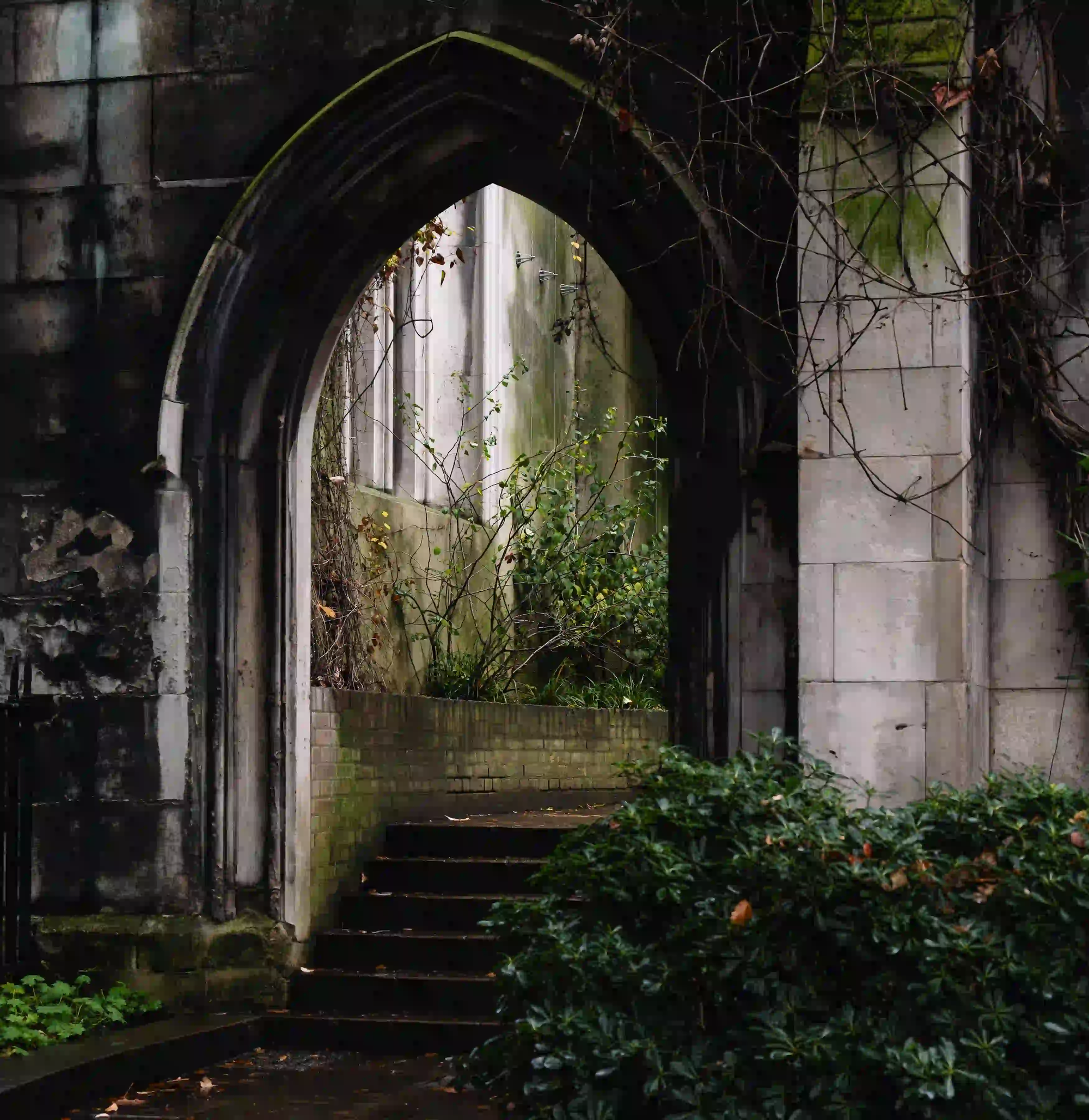
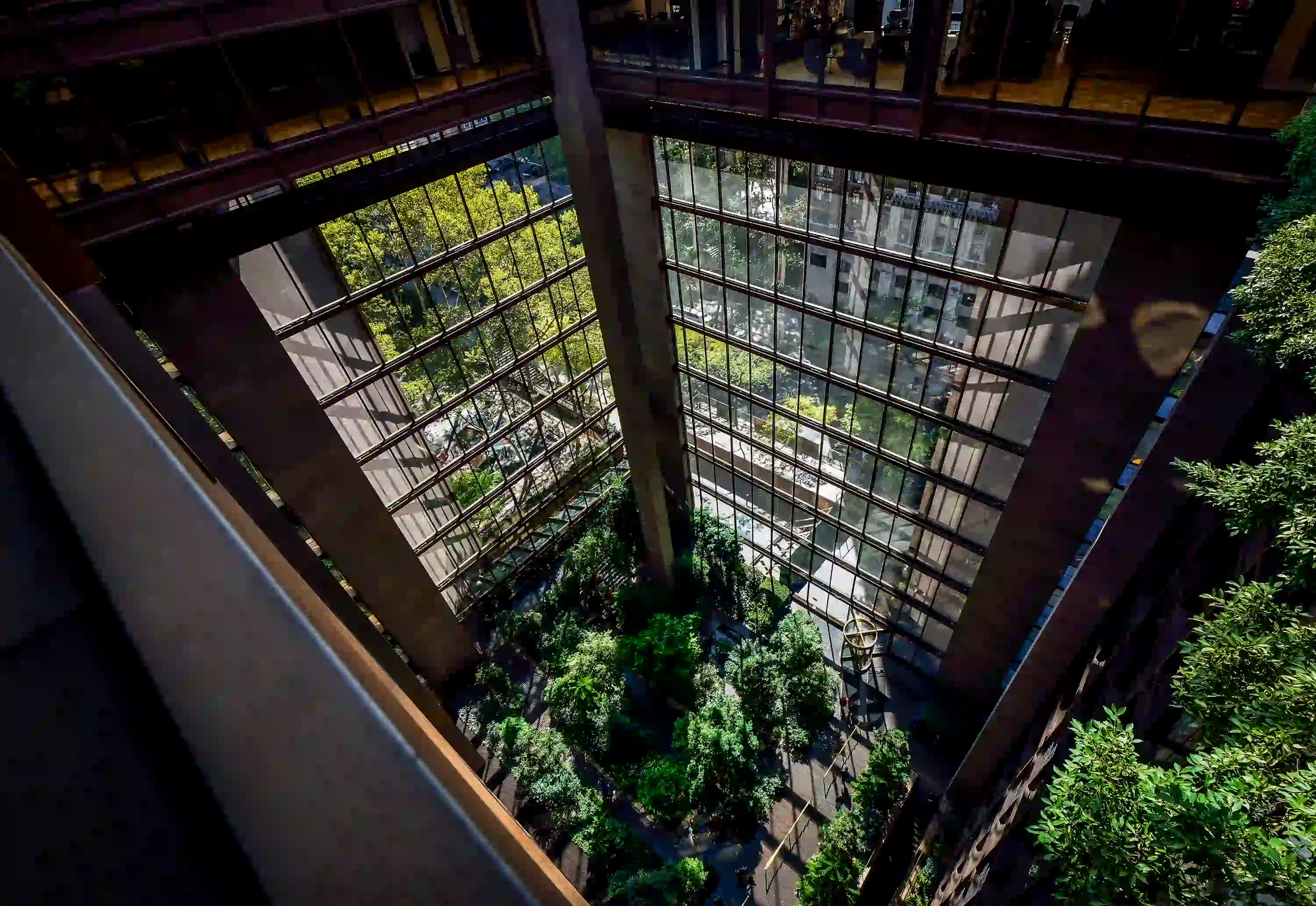
2. A Transparent Shield: Ford Foundation Atrium, New York
Allocating a massive volume of space entirely to air, light, and silence on one of Manhattan's most expensive plots of land—where real estate is measured in millions of dollars—is an architectural manifesto of "luxury."
Rising on 42nd Street and designed by architects Kevin Roche and John Dinkeloo in 1967, the 12-story Ford Foundation Building is a late-modernist masterpiece that harnesses the elegance of Cor-ten steel and transparent glass. While it resembles a sheer glass cube from the outside, the millisecond you step through its heavy doors, you are greeted by a lush subtropical flora. The massive interior volume (atrium) and the dense vegetation designed by landscape architect Dan Kiley act as a natural buffer zone, practically swallowing the metropolitan hum from outside. The structure grants employees and visitors the rare privilege of observing the external chaos as if it were a completely muted cinematic film.
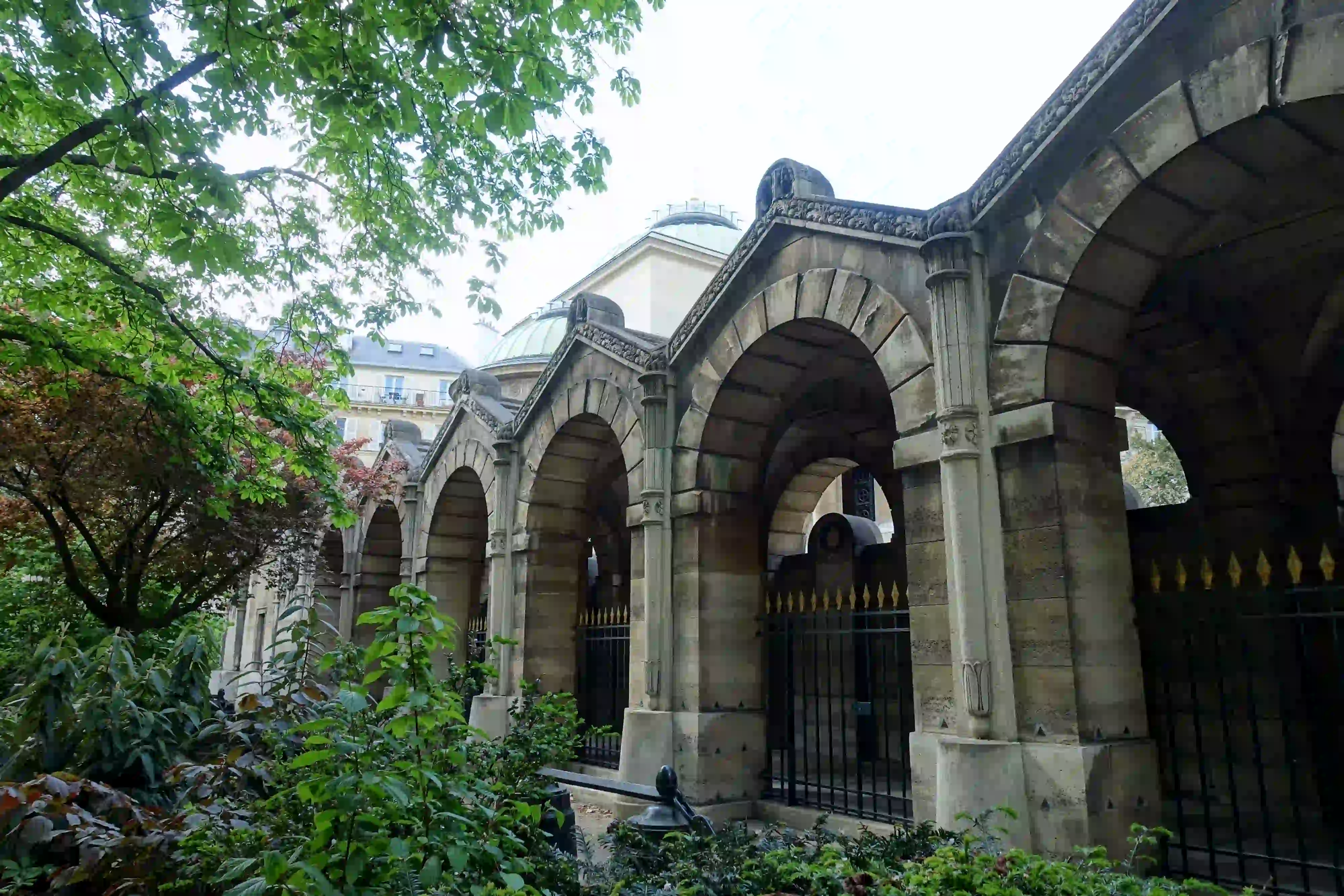
3. Mourning Behind the Walls: Chapelle Expiatoire, Paris
How far does the sound of a guillotine echo in the collective memory? In architecture, the most primitive yet effective method of blocking out the external world and its traumas is building insurmountable barriers.
Located just steps away from Boulevard Haussmann, one of Paris's busiest commercial arteries, the Chapelle Expiatoire is founded precisely on this strategy of isolation. Built in memory of King Louis XVI and Marie Antoinette, who were executed during the French Revolution, this neoclassical chapel is distinguished by the unusually high walls that enclose it. This thick stone mass physically blocks the hum of modern Paris, creating a flawless "acoustic shadow" within its inner courtyard. This armor, woven around the architecture as a physical form of mourning, ensures that the moment you enter through its gates, you leave the 21st century entirely behind.
4. The Physical Manifestation of "Ma": Kyu-Asakura House, Tokyo
Sometimes, absolute silence is not found in acoustic panels installed with massive budgets, but in the humble philosophy of century-old woodwork.
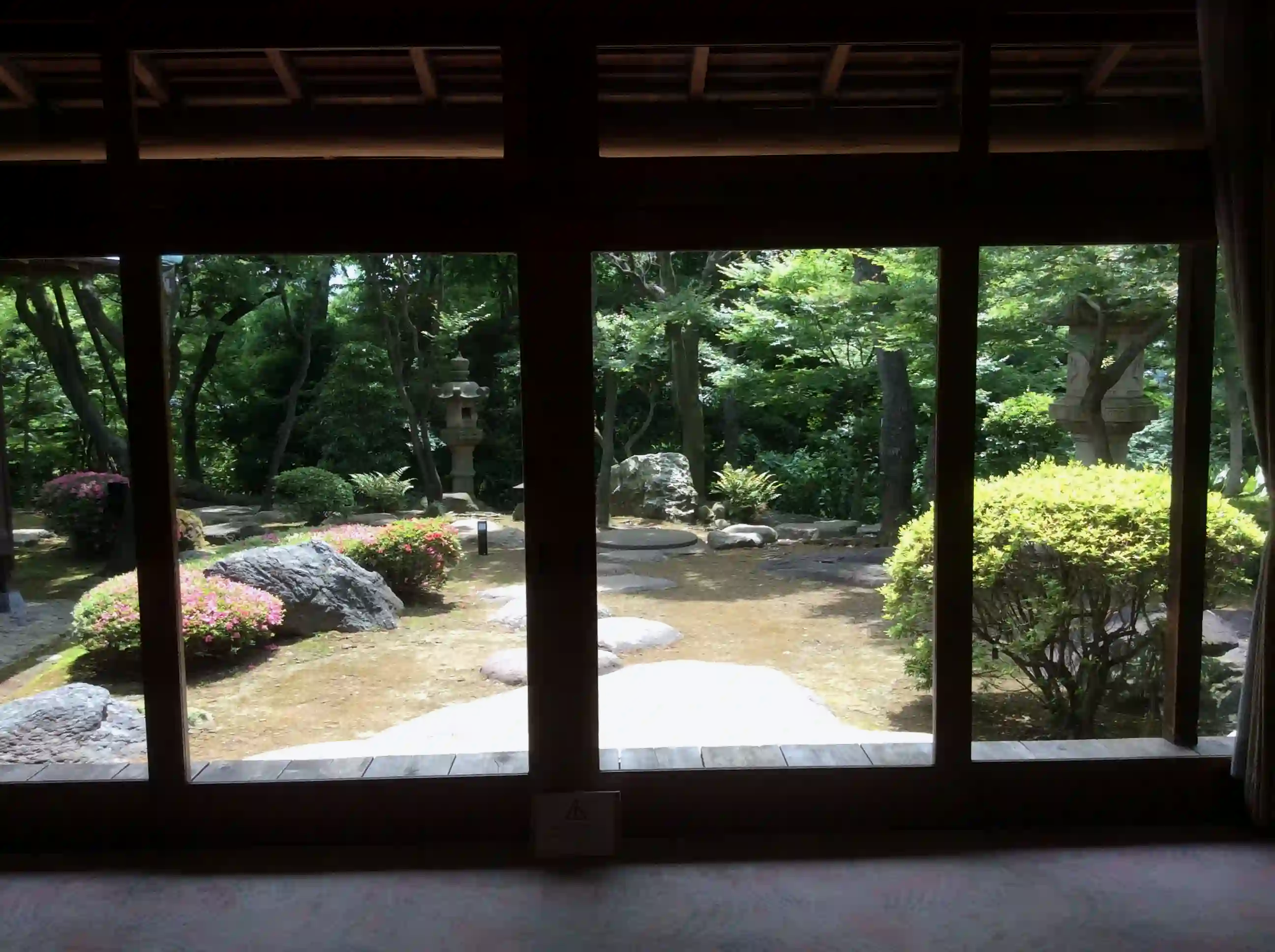
Today, tucked away in Daikanyama—one of Tokyo's most elite and highest-valued real estate districts within Shibuya—lies a traditional wooden mansion that has survived almost intact since 1919. The Kyu-Asakura House is the most refined example of how the traditional Japanese architectural philosophy of Ma (negative space, void, or pause) can be integrated into the urban fabric. As you step inside, you remove your shoes and walk across tatami floors. The paper sliding doors (shoji) and wooden floors frame the inner garden like a living painting while keeping the outside world at bay. In stark contrast to the hyper-modern world outside, the only sound to be heard here is the ancient rustle of the wind against the timber.
5. The Geometric Dissipation of Sound: Santo Stefano Rotondo, Rome
Just hundreds of meters behind the cacophony generated by the armies of tourists that besiege the Colosseum every day, sits Santo Stefano Rotondo, Rome's oldest surviving circular church.
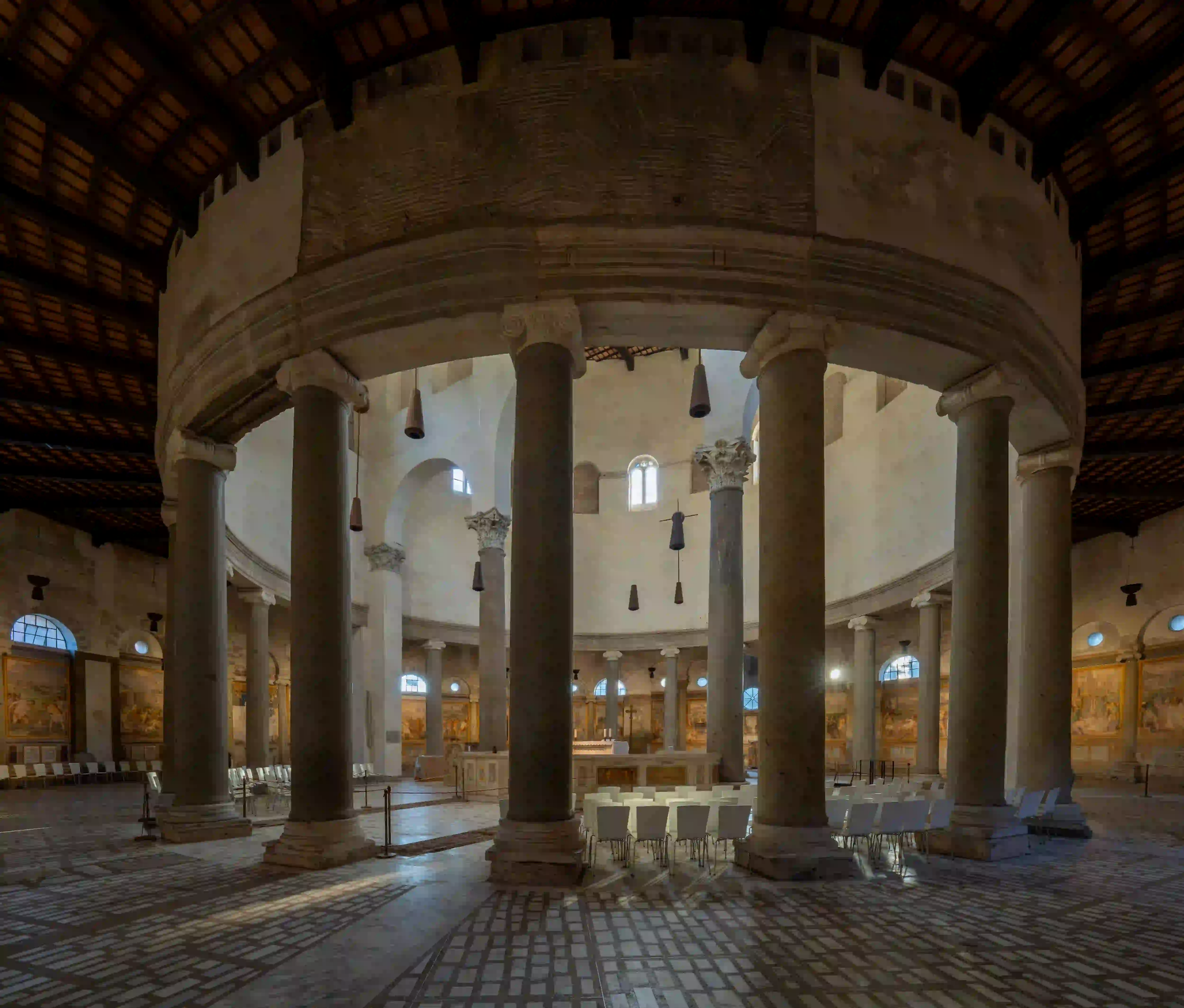
Constructed in the 5th century, this structure features a cylindrical architecture, sharply contrasting with classical Latin cross-plan churches. The human brain and ear anatomy are accustomed to sounds echoing in angular structures. However, when you enter a circular building, sound waves do not accumulate in corners and bounce back; instead, they disperse along the curved walls and dampen within the massive internal void. The moment you step inside, all the noise of the modern tourism industry vanishes, leaving only the solitary and solemn spirit of the Roman Empire's declining era. Here, geometry functions purely as a soundproofing material.
6. Subterranean Sensory Deprivation: The Theodosius Cistern, Istanbul
Flawless insulation not only silences the outside world but can also transform the faintest whisper inside into a massive symphony.
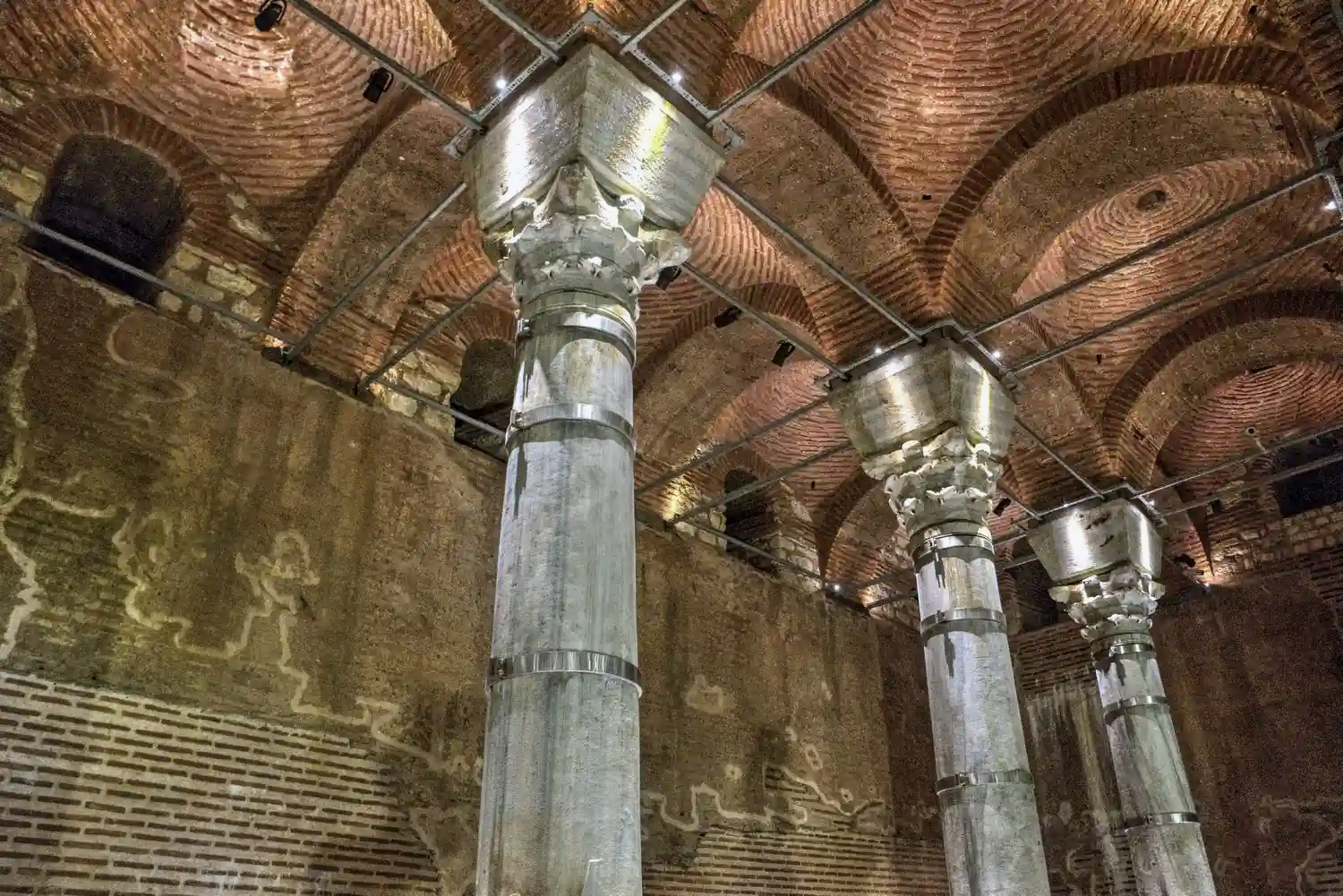
The historic peninsula is one of Istanbul's most congested and acoustically chaotic districts. Yet, just a few meters beneath this relentless surface-level frenzy lies a subterranean water sanctuary built during the reign of Theodosius II (approximately 1,600 years ago). With its massive brick vaults and Corinthian-capped columns, this structure was originally engineered solely to protect water. Today, however, thanks to the meters-thick layer of earth above it, it zeroes out every frequency from the outside world. This absolute insulation has turned the space into a flawless resonance chamber, which is why the cistern now hosts exclusive concerts celebrated for their exquisite acoustics. The architecture, completely deaf to the noise above, opens up a colossal echo chamber for the art within.
7. Silencing the Trauma: Sammlung Boros, Berlin
The transformation of an airless Nazi bunker—once a place where people hid from death and air raids—into one of the most prestigious temples of contemporary art and intellectual isolation is the most concrete proof of how architecture can rewrite memory.
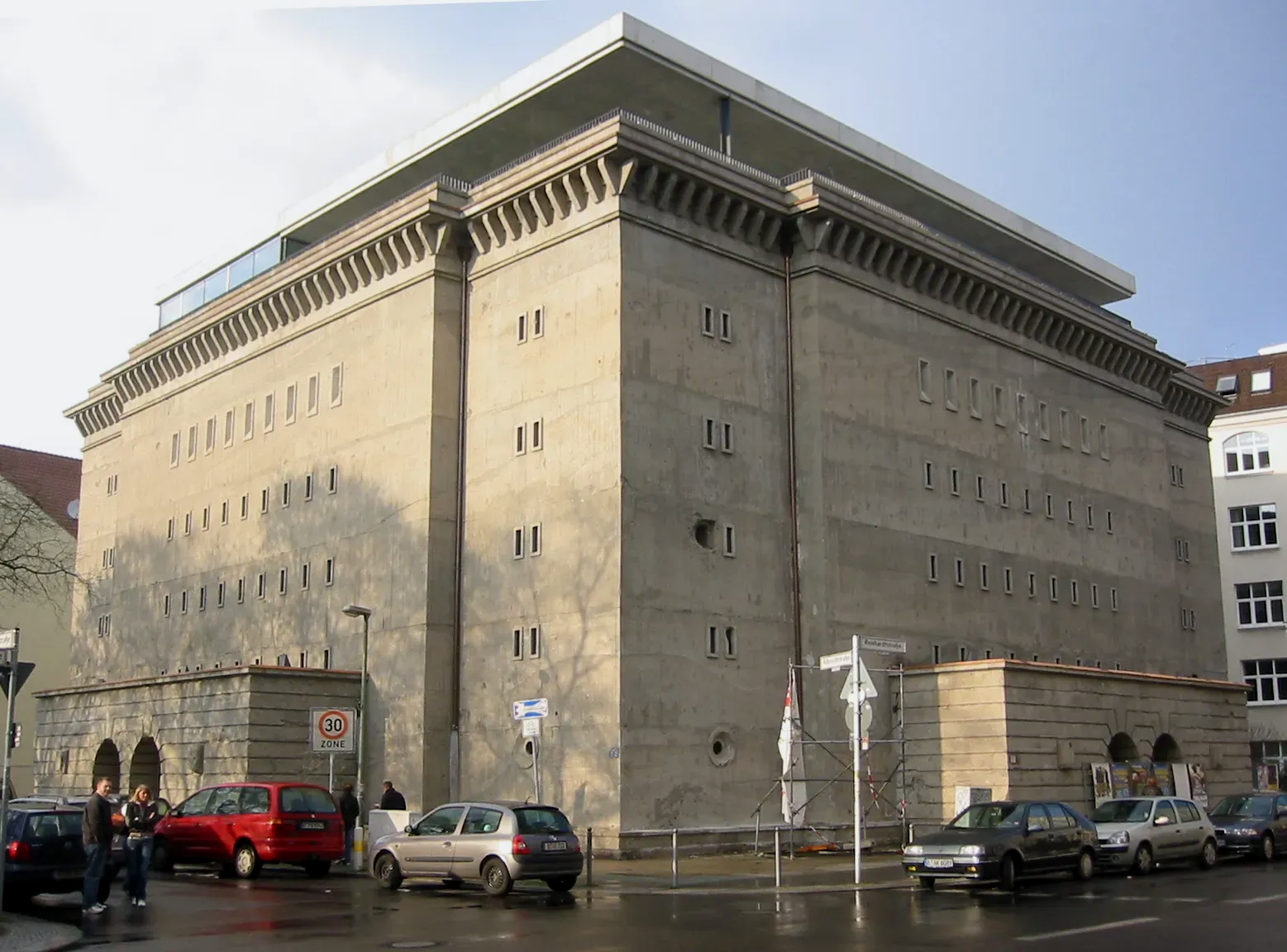
Rising with all its weight in Berlin’s bustling Mitte district, this concrete block now houses a private art collection under the name Sammlung Boros. Once you enter the bunker, encased in massive concrete walls nearly two meters thick, absolutely no light, wind, or vibration from the city can seep in. The silence experienced here is not peaceful or organic like in other spaces; it is a highly severe, introverted, and authoritarian silence. As the most brutal manifestation of architecture rejecting the external world, the Boros Bunker serves as a sensory reset point designed for minds desperate to "unplug" from the modern era.
Building Your Own Sanctuary
Architecture is mostly designed to cross boundaries and connect with the outside world. Massive glass facades, open-plan offices, and vast plazas sell an illusion of constant interaction. Yet, the 7 examples above force us to confront the reality that human psychology occasionally requires an absolute disconnect.
When we begin to measure the quality of a space not merely by what it lets in, but by what it manages to keep out, our relationship with our cities will fundamentally change.
The next time you find yourself stuck in the suffocating traffic of a metropolis, ask yourself this question: How much of the outside world's noise can your own mental architecture keep out?
— Related Reading: Hostile Architecture and the Hijacking of Public Space