The Luxury of Being Unreachable: Is Silence the New Status Symbol or Just Another Trend?
In an era where digital visibility is a rule for social survival, constant connection leaves us chronically depleted. The ultimate luxury of the modern world is no longer about proving your presence—it is the absolute, quiet sovereignty of being completely unreachable.
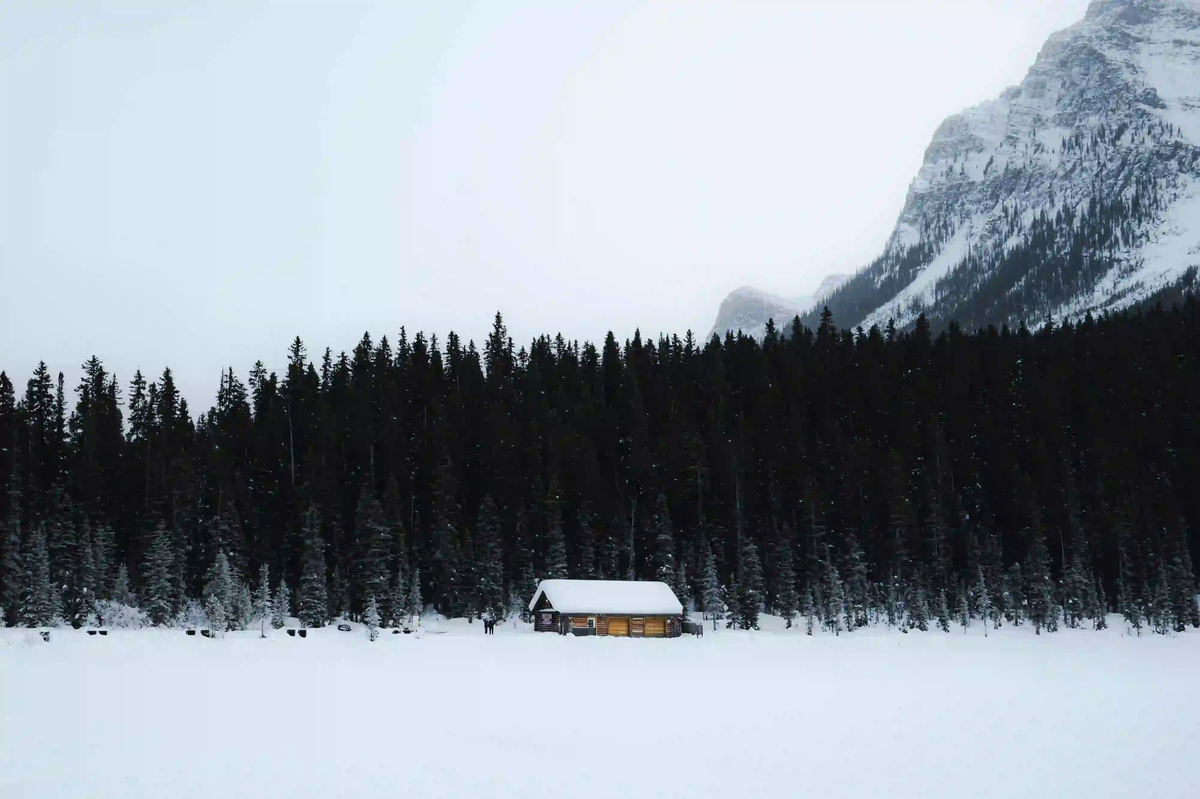
A wooden cabin buried beneath the snow, miles away from the nearest trace of civilization. On a heavy oak table lies a smartphone placed face down, its screen entirely dark, resting beside a thick, leather-bound book waiting to be opened. This silent tableau—devoid of the urgency to reply to messages, free from the anxiety of keeping up with a relentless news cycle—encapsulates the rarest and most expensive luxury of the modern world: the state of being completely unreachable.
We live in a hyper-connected era where remaining online and visible has practically transformed into a rule for social survival. We have spent the better part of the last decade navigating a relentless collective anxiety that entered our cultural lexicon as FOMO (Fear of Missing Out). For years, the ultimate indicators of belonging and social status were defined by our presence at the epicenter of the zeitgeist. Checking in at the newest, highly anticipated restaurant, broadcasting stories from the year’s most exclusive music festival, or securing that iconic, heavily filtered photograph on the Amalfi Coast were the modern equivalents of planting a flag. However, this insatiable desire for visibility has not only turned the globe into a massive amusement park for conspicuous consumption but has also steadily colonized the human mind, leaving us chronically depleted.
Today, the profound digital fatigue born from being perpetually accessible and compulsively following the crowds is giving way to a new sociological paradigm: JOMO, or the Joy of Missing Out.
Thorstein Veblen and the Evolution of Conspicuous Consumption
At first glance, the concept of JOMO appears to be a modern, mindful rebellion against technology and the attention economy. In reality, it represents the latest chapter in the long, historical evolution of status-seeking behavior. To truly understand the roots of this shift, we must look backward—more than a century into the past, to the year 1899.
In his groundbreaking work, The Theory of the Leisure Class, the American sociologist and economist Thorstein Veblen examined how individuals display their material wealth to establish and signal their place within the social hierarchy. Veblen argued that the ultimate indicator of immense wealth and high social standing was the ability to avoid physical, productive labor. According to his observations, dedicating one's time to entirely "unproductive" pursuits—such as the study of philosophy, the patronage of the arts, embarking on prolonged travel, or mastering complex social etiquette—was the highest mark of prestige. He termed this behavior "conspicuous leisure."
However, Veblen made a critical observation regarding the era following the Industrial Revolution. In large, modern, industrialized societies where populations boomed and people no longer knew each other personally, it became increasingly difficult for strangers to observe one's "conspicuous leisure" or idleness. In this process of urban anonymization, "conspicuous consumption"—the flaunting of expensive garments, sprawling estates, and material goods—usurped leisure to become the primary symbol of status.
When Veblen’s foundational theory is adapted to the digital landscape of the 21st century, a striking parallel emerges. Mass production drove down the cost of material goods; commercial aviation made global travel accessible; and social media democratized broadcasting, transforming everyone into a publisher. Consequently, the experiences that were once deemed elite have become thoroughly egalitarian.
We now inhabit an era where virtually anyone can go anywhere, and experiences are broadcasted to an audience of strangers in a matter of seconds. In a world where hundreds of tourists stand in a queue for the exact same photograph at a temple in Kyoto or a scenic overlook in the Swiss Alps, merely being present at these locations no longer conveys exclusivity or privilege.
At the precise moment when material possessions and popular travel destinations morphed into loud, ubiquitous, and ordinary indicators of status, the modern elite shifted their markers of prestige to an abstract realm that is infinitely harder to replicate: the sovereignty of attention and digital unreachability. Those "dead hours"—when you are entirely offline, completely inaccessible to your employer, your social circle, and the cultural discourse—have emerged as the modern era's definition of true wealth.
The JOMO Paradox: When the Anti-Trend Becomes the Trend
Yet, it is exactly at this intersection that the inescapable human need for validation intervenes, giving rise to a massive sociological paradox.
Silence, solitude, and unreachability instantly lose their essence the moment they are placed in the digital storefront, much like a designer handbag or an exotic vacation. Hastily uploading aesthetic photos of a digital detox retreat, writing lengthy, performative captions about "spending the weekend without a phone," or geo-tagging a hyper-isolated, undiscovered sanctuary—all of these actions strip JOMO of its inherent peace. Instead, they weaponize it, transforming the pursuit of inner quiet into a performance-driven display of modern elitism.
Furthermore, as the masses begin chasing this highly curated "hidden elitism," those undiscovered alpine cabins and secret coastal coves are rapidly gentrified, turning into the exact crowded consumption hubs they were meant to escape.
This phenomenon has sparked discussions in academic and editorial circles regarding a dangerous new behavioral loop: JOMO-induced FOMO. Fleeing from places simply because they are popular does not mean you are acting on your own sovereign will; it merely proves that your decisions are still being entirely dictated by trends—only in reverse.
Erasing the Crowd from the Decision-Making Process
Where, then, does authentic freedom begin, far removed from the exhausting theater of fake status games?
If you are sitting in a silent mountain cabin, staring into the hearth, while a corner of your mind is busy calculating how sophisticated your taste will appear once you share this isolated moment with your followers—that isn't JOMO. Genuine JOMO should not be a sense of lack because you missed out on the world; it must be the profound, quiet delight of existing entirely outside of that deafening noise. The moment this delight requires external proof to feel real, it evaporates.
To truly travel, to fully immerse oneself in an experience, or to plan a genuine retreat does not mean harboring a pretentious disdain for popular destinations. True refuge and personal sovereignty begin by completely erasing the concepts of "the masses," "pop culture," or "appearing elite" from your internal decision-making mechanism.
Freedom lies in transcending the binary dilemma of either blindly following trends or aggressively rejecting them just to appear sophisticated. If, in a given moment, your truest desire is to sit for hours eating gelato in front of the Trevi Fountain—arguably the most crowded, tourist-heavy square in Rome—doing so without caring in the slightest about how it is perceived is an act of freedom. Conversely, if your soul demands days of isolation under the snow without seeing a single human face, choosing that is equally free. The value of an experience is not measured by its virality on social media, its mainstream popularity, or its obscure exclusivity; it is measured exclusively by how deeply your mind inhabits the present moment while you are there.
Social media algorithms act as a colossal, manipulative storefront, continuously dictating where we should be, or increasingly, where we should not be. But the true essence of Old World luxury begins only when you choose an experience not to prove a point to an audience, but simply to live it.
Pause for a moment. Imagine silencing the relentless digital noise that surrounds you. Picture turning your phone off entirely, safe in the knowledge that absolutely no one in the world will ever witness your personal choices. If you were entirely free from the obligation to conform to a trend, and equally free from the pressure to reject one to appear elite... Where exactly would you want to be right now, and what would you be doing?
— Related Reading: Is Withholding a Location Selfish, or a New Conservation Instinct?