Between Taking Root and Being Erased: Suat Öğüt's Anatomy of Belonging
A Gaza farmer clearing rocks from a struggling olive tree uncovered a 1,500-year-old Byzantine mosaic. This clash between ancient cultural heritage and new organic life inspired Suat Öğüt’s Anatomy of Belonging, a site-specific artwork reflecting on diaspora, displacement and taking root.

In 2022, a farmer in the Bureij area of central Gaza began digging around his struggling olive tree, hoping to clear away the rocks he believed were disturbing its roots. His son struck something hard beneath the soil. As they cleared away the dirt, vivid colors began to emerge. It was a Byzantine mosaic, estimated to be around 1,500 years old, decorated with colorful depictions of animals, including flamingos and birds of prey, alongside leafy vines and fruit. A remnant of the past had emerged from the very ground where new roots were struggling to take hold.
This unexpected encounter between cultural heritage and new growth became the starting point for artist Suat Öğüt's Anatomy of Belonging. Presented as a site-specific installation at the 2026 PaltzBiënnale in Soest, the Netherlands, the work shifts attention from what is visible above ground to the hidden systems beneath it.
Produced in collaboration with Syrian mosaic artisan Abdurrahman Hamid, the two-by-two-meter mosaic was made from natural stone using traditional techniques. Its design combines olive roots and fungal networks, and the work is embedded directly in the soil beside a fallen tree with its roots exposed.
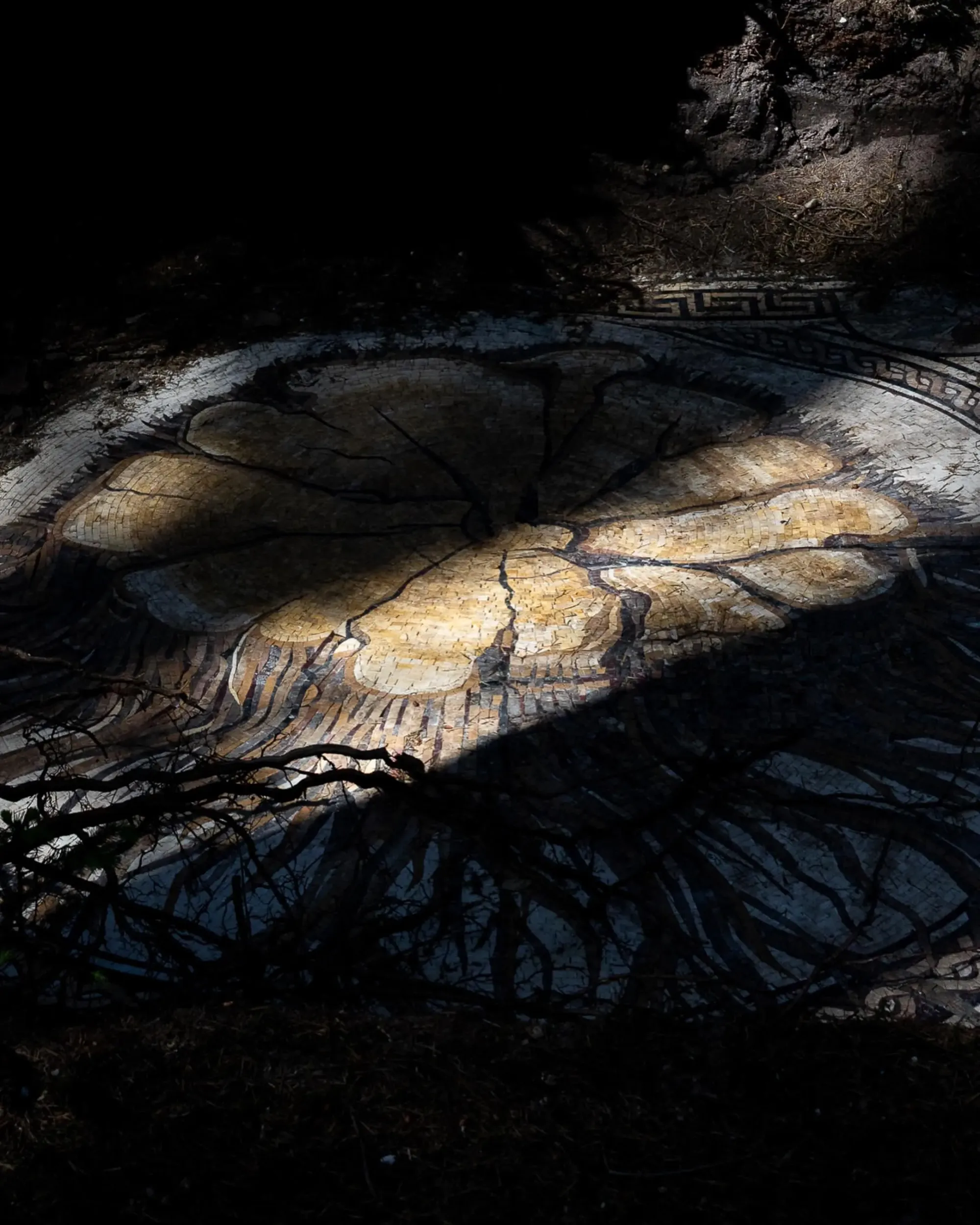
At the heart of the mosaic's design is the olive tree, a species deeply rooted in Mediterranean landscapes and cultural memory. Here, it becomes a symbol of displacement, attempting to take root in unfamiliar soil. Its roots and fungal networks evoke diasporic existence: lives shaped by their origins, yet continually adapting and forming connections in new environments.
Much of Öğüt's installation remains hidden beneath the surface. The original Al-Bureij mosaic was also temporarily covered after heavy rains flooded its excavation pits in November 2022. The exposed sections were cleaned, covered with geotextile, and protected with sandbags. UNESCO later listed the site among Gaza's damaged cultural heritage sites in its March 2026 assessment. Through this parallel, the artwork's imagery suggests that belonging is not simply about where we come from, but how we maintain connections while adapting to unfamiliar places.
What does it take to put down roots when history lies just beneath the surface?
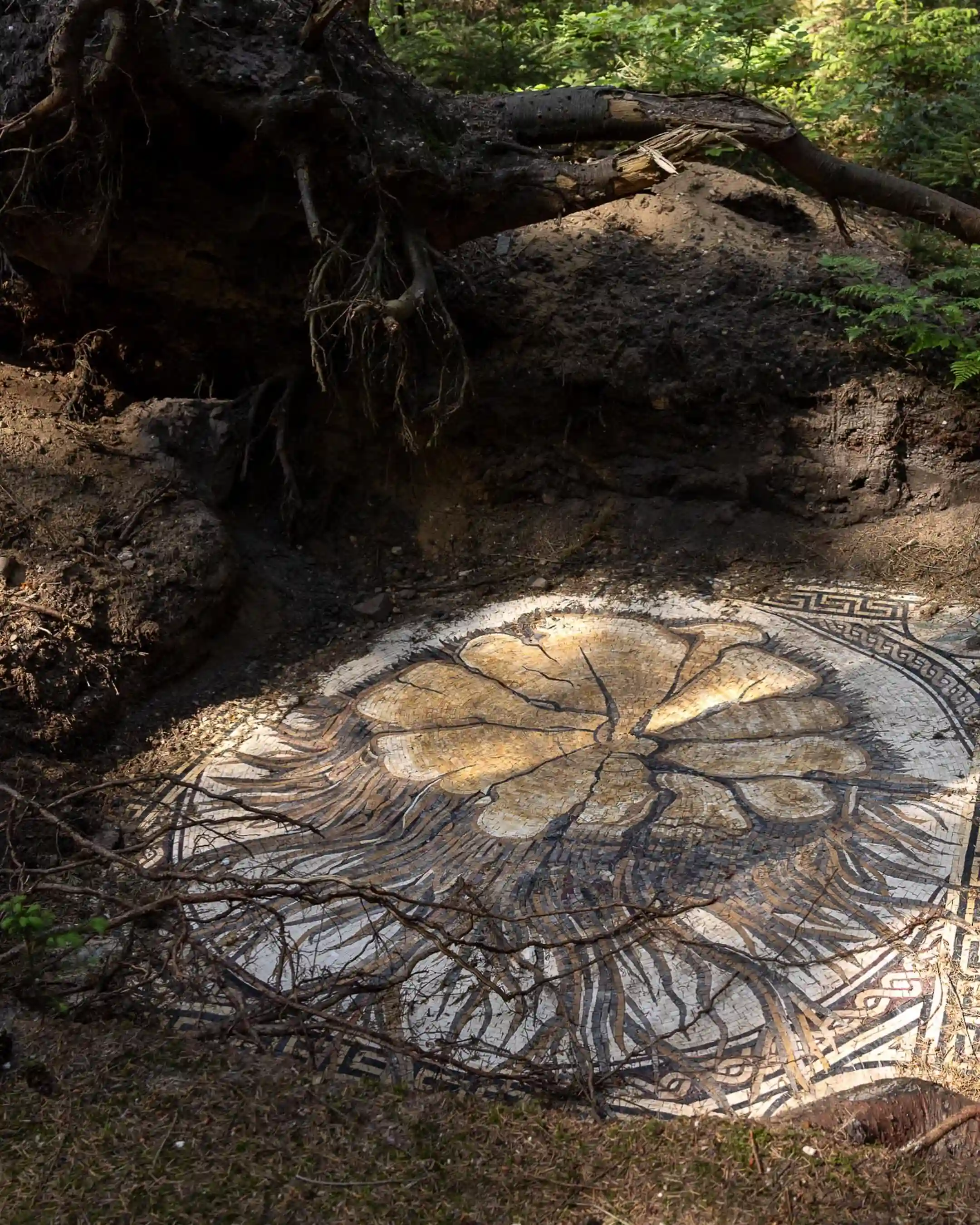
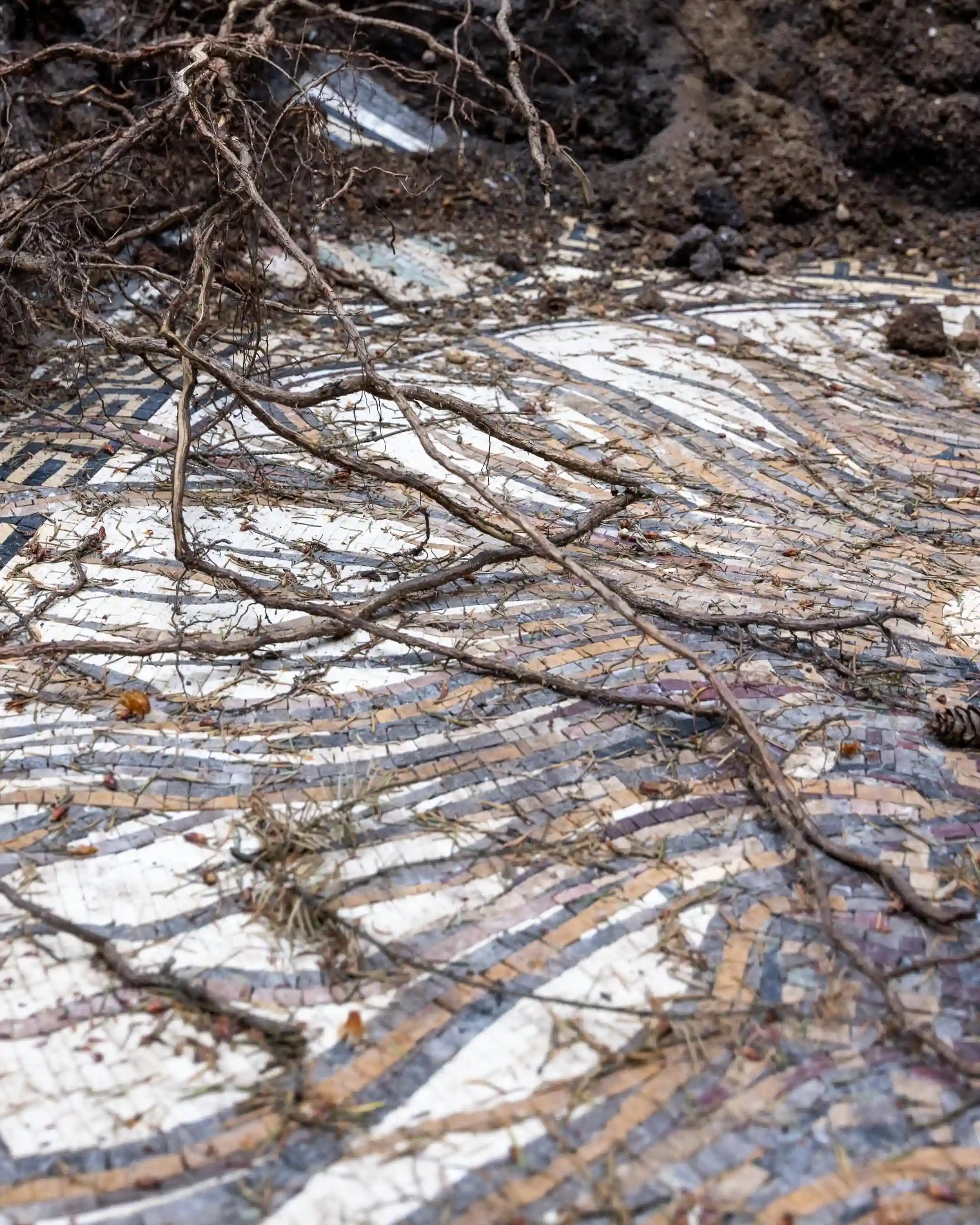
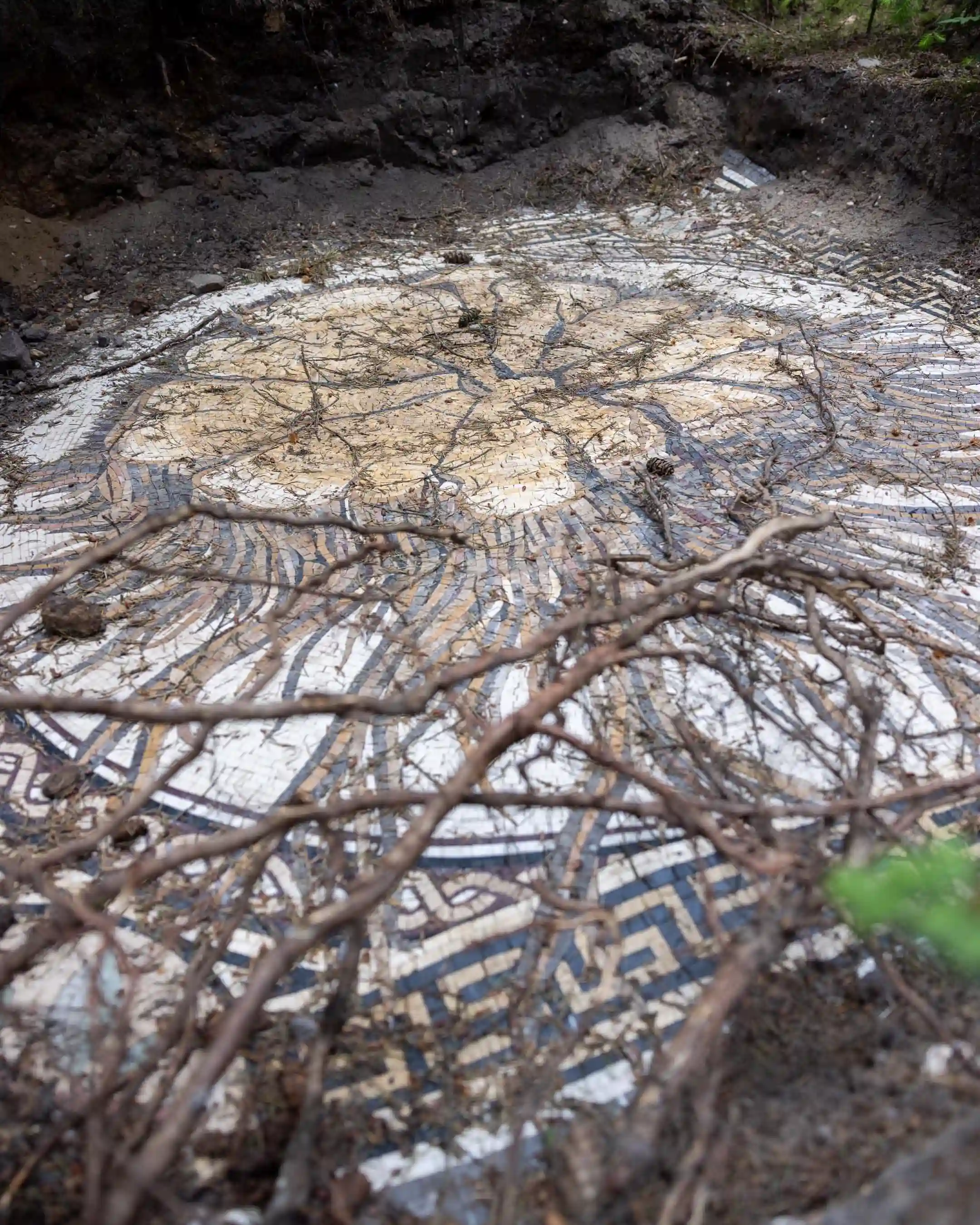
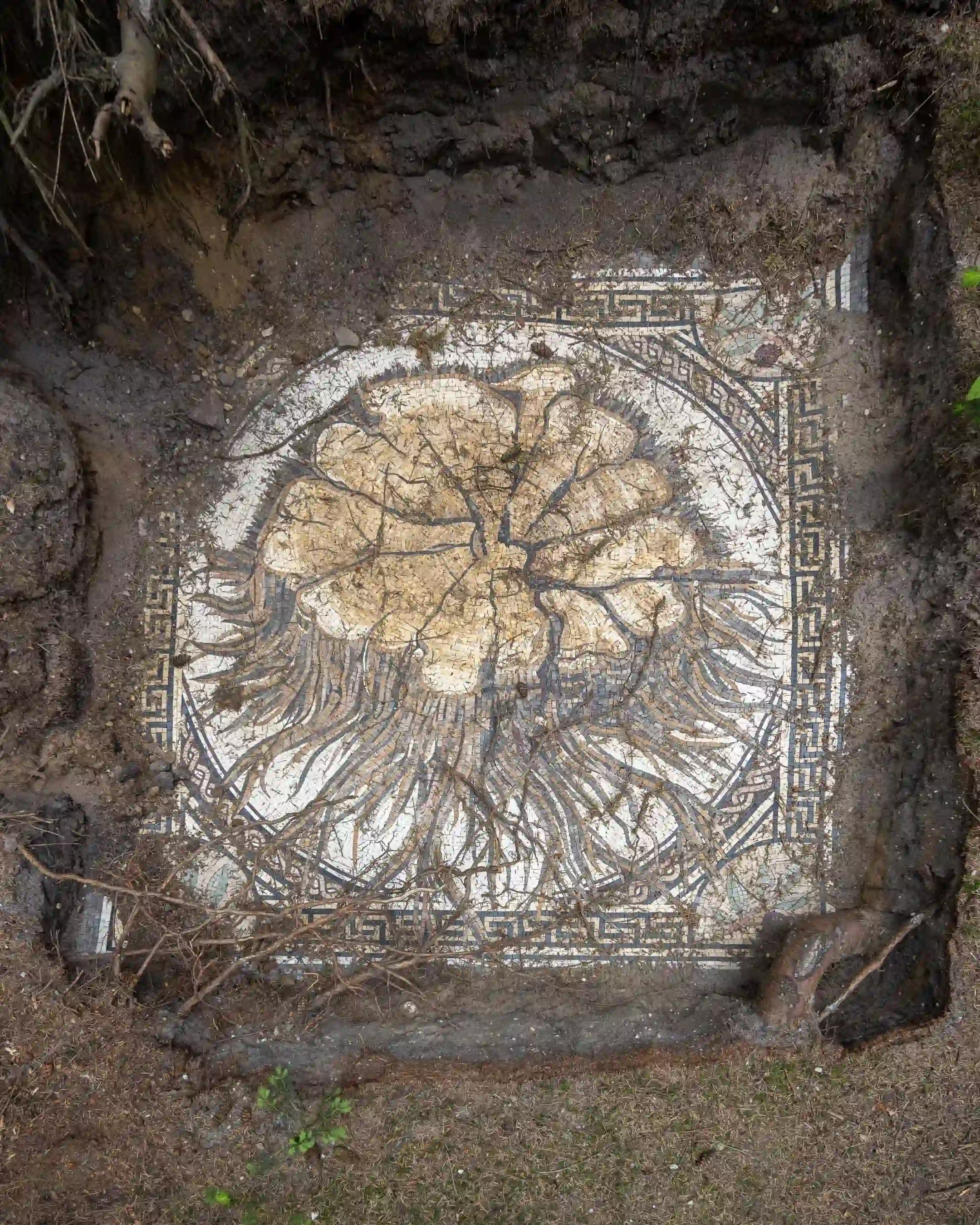
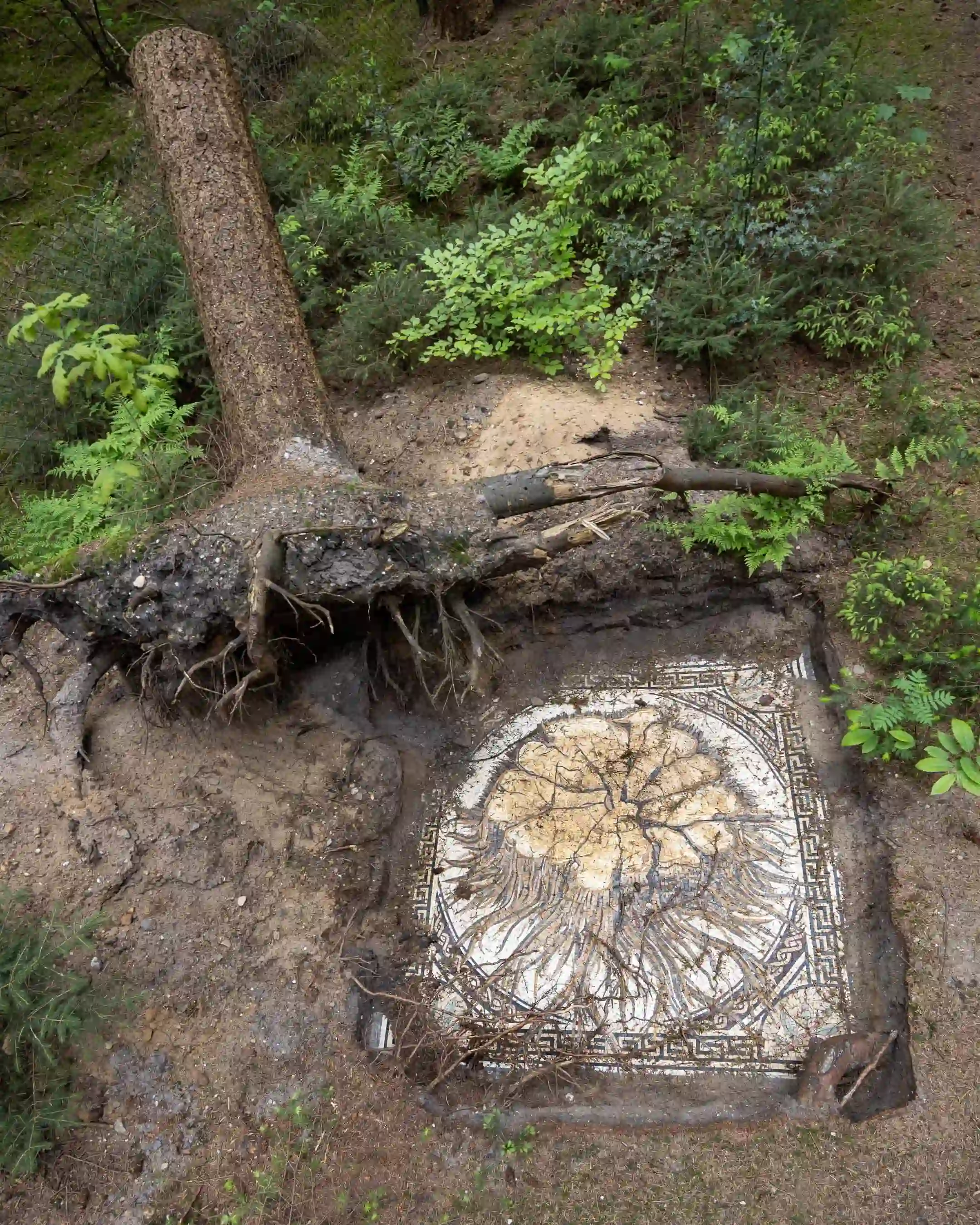
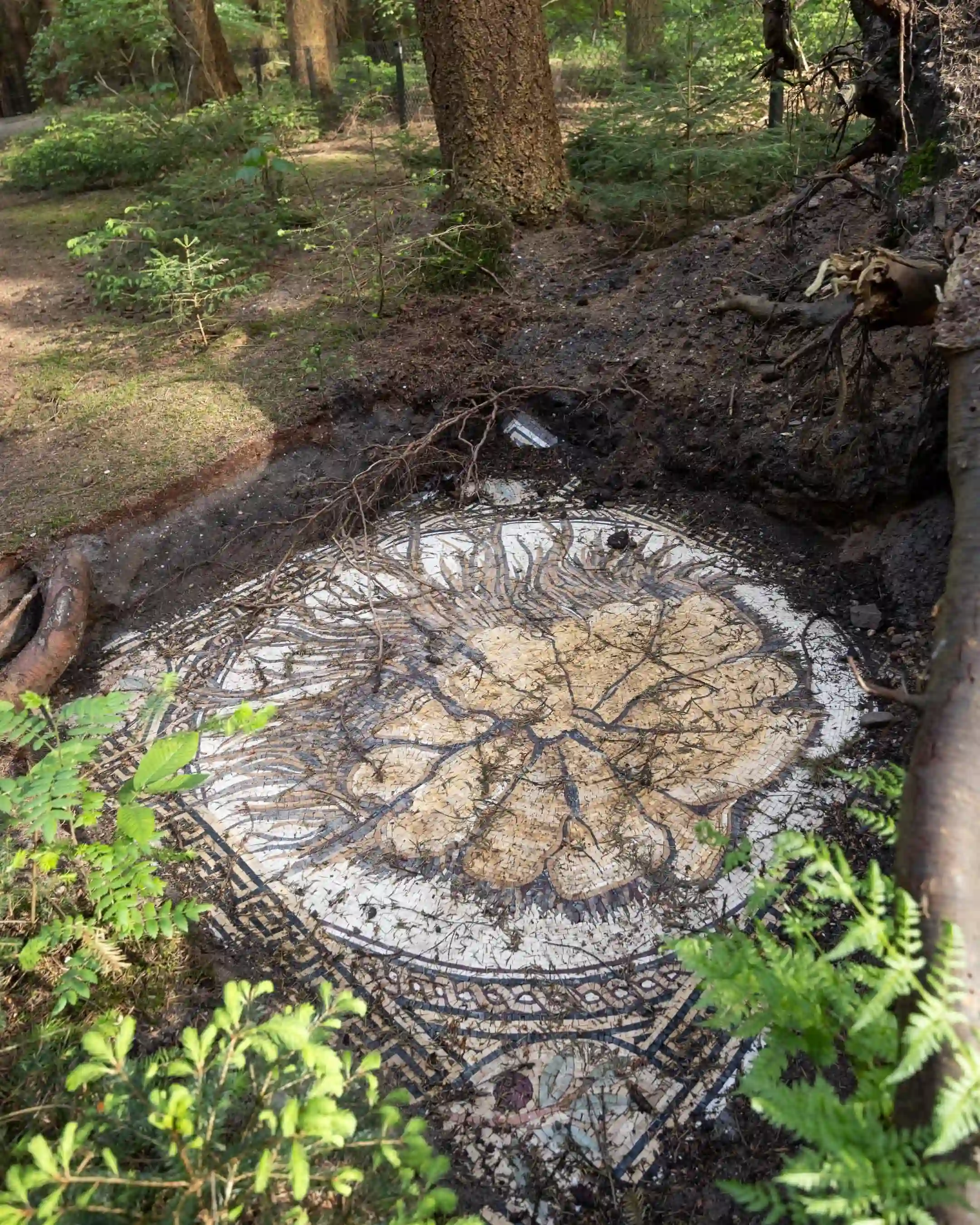
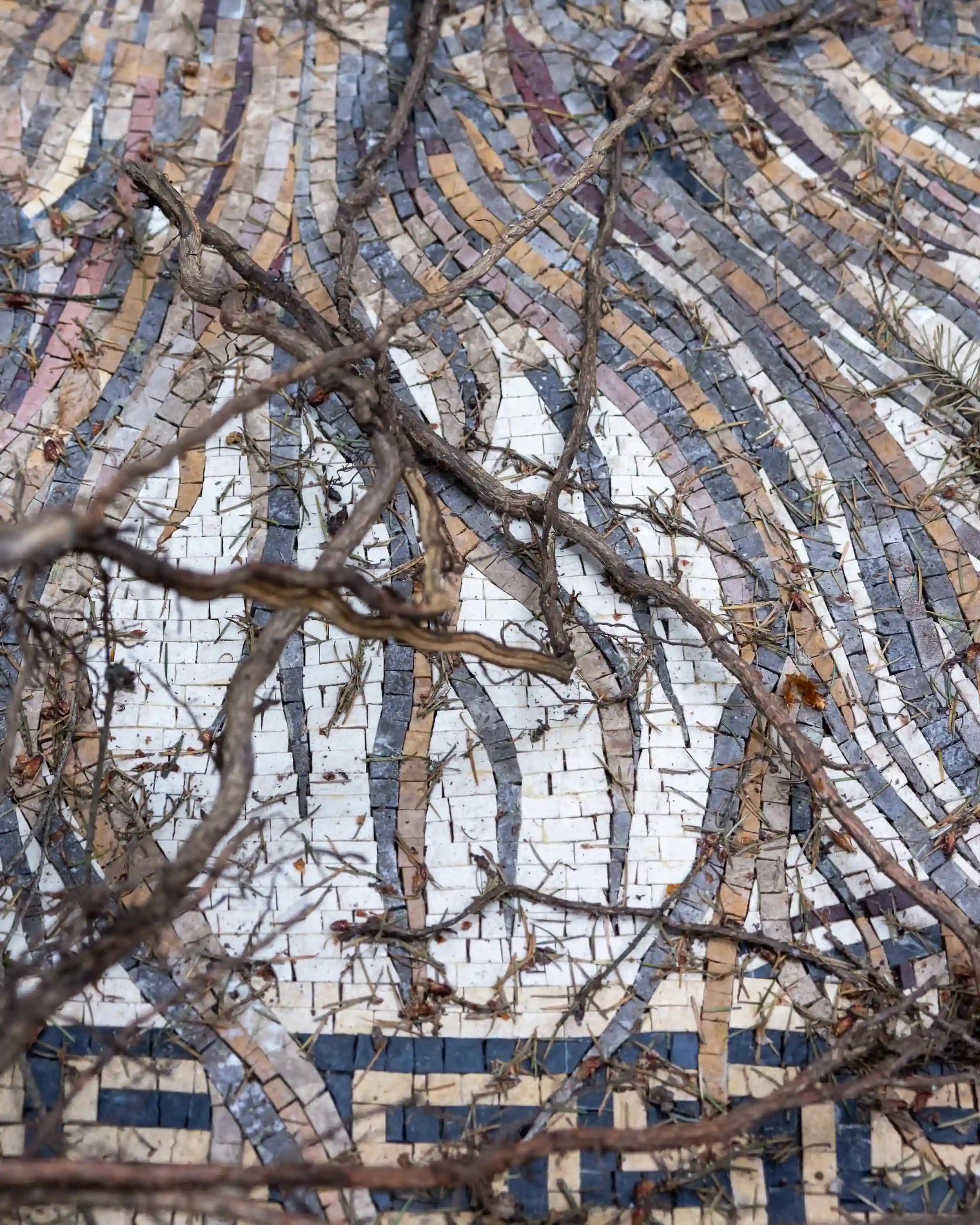
Installation views and details of Suat Öğüt’s "Anatomy of Belonging" (2026). Photographs by Robin Meyer.