War's Underwater Toll: Why Are Marine Mammals Dying in the Black Sea?
A childhood encounter with a stranded dolphin opens a wider investigation into marine mammal deaths in the Black Sea. As Russia's war continues, scientists are weighing underwater noise, industrial pollution, food shortages and the limits of what can be counted.
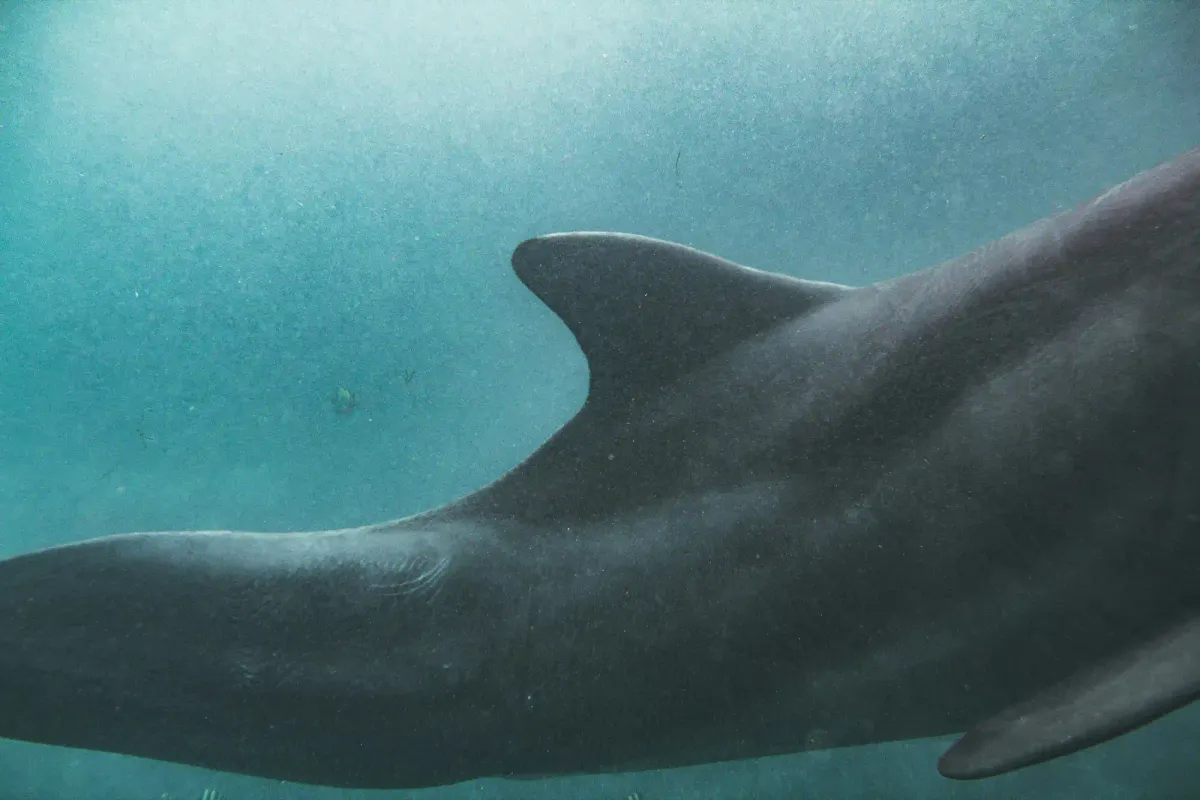
Growing up in Samsun, I always found the Black Sea mysterious. But it was a stranded dolphin that first showed me just how fragile the sea could be.
The dolphin was much bigger than I was. Even today, I remember touching its smooth skin and the sound it made as it breathed. I tried repeatedly to guide it back into the water. Each time, it returned to the shore. We eventually called Greenpeace. When I went back to the beach the next day, the dolphin was gone. I never found out if it survived.
Years later, while researching the mass deaths of marine mammals in the Black Sea, I found myself thinking about that day again. Dolphins perceive their environment not just by sight, but through the echoes of the sounds they emit. This system, known as echolocation, plays a crucial role in hunting and navigation. But since the start of Russia's large-scale invasion in 2022, explosions, military sonar, and mounting chemical pollution have created new pressures for marine mammals.
The dead marine mammals washing up on Ukrainian shores are one of the most visible signs of this crisis. Scientists, however, point out that there is no single cause behind the fatalities. Underwater noise, acoustic trauma, dwindling food sources, fishing nets, and chemical pollutants create a range of overlapping risks.
Washed Ashore and the Uncertainty of Numbers
The records of Dr. Ivan Rusev, Head of Research at the Tuzly Lagoons National Nature Park, show the scale of the strandings. According to a July 28, 2026 field report by the Ukrainian environmental organization Environment-People-Law (EPL), 40 dead marine mammals were found along a 39-kilometer stretch of the national park's coast between June 5 and 6. Thirty-seven of these were harbor porpoises, two were bottlenose dolphins, and one was a common dolphin. In a separate account of strandings that June, Rusev reported that some carcasses were already more than a month old when they washed ashore. Many were in different stages of decomposition, while some showed signs of severe emaciation and depleted fat reserves.
Determining the total number of deaths across the entire basin remains extremely difficult. In 2022, Rusev made a calculation based on approximately 2,500 dead marine mammals found along the coasts of Ukraine, Bulgaria, and Romania. Using the assumption that only five percent of dead animals actually wash ashore, this projection suggested that at least 50,000 animals may have died during the first year of the invasion. In a more recent assessment given to Al Jazeera in October 2026, Rusev stated that the total number of dead marine mammals since the onset of the war might have exceeded 120,000. Yet, the exact methodology behind this 120,000 figure has not been published in detail and lacks independent scientific verification.
Underwater Noise, Starvation, and Stored Pollutants
Experts investigating the mechanisms behind the deaths agree that the problem is multidimensional. Dr. Pavlo Goldin, a marine mammal specialist at the Schmalhausen Institute of Zoology of the National Academy of Sciences of Ukraine, emphasizes that it is impossible to attribute the fatalities in the Black Sea to a single cause. According to Goldin, infections, injuries from sonar and mine explosions, chemical pollutants, stress, and depleting food sources must all be evaluated together.
High-intensity sounds from military sonar and underwater explosions can interfere with marine mammals' hearing and echolocation, potentially affecting their ability to navigate, communicate, and hunt. Determining the exact role of acoustic trauma in every fatality, however, requires tissue samples and comprehensive laboratory analysis.

One of the hypotheses put forward by Rusev is that animals may be re-exposed to pollutants accumulated in their own bodies during periods of starvation. If underwater noise disrupts an animal's ability to hunt, reduced food intake could force it to rely more heavily on its fat reserves. Certain persistent organic pollutants accumulate within this blubber. When the fat reserves are broken down, a portion of these substances can re-enter the bloodstream. Studies on other marine mammals support this biological mechanism. However, the extent to which this process drives the current war-related mortality in the Black Sea has not been directly proven.
Industrial Pollution and the Future of the Black Sea
Another potential threat to marine mammals comes from pollution associated with war-damaged industrial facilities. According to the Conflict and Environment Observatory (CEOBS), strikes on heavy industrial facilities could release hazardous pollutants into the environment. For example, Petro Andriushchenko, an adviser to the mayor of Mariupol, stated in a May 19, 2022 announcement that the Azovstal steel plant had been hit by a total of 714 tons of TNT equivalent in aerial bombs over a single month. CEOBS reports document damage to the plant's blast furnaces, coke production areas, electrical substations, and wastewater treatment facilities. There is a distinct risk that lead, arsenic, and hydrocarbons from the facility's historical pollution load could spread into the soil and the waters of the Sea of Azov.
The pressures of the war are not confined to northern waters. In a 2022 interview with BNR Burgas, Dimitar Popov of the Bulgarian organization Green Balkans pointed out that increased underwater noise may have driven some marine mammals toward quieter southern regions. Such displacements can also increase the risk of animals becoming entangled in fishing nets in unfamiliar territories.
The loss of marine mammals could further exacerbate the challenges facing an already stressed Black Sea ecosystem. As predators, dolphins play an important role in the Black Sea's food web. Understanding the long-term impacts of these losses on fish populations and lower trophic levels will require comprehensive ecological monitoring.
International data is vital for understanding the regional ecosystem in the face of this crisis. Aerial surveys carried out over 15 days of suitable weather between June 19 and July 4, 2019, provided important pre-war baseline data covering approximately 52 percent of the Black Sea. Researchers emphasize that this data only represents a brief summer period and cannot be directly generalized to the entire basin. In 2025, ACCOBAMS adopted Resolution 9.10, calling for a roadmap toward a post-war conservation plan for Black Sea cetaceans. The resolution's annex outlines measures such as comprehensive monitoring, necropsies and tissue sample analysis, mine clearance, marine protected areas, and post-war aerial surveys.
I never learned what happened to the dolphin I found on the beach as a child. Today, reports of dead marine mammals washing ashore along the Black Sea coast bring that uncertainty back. But the question now extends far beyond the fate of one animal: what will it take to protect the wildlife of the Black Sea?
By Enes Coşkun
— Related Reading: The Ocean’s Darkest Secret: How a 40-Ton 'Whale Fall' Becomes a Century of Life