The Invisible Walls of Our Cities: Hostile Architecture and the Hijacking of Public Space
You cannot measure a city's hospitality by its skyline. The real answer lies below eye level: slanted benches, narrow shelters, and concrete spikes. Welcome to the era of hostile architecture, where public space is weaponized, and unproductive time is treated as a modern crime.
How can you tell if a city secretly hates you? When walking through a modern metropolis, judging a city's hospitality by the height of its skyline, the greenery of its parks, or the width of its boulevards is profoundly misleading. The real answer usually lies just below eye level, revealing itself the moment you slow your pace or try to pause for a brief rest. A bench you slide off because of its subtle slope, a narrow bus shelter seat that allows for nothing more than a momentary lean, or a bed of asymmetrical concrete spikes meticulously arranged under an overpass...
These pieces of urban furniture, which we pass by daily in the rush of city life, are not accidental designs. The academic and urbanist term for this engineering—which quietly steals public space from specific demographics and dictates who is allowed to exist where—is "Hostile Architecture." By stripping urban design of its public utility and transforming it into a silent weapon of exclusion, this trend is erecting invisible walls around the world's most developed cities.
The Dark Side of an Award-Winning Design: The Camden Bench
One of the most iconic, and perhaps most hypocritical, examples of hostile architecture is the "Camden Bench," a fixture on the streets of London. At first glance, this gray concrete block appears to be a modern, smooth, and minimalist piece of public art, and it has indeed been lauded with various design awards. Yet, when you examine its anatomy, it becomes glaringly obvious how architecture can be weaponized to exclude.
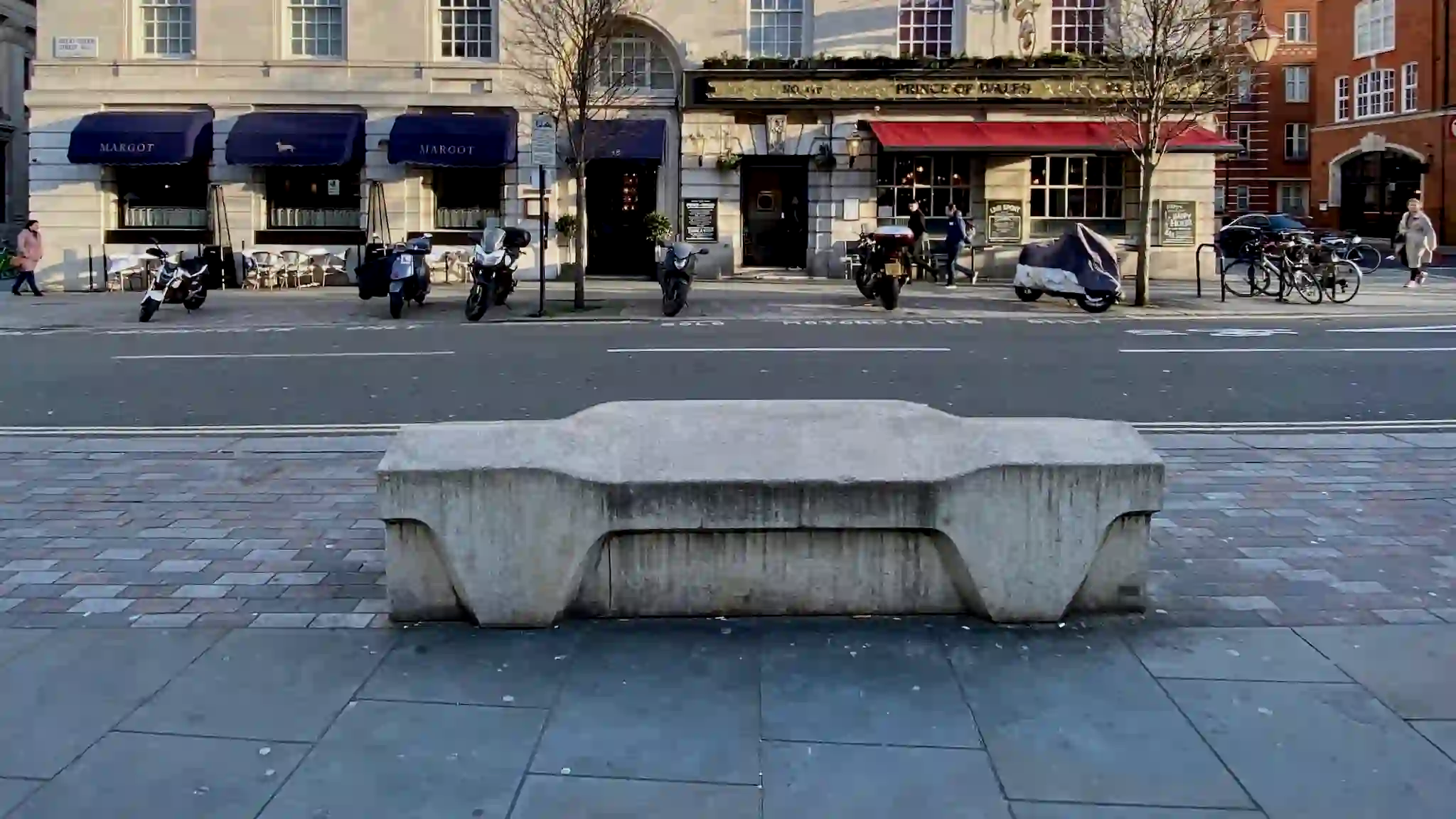
You cannot sleep on the Camden Bench because its surface is undulating and sloped. You cannot skateboard on it because it lacks rigid edges. Furthermore, you cannot store your belongings on it for any prolonged period. The specific recesses at the base are designed solely for seated users to tuck their bags behind their legs to deter theft. This detail betrays the design's true intention: while it protects the daily consumer from pickpockets, it relies on strict engineering to make it impossible for a homeless person to settle there.
Coated with a special anti-graffiti surface and completely devoid of any crevices where drugs could be hidden, this structure weighs a massive two tons. This immense weight is intentional; it allows the bench to be hoisted by a crane and used as a vehicular barrier against terrorist attacks if needed. What we are looking at is not a "seating area" where a weary pedestrian can rest, but a heavy security apparatus disguised and deployed in the public square.
Aesthetic Defense and Weaponized Awnings
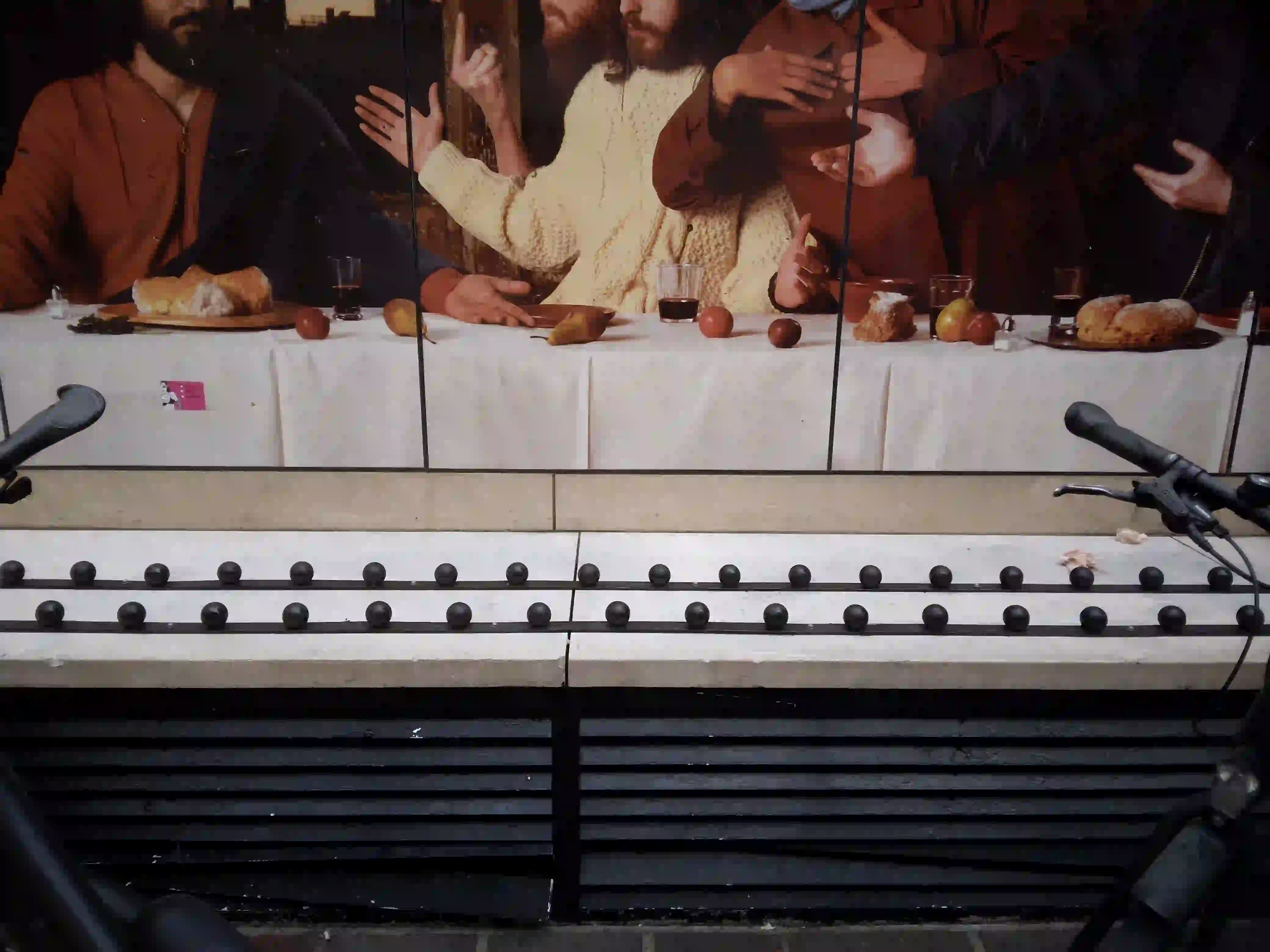
Hostile architecture is not limited to benches; it infiltrates the very fabric of the city under the guise of landscaping and aesthetics. In many major cities around the world, the concrete spikes placed in the empty spaces beneath highway viaducts or broad overpasses might initially register as modern urban landscaping. However, these asymmetrical protrusions have a singular purpose: to prevent a homeless person from laying down a piece of cardboard and finding shelter.
An even more disturbing manifestation is found in "defense" mechanisms designed around rain. In certain urban developments, strategic gaps are deliberately left in wide building awnings or canopies. The sole intent is to ensure that during a heavy downpour, water drips directly onto anyone attempting to take cover underneath. The city effectively punishes the very vulnerability and poverty it has helped create, using a direct, physical deterrent veiled as architectural design.
The Criminalization of Unproductive Time
While the practical targets of hostile architecture often appear to be the unhoused, teenagers, or street performers, the philosophical underpinnings of this design language directly target the ordinary citizen as well. A slanted bench or an uncomfortable bus shelter silently dictates the same rule to everyone living in that city day after day: "Unproductive time is a modern crime."
Capitalist urban planning fundamentally rejects the idea that public space is a free place to gather and rest. If you are not sitting in a café spending money, or walking briskly toward your workplace, you simply do not have the right to "exist" on that street for free. The design is entirely orchestrated to keep people in constant motion. The unconditional right to exist—once offered by traditional concepts of the "Agora" or the "Town Square"—has been replaced by a landscape of perpetual consumption or mandatory transit.
"City streets are no longer designed for us to rest; they are massive corridors built merely for us to walk through until we reach our next point of transaction."
Civil Resistance and the Right to Rest
However, against this ruthless architectural dialect, an organic civil resistance is growing in various corners of the globe. Lacking a formal institution or central headquarters, this scattered yet increasingly powerful backlash coalesces around the ideal of "Anti-Hostile Architecture," reclaiming the welcoming—rather than the controlling—power of public space.
One of the most concrete examples of this grassroots movement took place in 2018 in Bournemouth, England. The local council had installed metal bars across the middle of wooden public benches to prevent homeless individuals from lying down. Artist Stuart Semple noticed this intervention, photographed it, and launched an independent campaign. Faced with a civil outcry that quickly amassed over 20,000 signatures, the local council was forced to backtrack and remove the bars. The city’s residents had successfully defeated the "Go away" command embedded in the design.
In the United States, the issue has been elevated to a more structural and legal arena. Particularly in Oregon, Colorado, and California, the "Right to Rest" legislative campaign, spearheaded by the civil rights organization WRAP (Western Regional Advocacy Project), aims to make public spaces human-centric once again. The fundamental goal of this movement is to liberate the street, the park, and the sidewalk from being zones of commercial obligation, transforming them into unconditional living spaces for everyone, regardless of their housing status or economic class.

The future of our cities will not be shaped merely by building greener towers or faster transit networks. The question of who truly owns the public space remains one of the greatest sociological tests of the 21st century.
You cannot measure a city's level of civilization or development by counting its massive skyscrapers or admiring the glare of its luxury shopping avenues. True sophistication and civility are found in how long, how safely, and how freely you can sit on an ordinary street bench without having to buy a single thing. For public space to be returned to us, we must first learn to see the invisible iron bars resting right in front of us.
— Related Reading: Solastalgia: The Homesickness That Strikes Without Moving