The Moment Breath Becomes a Weapon: Wildfires and the Silent Invasion of PM 2.5 in Our Bloodstream
When a forest burns, we don't just lose trees. We absorb the microscopically fractured remnants of that forest, mixed with synthetic pollutants, into our own cells. The environmental destruction of wildfires is now triggering a silent biological collapse within human anatomy.
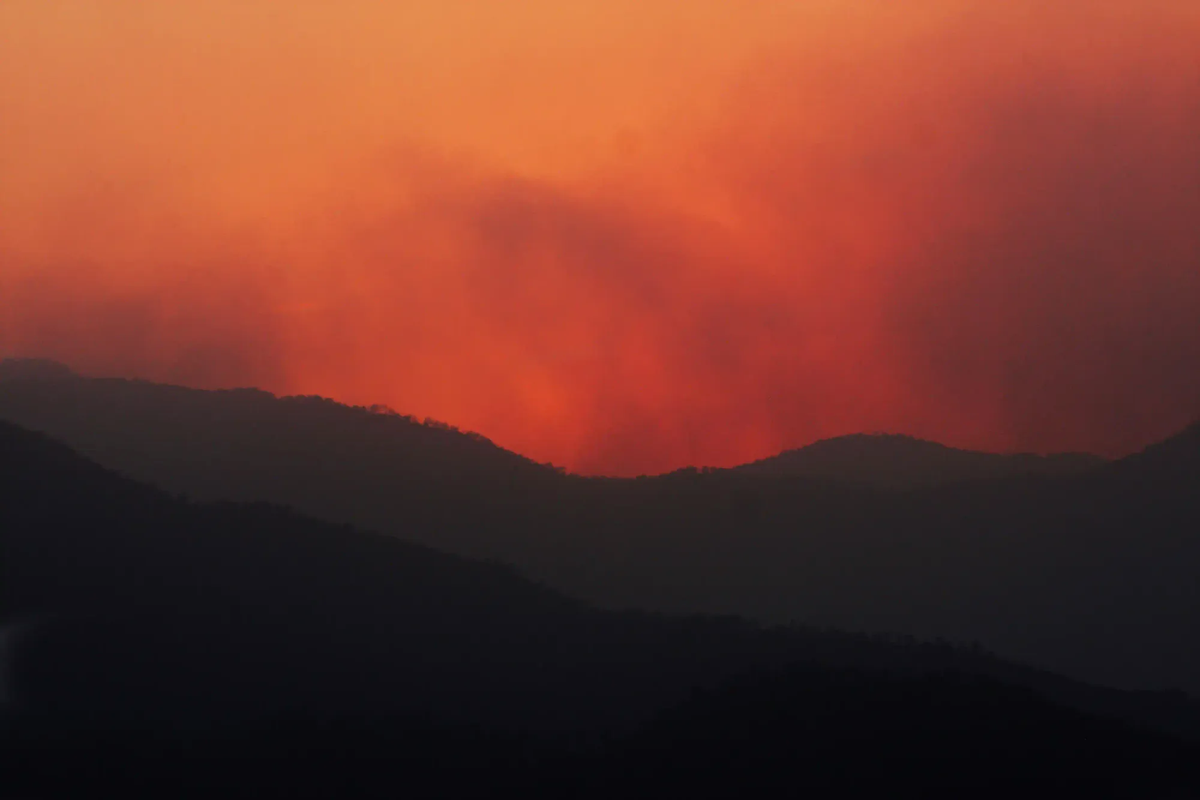
When France confronted its most devastating wildfire since World War II in July 2026, the crisis extended far beyond the 42,000 hectares of scorched earth and mass evacuations. The dense smoke rising from the devoured lands did more than just eclipse the sun or alter atmospheric chemistry; carried by invisible wind currents, it quietly infiltrated Europe’s bloodstream.
This phenomenon is triggering a cellular crisis that modern medicine and environmental science have yet to fully map. When a forest burns, we are not merely losing centuries-old trees or vital carbon sinks; we are absorbing the microscopically fractured remnants of that forest into our own cells as a toxic inheritance. Environmental destruction has ceased to be a distant geographic problem; it is now a biological collapse echoing directly within human anatomy.
The Illusion of Distance: Inhaling a Fire Miles Away
Our traditional perception of the environment harbors a profound ecological fallacy: the belief that a fire burning miles away remains a localized threat. However, the dynamics of air pollution operate on a physics that renders geographical borders and distances entirely meaningless.
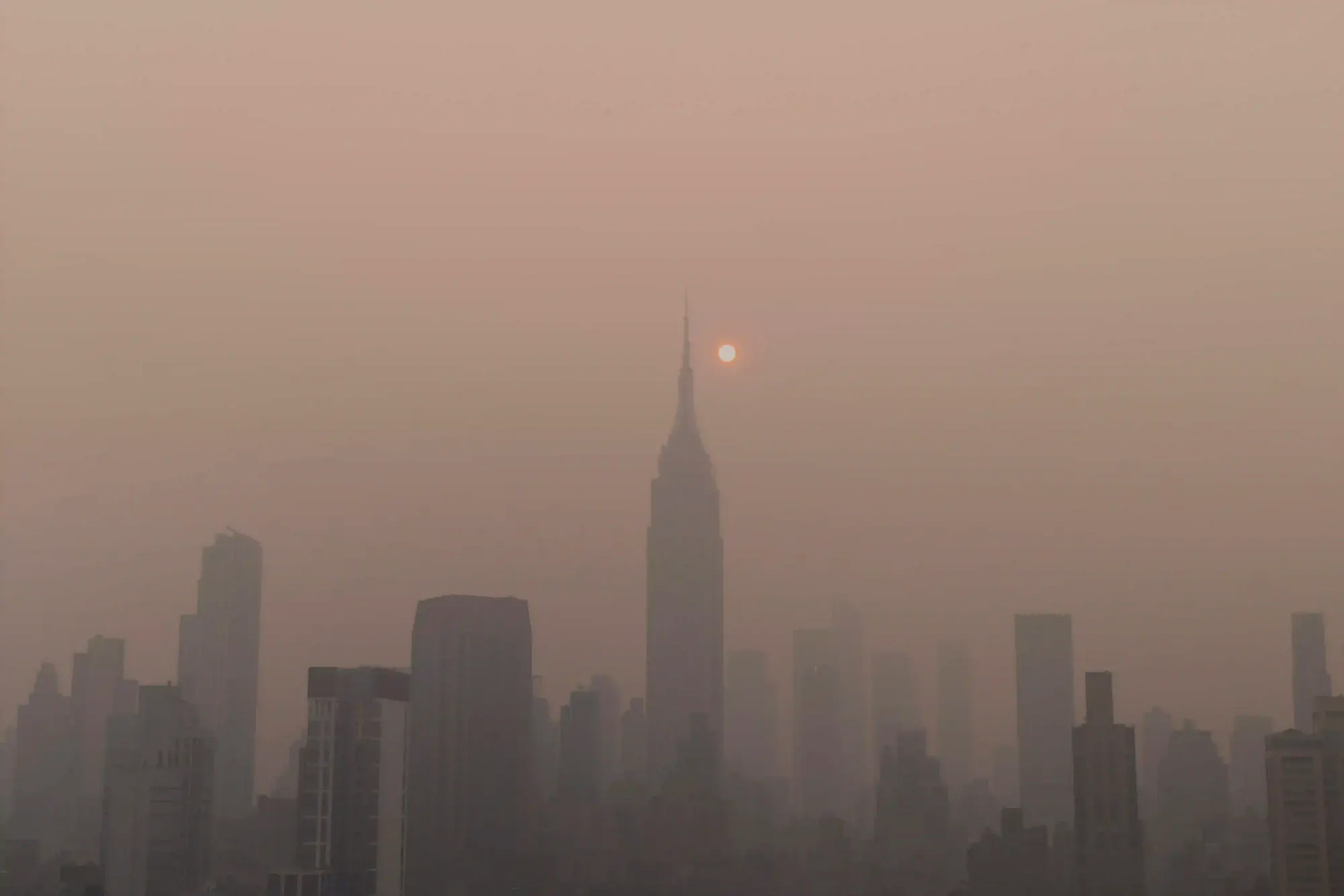
In late July 2026, as fine particulate matter (PM 2.5) levels in Bordeaux—the epicenter of the flames—surged to five times the European Union’s daily limit, the city of Limoges, located 200 kilometers away, recorded a staggering 400 μg/m³. These figures prove with mathematical certainty that retreating from the flames is no longer enough to escape their reach. The true threat lies in the invisibility of these microscopic particles, which obliterate the concept of distance and ride wind currents across continents. The air breathed in a downtown office or a sealed living room can now easily harbor the charred bark of a pine forest burning hundreds of miles away.
A Biological Dead End: The Enemy the Body Cannot Destroy
To fully grasp the impact of wildfire smoke on human health, one must examine the threat through a microscopic lens. Measuring roughly 30 times smaller than a single strand of human hair, PM 2.5 (particles 2.5 microns or less in diameter) is fine enough to bypass the respiratory system’s natural filtration mechanisms entirely.
When inhaled, these particles are not trapped by nasal hairs or the mucous membranes in the throat. Instead, they travel straight down the trachea, reaching the deepest barriers of the lungs—the microscopic air sacs, or alveoli, where the exchange of oxygen and carbon dioxide occurs. The body instantly deploys its defense mechanism against these foreign invaders, releasing immune cells known as macrophages. Their job is to engulf and destroy the intruders.
Yet, our biological system hits a massive dead end here: while our immune cells possess the enzymatic hardware to break down a virus, a bacterium, or an organic pathogen, they cannot biologically dismantle the remnants of incinerated plastics, heavy metals, and charred wood fibers.
"Every particle the body fails to destroy keeps the immune system in a perpetual state of alarm. As macrophages wage an endless war against substances they cannot break down, they release chemicals that damage surrounding tissues. This creates not just an acute reaction, but a chronic, systemic inflammation that slowly consumes the body from within."
Systemic Devastation: From the Lungs to the Bloodstream
For decades, the medical community operated under the assumption that wildfire smoke merely exacerbated chronic respiratory conditions like asthma or COPD. Today, modern environmental health science paints a much darker picture.
The ultrafine particles accumulating in the alveoli possess the capacity to pierce the cellular barrier between the lungs and the capillaries, leaking directly into the bloodstream. Once these toxic agents enter the blood, they are no longer just a pulmonary issue; they become a critical threat to the kidneys, liver, heart, and brain.
Groundbreaking research published in The Lancet Planetary Health proves that current air pollution models underestimate wildfire-related mortality risks by a staggering 93%. Statistical models traditionally account for direct asphyxiation or acute asthma attacks linked to smoke exposure. However, they frequently fail to connect fires with the sudden heart attacks caused when PM 2.5 destabilizes arterial plaque, or the strokes triggered by disrupted cerebral blood flow. In reality, modern wildfires operate as the invisible architects of systemic cardiovascular collapse.
The New Poison of the Anthropocene: Synthetic Smoke
The very nature of wildfires has undergone a radical transformation in the Anthropocene epoch. What mingles into the atmosphere today is no longer just burning oak, pine, or organic vegetation.
As climate-driven blazes spread into cities, suburbs, and industrial zones, they incinerate home insulation, lithium-ion batteries, synthetic paints, polyurethane foams, and tons of plastics. Thousands of synthetic compounds—many of which laboratories have yet to fully identify or understand how they react at high temperatures—are released into the atmosphere as a massive toxic cocktail. This new "synthetic wildfire smoke" contains carcinogenic and mutagenic substances far more lethal than traditional wood smoke. When the modern materials we built by destroying nature meet the flames, they transform our most fundamental need—breath—into a perfect biological weapon working directly against us.
A Silent Eradication: The Invisible Victims
As the World Health Organization (WHO) reveals a 57% surge in European wildfires over the last four years, a colossal ethical and biological blindness lies beyond the human dimension of this ecological crisis.
When the Air Quality Index (AQI) hits "hazardous" levels, we retreat behind closed doors, seal our windows, and engineer sterile microclimates with high-tech HEPA purifiers. But what about the biological reality outside?
Wildlife—birds, mammals, insect populations, and entire ecosystems—has no shelter to run to, no air filters, and no N95 masks. They are condemned to inhale these toxic clouds for days in their densest, most unfiltered form. What goes down in our statistics as a "public health and infrastructure crisis" is, for the original inhabitants of the ecosystem, a slow, silent, and inevitable eradication. This quiet massacre within nature often vanishes into the footnotes of climate reports.

Amidst this cellular devastation, synthetic smoke, and ecological inequality, humanity must ask itself one final question—one whose answer will determine the future of the planet:
While we believe we are merely watching the destruction of nature through digital screens from the safety of our insulated homes, could we actually be paying the heaviest price for that destruction—alongside every other living creature—right inside our own cells, with every single breath we take?
— Related Reading: 7 Silent Ecological Revolutions Saving the Planet