The Museum That Bent Its Architecture to the Will of a River
We usually build sterile concrete boxes to protect art from the elements. Deep in a Norwegian forest, a former wood pulp mill has been transformed into a space where contemporary sculptures and BIG's The Twist surrender entirely to the corrosive and healing powers of the earth.
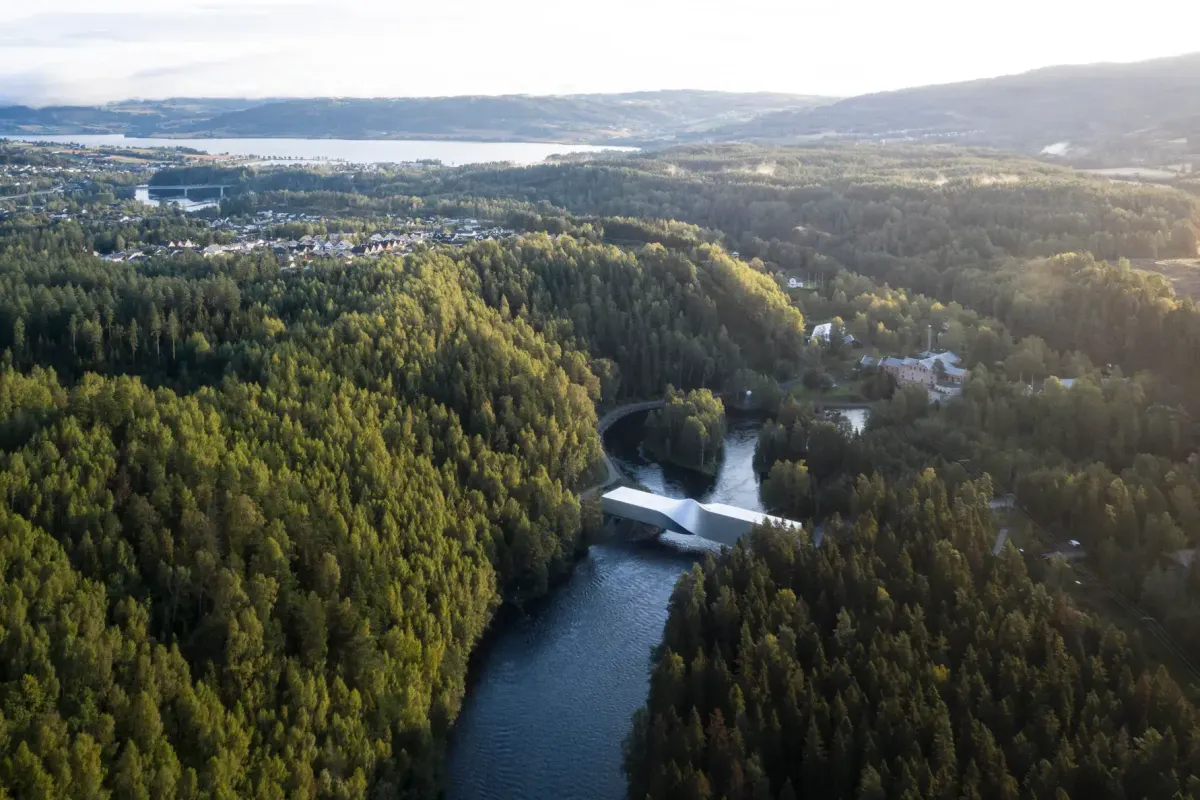
We are intimately familiar with the isolated mechanism designed to protect modern art. Sterile white cubes where climate control is managed down to the second, sunlight is entirely blocked by specialized filters, and every organic fluctuation of the outside world is left at the door. The traditional museum philosophy is built on sheltering human genius from the decaying effects of nature. Artworks are displayed in these artificial sanctuaries where time stands still. Upon entering, the visitor completely forgets the weather, the seasons, and the surrounding geography. But what happens when art ceases to be a fragile object preserved in a glass bubble, and instead confronts the harsh winds, freezing snow, and industrial rust of the earth directly? Deep in the Norwegian forests, situated right in the heart of a former production site, Kistefos Museum radically redefines this question through modern architecture and ecological memory.
The Silence Left by Machines That Ground the Earth
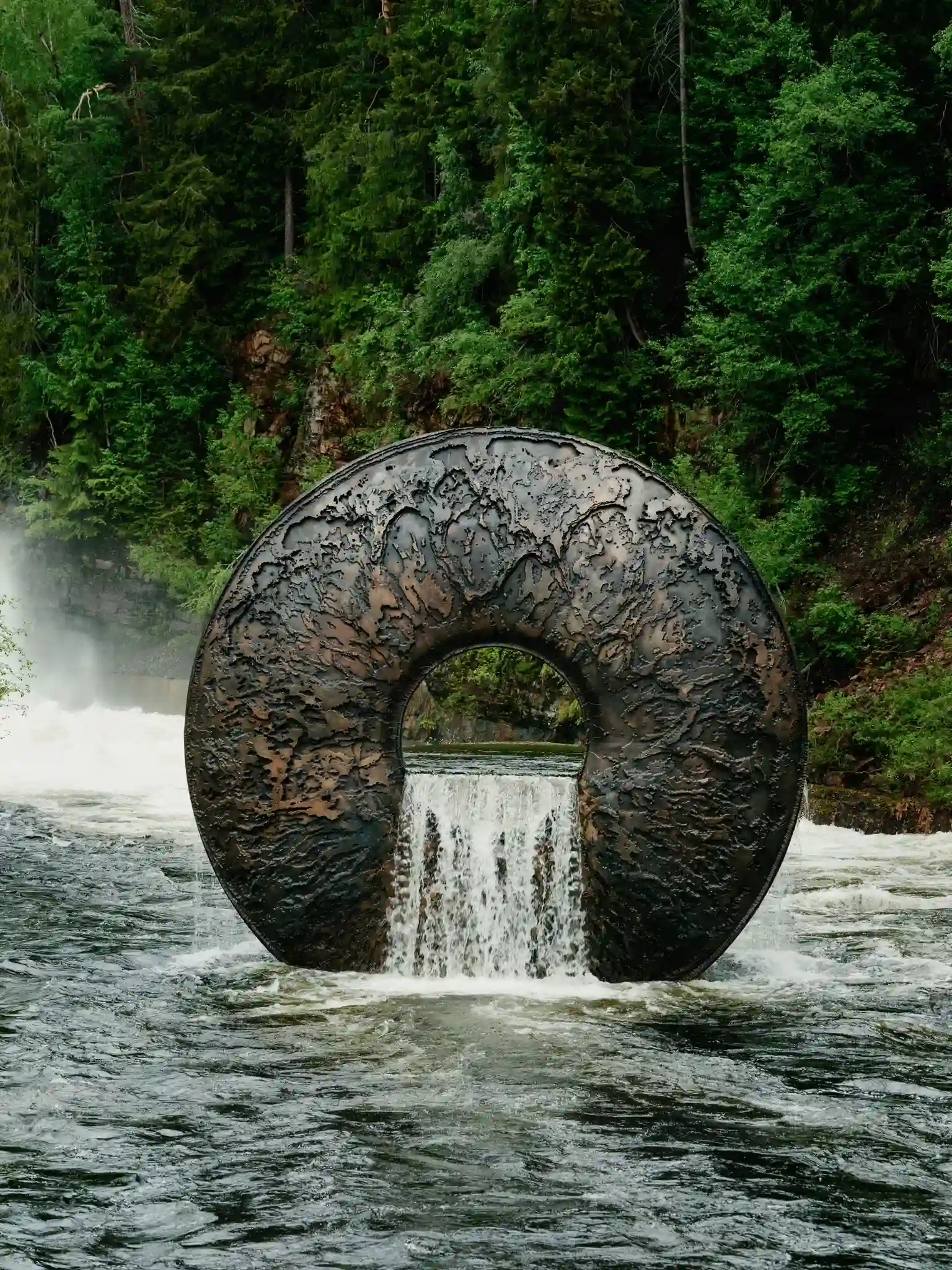
When you stand on the banks of the Randselva river in the town of Jevnaker, an hour north of Oslo, the intense sound of rushing water you hear once powered the massive industrial cogs of a century ago. In the late 1880s, rapidly rising literacy rates across Norway created a colossal demand for wood pulp for books and newspapers. In 1889, businessman Anders Sveaas founded a giant wood pulp mill named A/S Kistefos Træsliberi in this forested area where the Kistefossen waterfall cascades. The factory’s operational principle relied entirely on grinding down the earth. Water power turned heavy machinery, thousands of logs cut from the forest were transported cheaply via the river, and wild nature was rapidly consumed and converted into paper for the printing industry.
Until 1955, this facility operated at full capacity as a deafening symbol of humanity's appetite for consumption over the earth. When production finally halted, all that remained were giant cogs sinking into a profound silence, machinery abandoned to rust, and an exhausted riverbed.
Healing Industrial Ruin Through Art
In modern urbanization practices, the fate of abandoned industrial sites is usually identical. Machines are dismantled, buildings are torn down, and the memory of the area is entirely erased to build sterile commercial centers or luxury housing in its place. Yet in 1996, Christen Sveaas, the grandson of Anders Sveaas, decided to revive this decaying industrial heritage with a completely different existential philosophy. Instead of tearing down his grandfather's nature-consuming machines and clearing the land, he surrendered them to the natural flow of time and built a world-class contemporary sculpture park around this old wound opened in the earth. Rather than erasing the heavy industrial past, he forced it to confront art.
Christen Sveaas articulates this unique vision with stark clarity in an interview with Georgina Adam of the Financial Times:
"Any rich man can build a sculpture park anywhere in the world; no one but me can build one around an intact 1889 factory."
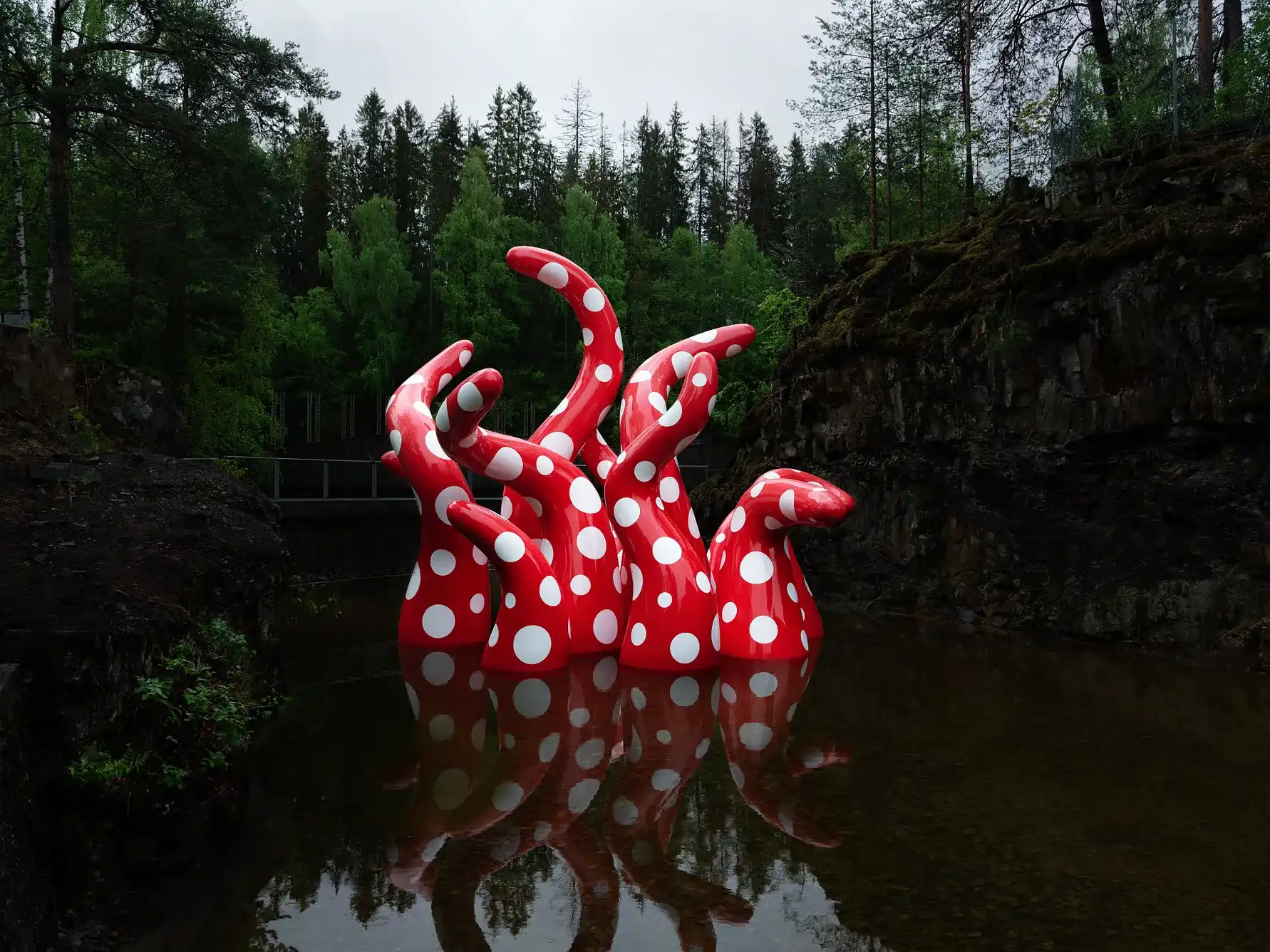
Today, spreading across a massive 17.6-hectare forest, this park houses more than fifty sculptures by some of the world's most prominent contemporary artists, including Yayoi Kusama, Anish Kapoor, Tony Cragg, Olafur Eliasson, and Fernando Botero. But what transforms Kistefos Sculpture Park into a global phenomenon is not solely these names, but the organic bond the artworks form with nature. A vast majority of the sculptures here are designed to be site-specific. Artists were not expected to produce their works in studios and place them on isolated pedestals; instead, they were asked to draw inspiration directly from the dark waters of the Randselva river, the gloomy Scandinavian winter, and the site's industrial past. Rather than being confined within white walls, the art is left to live alongside mud, fallen autumn leaves, and the continuous snow. Art is not protected against nature; on the contrary, it bows with immense submission to the corrosive power of the earth.
Architecture Yielding to Topography: The Twist
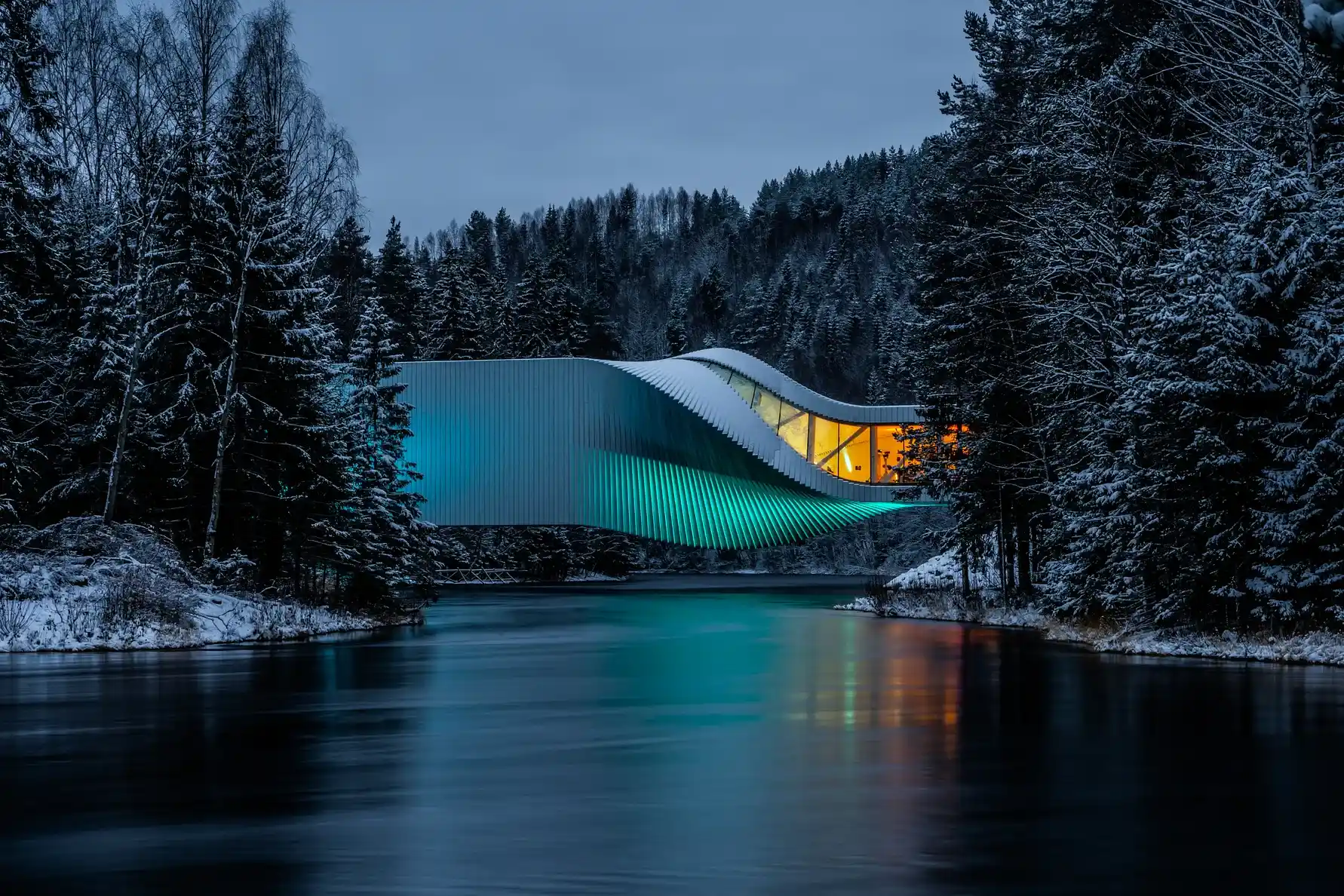
The most magnificent point of this ecological and artistic transformation is The Twist, built directly over the Randselva river in 2019. As Kistefos expanded, there was a need for a new bridge that would allow visitors to circulate seamlessly between the two banks of the river, as well as a modern indoor exhibition space. The world-renowned architectural firm Bjarke Ingels Group (BIG) resolved this complex requirement by fusing the concepts of a bridge, a gallery, and a colossal sculpture into a single structure. However, the true architectural genius of this building lies not in its futuristic appearance, but in its humble stance toward nature.
Traditional architecture digs into the earth before constructing a building, flattens natural elevations with heavy machinery, and forces the geography to comply with the plan on paper. A very distinct elevation difference existed between the forested southern and northern banks of the Randselva river. Architect Bjarke Ingels and his team chose to sacrifice the building itself rather than carving out nature to level the ground. The structure, designed with steel beams, twists 90 degrees right in the middle of the river, gripping organically from the low elevation of one bank to the high elevation of the other. This design, which is extraordinarily complex from an engineering standpoint, meant that no part of the structure had right angles. Calculated using parametric modeling software, this curvature allowed the building to adapt to the natural topography of the Randselva river without resistance. The Twist is not merely a cleverly designed museum building. It is a monumental act of submission, bending its own engineering to the conditions of nature at the exact point where humanity can no longer dominate the earth.
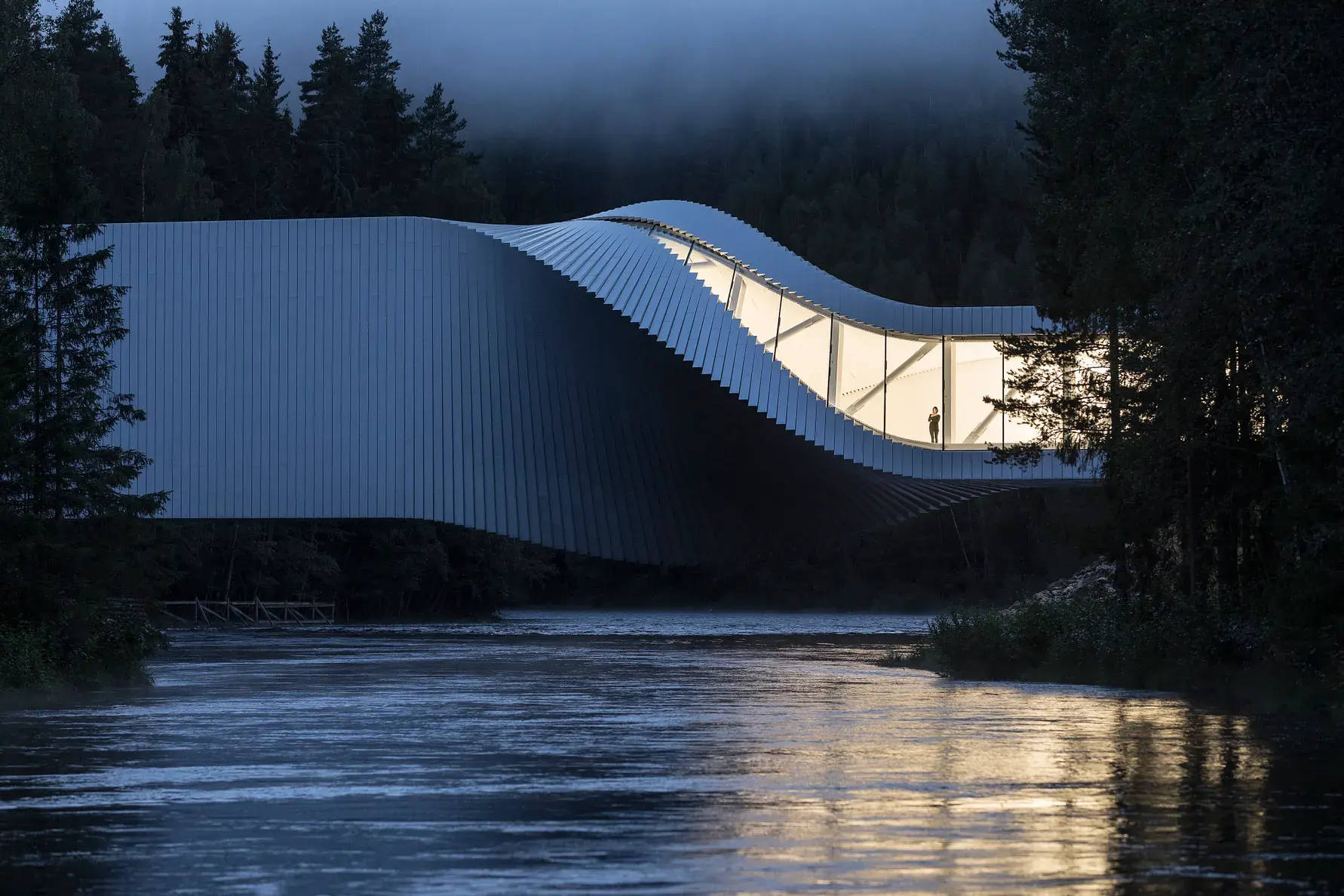
This 90-degree physical twisting motion creates a jarring psychological experience indoors as well. Visitors begin walking from the windowless, dark, high-ceilinged vertical gallery in the south. Upon reaching that curling point in the exact center of the structure, the walls slowly transition into the ceiling, and the ceiling turns into massive glass panels due to the exterior twist. By the time the northern bank is reached, the space has become a horizontal, luminous gallery covered in floor-to-ceiling glass, letting in the full majesty of the forest and the old Nybruket paper mill. That sharp division between outside and inside wears so thin that the visitor cannot distinguish whether they are looking at a modern work of art or the river-washed silhouette of those rusty machines that ground nature a century ago. The architecture steps aside and turns the landscape into the grandest artwork on display.
Kistefos Museum and The Twist, suspended over the river, remind modern humans of a very fundamental truth regarding their relationship with the earth. For centuries, we dug the soil, felled forests for our industrial ambitions, and altered the courses of rivers to lower production costs. We built concrete-walled buildings in the middle of the nature we destroyed, stepped inside, and forgot how disconnected we had become from the earth within those sterile rooms.
This quiet forest in the Norwegian town of Jevnaker proves to us in a highly aesthetic language that we do not have to erase the memory of industrial ruins. Without trying to hide those rusty machines, shattered giant cogs, and the scars of the past, we can expose human creativity directly to the healing violence of the earth. When we stop using nature merely as a passive backdrop to be viewed through a window and dare to bend our buildings according to its topography, what emerges is much deeper than a simple architectural success. While standing in the middle of a river, looking at the rusty roofs of an old paper mill behind a glass twisted 90 degrees, the real question echoing in your mind is this: Are we brave enough to heal the heaviest ruins of our own past by surrendering them to the natural cycle of the earth?
— Related Reading: The sā Ladakh Biennale and the Memory of the Earth