The Architecture of Recovery: Six Silent Shifts in the Global Ecosystem

The prevailing narrative of our planet is one of irreversible decline. We have been conditioned to read environmental journalism as a real-time obituary: shrinking ice caps, vanishing species, and soaring temperatures. But this doom-laden consensus obscures a critical, quieter reality. When systemic action is applied, ecosystems do not just endure; they respond.
At The Great Planet, we track these shifts. Not to offer naive optimism in a time of crisis, but because measurable progress demands the same rigorous attention as ecological collapse. Here is what the data from a single week in December reveals about the mechanics of global recovery.
The Reversal of the Amazon’s Erasure
In Brazil, the trajectory of the world’s most crucial carbon sink is shifting. Recent data confirmed a nine-year low in Amazon deforestation, driven by an 11 percent drop. This was not a spontaneous ecological healing. It was the direct result of aggressive environmental enforcement and hyper-precise satellite monitoring. It proves a fundamental thesis: massive deforestation is not an inevitable byproduct of modern development; it is a policy choice that can be reversed.

The Geography of Survival in Kenya
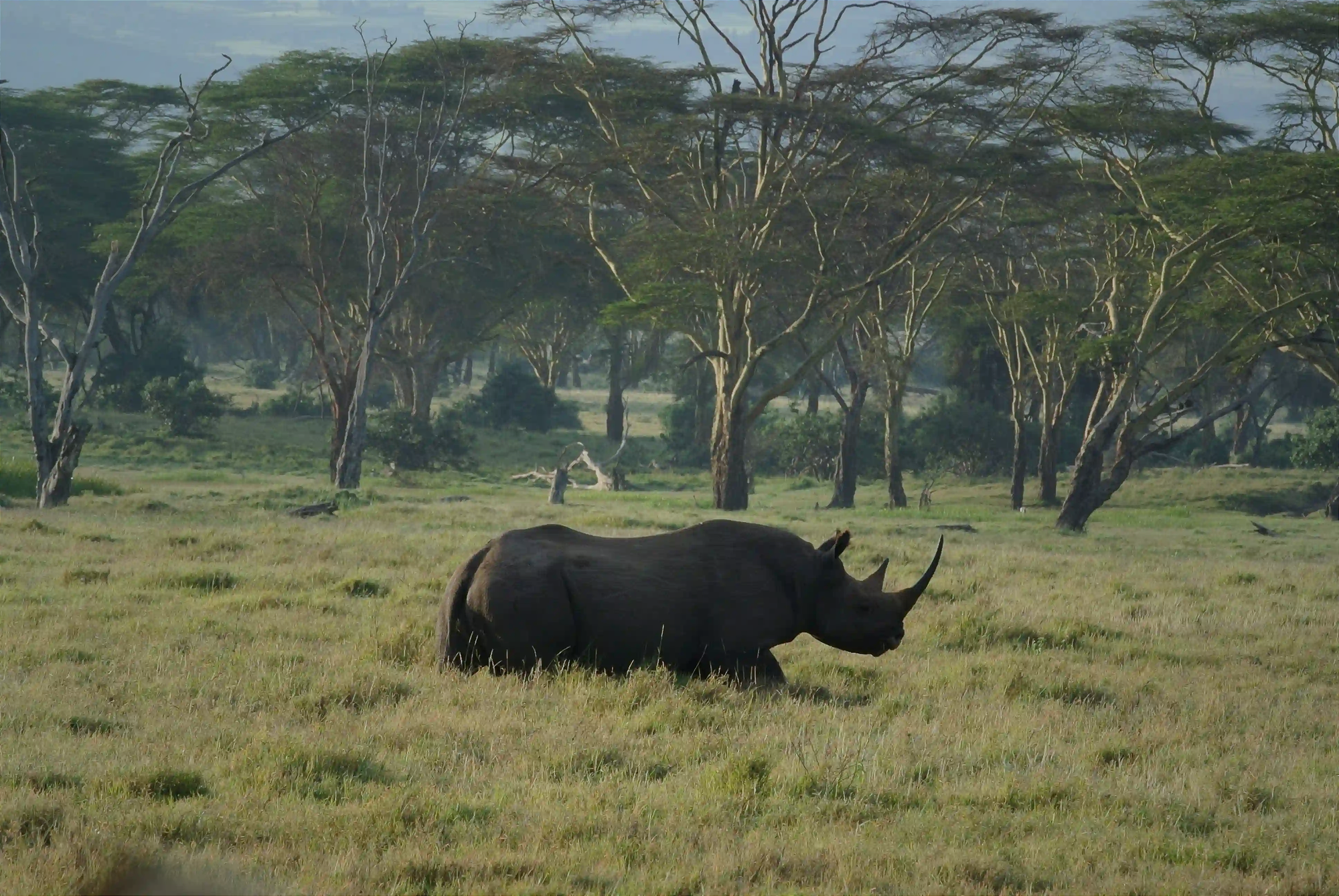
Wildlife conservation often fails simply because it lacks physical space. Kenya addressed this by expanding Tsavo West National Park into the largest rhino sanctuary on Earth. Spanning 3,200 square kilometers, this highly controlled territory aims for an 8 percent annual growth rate in the critically endangered Black Rhino population. It is a stark reminder that iconic species do not require our pity to recover; they require secure territory.
Nature’s Memory in California
For three decades, the Upper Russian River in California was completely devoid of the endangered Coho Salmon. Then, scientists documented their sudden return. This comeback was not achieved by artificially engineering the fish, but by systematically removing human interference—improving water quality and rehabilitating habitats. The lesson is profound: nature possesses an immense capacity to self-correct, provided we step out of its way.
The Policy of Execution in India
Environmental protection frequently stalls at the legislation phase. The United Nations recognized Supriya Sahu as a Champion of the Earth precisely because she bridged the gap between policy and reality. By enforcing large-scale plastic bans and orchestrating massive tree-planting initiatives across India, she demonstrated that ecological defense relies less on groundbreaking technology and more on uncompromising administrative leadership.
When 'Alternative' Becomes the Baseline
The rhetoric around renewable energy often frames it as a future aspiration. The United Kingdom dismantled that narrative when its wind power generated 23.8 gigawatts, supplying nearly half of the nation’s total electricity demand. This is a structural milestone. Wind is no longer an "alternative" energy source; it is the robust, stable foundation of a modern national grid.
The Orbital Defense of Indonesian Coastlines
In Indonesia, the preservation of ancient coastal ecosystems is being outsourced to space. A new partnership between Kuva Space and WWF Indonesia deploys hyperspectral satellites to map blue carbon ecosystems, specifically mangroves and seagrass. By monitoring these critical carbon vaults from orbit, conservation shifts from a reactionary scramble on the ground to a preventative strategy from above.
The Utility of Hope
Refusing to believe the world is entirely lost is not a denial of the crisis. It is a strategic necessity.
Progress rarely announces itself with the same volume as disaster. It appears silently—as cold data, returning salmon, and stabilized power grids. We highlight these coordinates of recovery because hope, when backed by hard evidence, ceases to be an emotion. It becomes a metric. And it remains the most powerful catalyst for action we have left.