Flight Shame (Flygskam) and the Illusion of Green Aviation: Must We Stay Grounded to Save the Planet?
Roughly 80 percent of the world has never flown, yet aviation continues to warm our planet. From the false comfort of carbon offsets to the agricultural paradox of sustainable aviation fuels, we dismantle the marketing illusion of "green aviation." Must we stay grounded to save the Earth?

Roughly 80 percent of the global population has never set foot on an airplane. Yet, the aviation industry—the very backbone of modern globalization that transcends borders and connects continents—is solely responsible for an estimated 3.5 percent of all human-induced climate warming. As our social media feeds overflow with idyllic images of travelers sailing through crystal-clear bays, hiking hut-to-hut in the Swiss Alps, and exploring remote landscapes, a growing number of us have begun to quietly question the true cost of reaching these pristine destinations.
The flygskam (flight shame) movement, which originated in Sweden before rippling across the globe, is fueled by exactly this silent guilt. With the devastating impacts of the climate crisis already knocking at our doors, we are forced to look up at the white contrails scarred across the sky and ask a difficult question: Is the technological leap that will allow us to fly guilt-free actually on the horizon, or is the "green aviation" currently being sold to us nothing more than a colossal marketing illusion?
Carbon Offsetting: The Purchase of a Modern Conscience

Today, that little "offset your carbon footprint" button that appears at checkout when purchasing a flight is the aviation industry’s most popular method of absolution. The few extra dollars you pay are, in theory, funneled into tree-planting initiatives or renewable energy projects. In the industry, this is known as carbon offsetting. However, there is a ruthless and undeniable mathematics at play here.
According to scientific estimates, there are only about 500 million hectares of land globally that are actually suitable for reforestation. Meanwhile, the land required to fulfill the "net-zero" pledges of oil giants, heavy industries, and global airline conglomerates exceeds this capacity many times over. The pledges of a single fossil fuel behemoth alone amount to 50 million hectares.
To solve the climate crisis, we need more than a clear conscience bought for a few extra dollars at checkout. The vast majority of carbon offset projects function less as a mechanism to genuinely scrub carbon from the atmosphere, and more as an aesthetic indulgence purchased by corporations to maintain their current rate of pollution.
The Stubbornness of Batteries and the Limits of Physics
When we hear "zero emissions," batteries are usually the first technology that comes to mind. Electric vehicles may be fundamentally rewriting the rules of the terrestrial automotive industry, but in the sky, gravity forgives no engineering flaws. While eVTOL (electric vertical takeoff and landing) vehicles and short-haul air taxis offer a brilliant horizon for urban mobility, physics builds an insurmountable wall when it comes to transoceanic, long-haul flights.
Traditional jet fuel (kerosene) possesses an energy density vastly superior to that of lithium-ion batteries. The expert calculations are staggering: if you wanted to fly a Boeing 747 across an ocean today using only battery power, you would need the equivalent of 4.4 million laptop batteries. The sheer weight of this massive battery pack would be seven times the empty weight of the aircraft itself. In short, while battery technology can clean up regional short hops, it does not yet possess the power to carry us across continents.
The SAF Paradox: Feeding the Sky While Starving the Earth
Because batteries cannot cross oceans, the aviation industry’s most realistic and heavily promoted hope lies in alternatives known as Sustainable Aviation Fuel (SAF). These drop-in biofuels, which can be used directly in existing aircraft engines without major modifications, have the theoretical potential to reduce the industry's carbon emissions by up to 80 percent. The dark side of the story, however, is hidden in exactly what these fuels are made from.
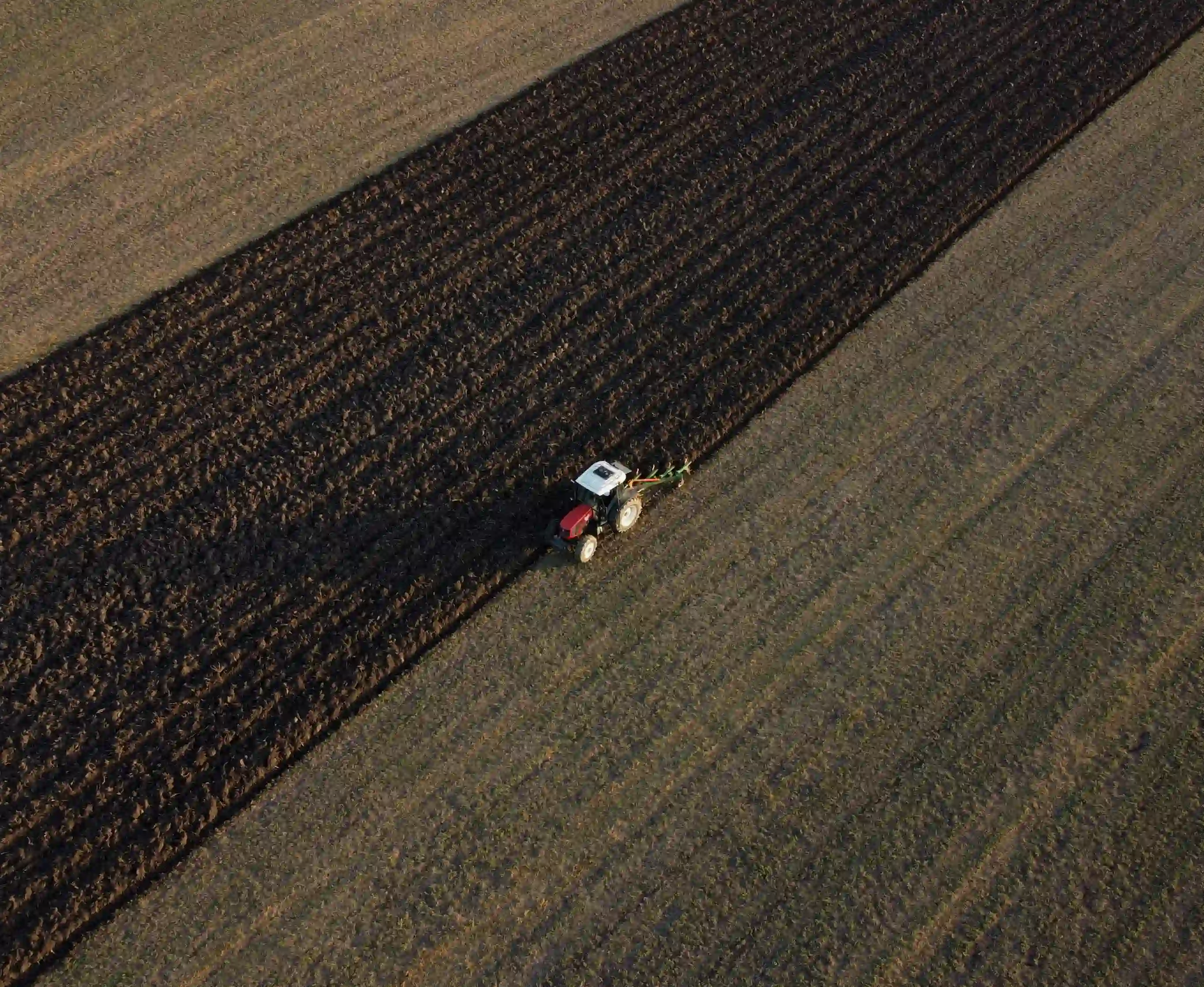
A significant portion of the "eco-friendly" fuels currently on the market is derived directly from agricultural crops like soybeans, corn, or palm oil. To meet just 15 percent of the current commercial aviation demand in the United States using these biofuels, a staggering 41 million acres of soybean fields would be required.
In the name of reducing carbon in the sky, converting potential food sources on the ground into aviation fuel is a gamble of unfathomable risk. Expanding agricultural lands, accelerating deforestation, and driving up global food prices under the illusion of saving the climate is the most dangerous paradox lurking behind these easy, green-labeled fuels.
The "Dirty" Reality of a True Solution and the Circular Economy
If batteries are too heavy and converting forests into fuel is a catastrophic mistake, only one option seems to remain: stop flying entirely. Yet, in a deeply globalized world, this is neither a realistic nor a progressive approach. The true green revolution of aviation is not unfolding in aesthetic, pristine forests; it is happening within our terrestrial waste, through a rather "dirty" process.
This is precisely where the thin, moral line dividing the industry is drawn. The rare, visionary fuel projects whose math actually adds up—and respects the ecosystem—do not rely on cornfields. Instead, they utilize discarded industrial cooking oils, agricultural residues, and municipal waste.
Taking this a step further is the technology of Synthetic E-Fuels (Power-to-Liquid). Produced in a laboratory by capturing carbon dioxide directly from the atmosphere and combining it with green hydrogen, these fuels do not touch a single inch of agricultural land. Rather than taking the easy route and burning food crops, the minority of airlines utilizing advanced technology to create a circular waste economy are the ones truly building the future of aviation.
Hydrogen Aircraft and Infrastructural Bankruptcy
But what about those futuristic planes emitting nothing but water vapor from their exhausts? Zero-emission hydrogen aircraft, currently under development by aviation giants, are undeniably the industry's ultimate goal. However, hydrogen is, by nature, a highly capricious element.
For liquid hydrogen to be safely stored inside an aircraft, it must be kept at cryogenic temperatures of -253°C (-423°F). Furthermore, because liquid hydrogen takes up significantly more volume than kerosene, aircraft will be forced to abandon the familiar "tube and wing" design in favor of massive, flying triangles—a concept known as the Blended Wing Body. This means not just designing new planes, but tearing down and rebuilding the entire global airport infrastructure, refueling systems, and safety protocols from the ground up. Until this magnificent vision becomes a reality, we remain reliant on smart, waste-derived fuels (SAF) for at least a few more decades.
Redefining the New Luxury

The aviation industry is at a historic turning point. Technology will inevitably carry us toward zero-emission flights, but until that day arrives, we all must bear the weight of our choices.
In the world of tomorrow, true luxury will not merely be sipping champagne in a first-class seat. The new luxury will be the deep intellectual peace of knowing that the plane you boarded did not decimate forests, did not starve the soil, and left absolutely no carbon footprint in its wake.
Isn’t it time we stop settling for airline companies simply claiming to be "eco-friendly," and instead demand they transparently prove exactly where they source the fuel that powers their planes?
— Related Reading: The Death of the Itinerary: Why We Are Paying Airlines to Keep Our Destinations Secret