In Upper Mustang, What You Wear Is Part of the Celebration
In Lo Manthang, preparing threads for a loom takes hours. During Yartung, women sing traditional Loba songs, families dress for royal processions and monks gather for the final day. Photographs by Rafaela Maia.
In Lo Manthang, preparing the threads for a loom takes at least two people and two or three hours. They need a long, open space and usually choose a day without wind. The weaving has yet to begin.
In his 2024 account of life in the town, researcher Tunga Bhadra Rai describes the work involved in making traditional clothing. Women weave the keden, a covering worn over the back of a robe. Men sew its white or blue borders and attach a triangular piece called the rokten. The edging decorates the garment while protecting it from wear.
Work with wool also brings people together in sunny communal gathering places. Adults talk and share meals as they work; children watch and help. Learning to make clothing happens within the ordinary business of spending time together.
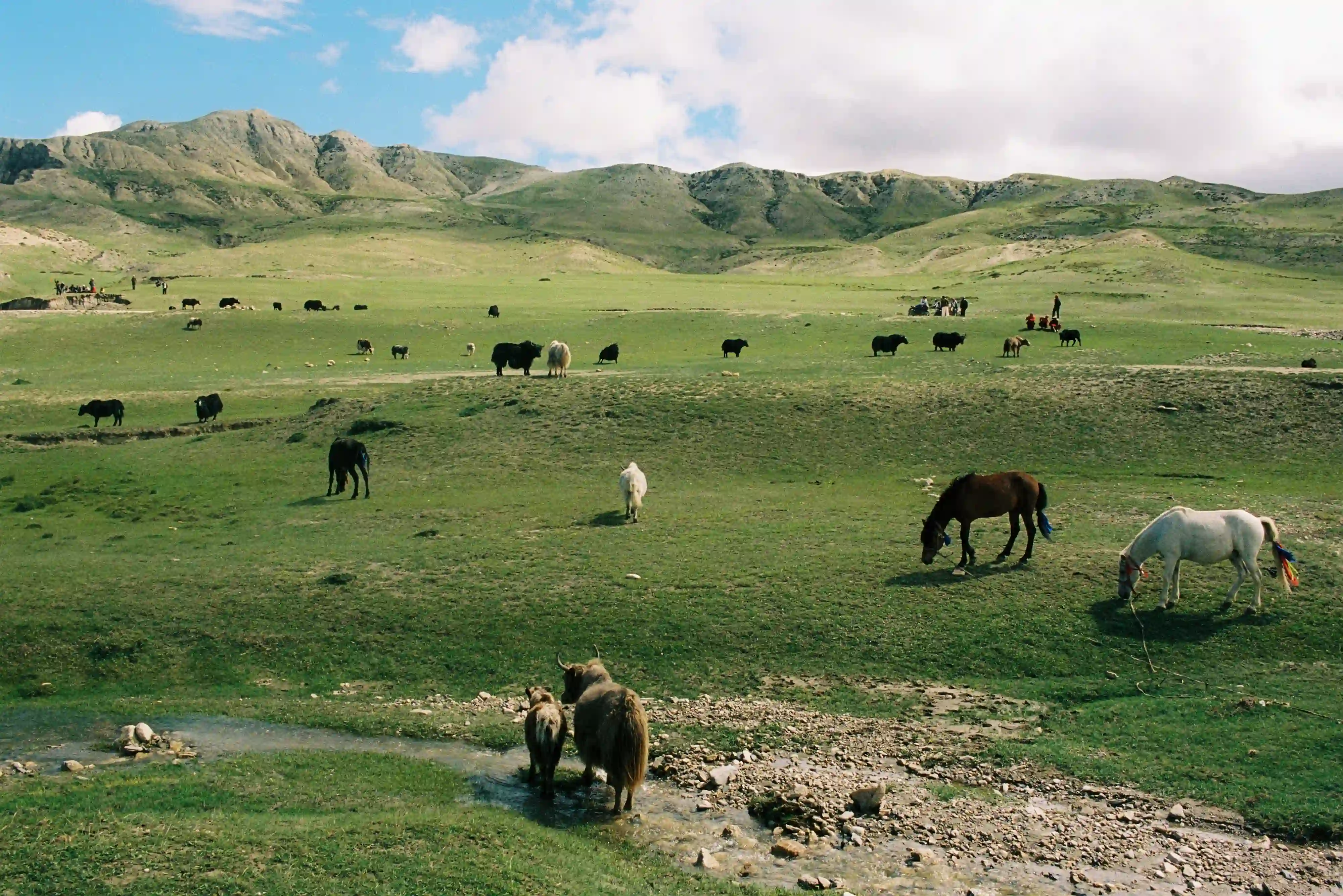
Lo Manthang sits at around 3,850 meters in Upper Mustang, northern Nepal, and is home to the Loba community. At the end of summer, people gather for Yartung, a three-day festival of horse racing, singing, dancing and shared meals. They wear their finest clothes. After the hours spent preparing and making garments comes an occasion to wear them in company.
The Next Wearer
Among the accessories worn at weddings and festivals is the perak, a headdress of turquoise and silver attached to reddish cloth. Brides often inherit their mother’s perak, bringing an existing family piece into their own wedding. Preparing for a new marriage includes something already worn by an earlier generation.
Passing down a headdress preserves something different from teaching someone how to make it. In one case, a skill passes between generations; in the other, the object itself changes hands. Recurring celebrations give these inherited pieces a place in the lives of their next wearers.
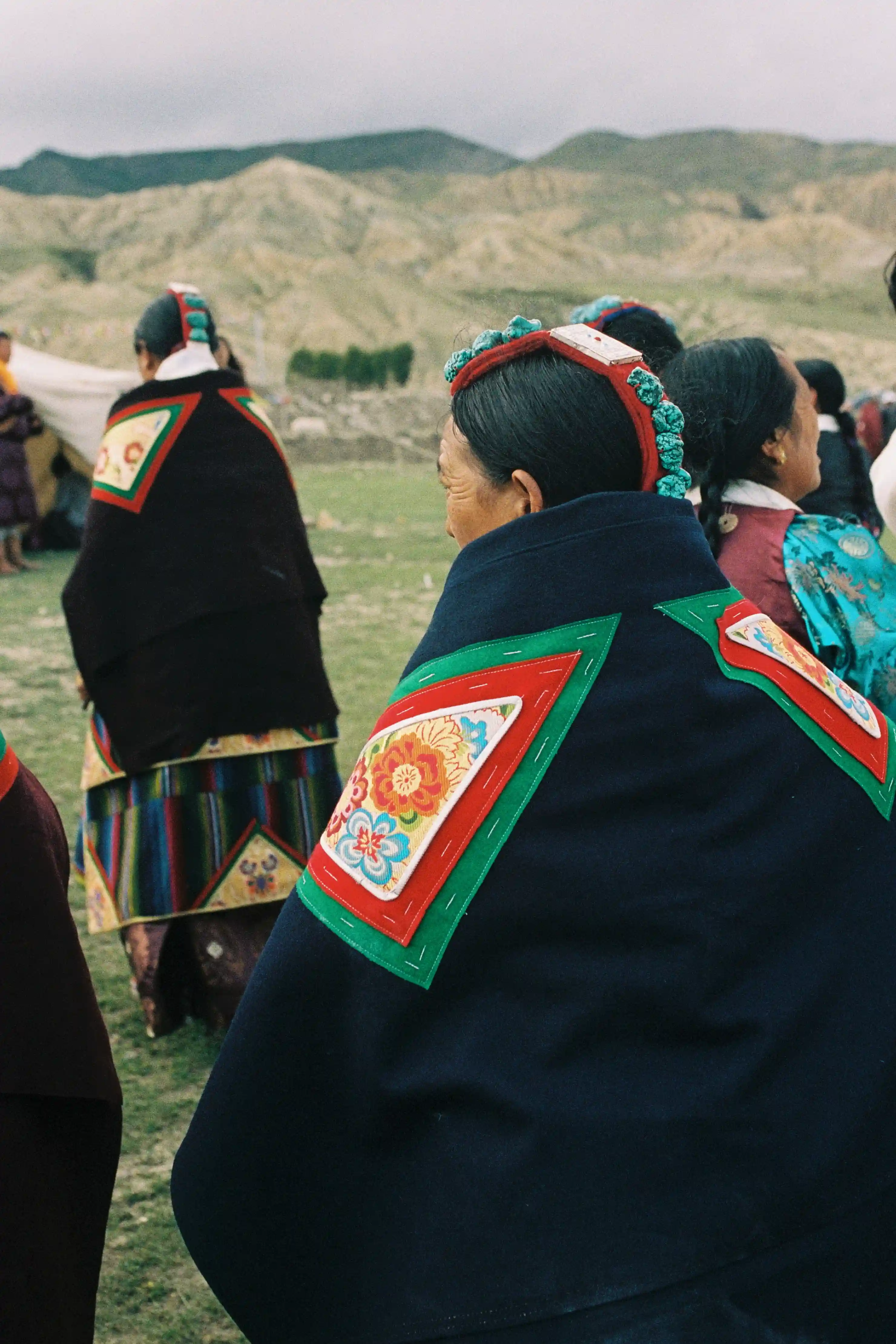
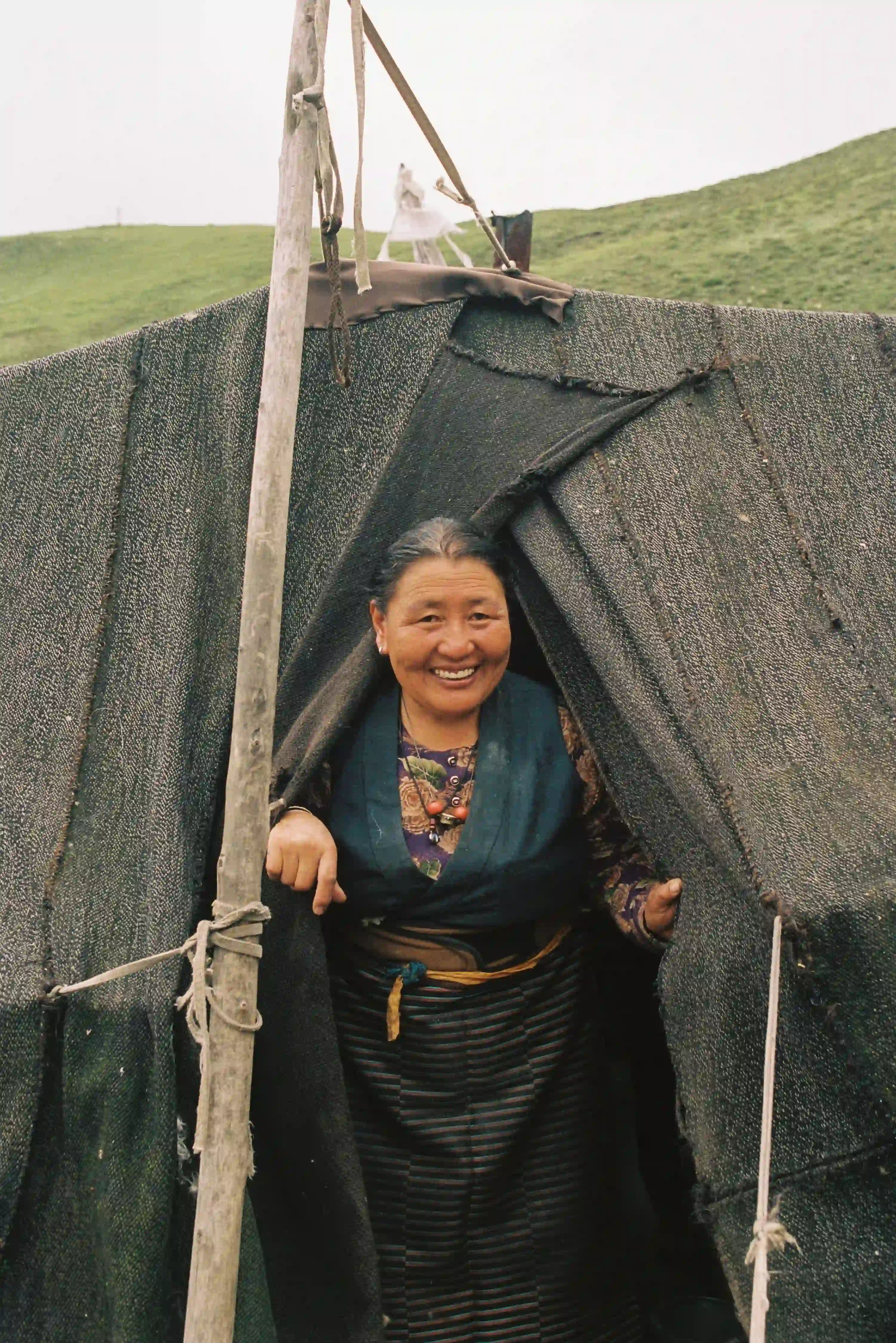
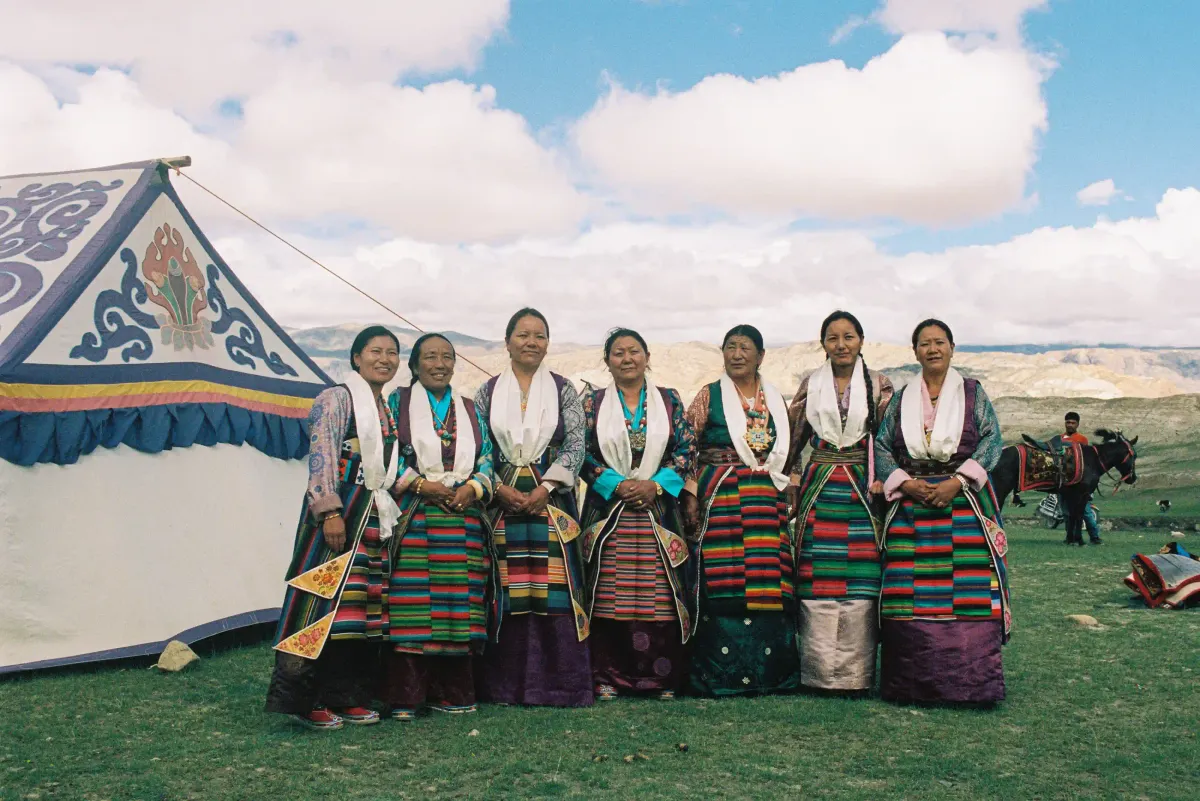
Festival clothing and a portrait at a tent entrance during Yartung in Mustang, Nepal. (Images: Rafaela Maia)
Everyday clothing and hairstyles in Lo Manthang have changed over time. Road connections, migration and new sources of income have brought different habits into local life. Festival dress belongs within this changing community. The royal family’s role in Yartung reflects another form of continuity: Lo’s officially recognized kingship ended in 2008, while respect for the royal household continues in cultural life.
Dressing for the Occasion
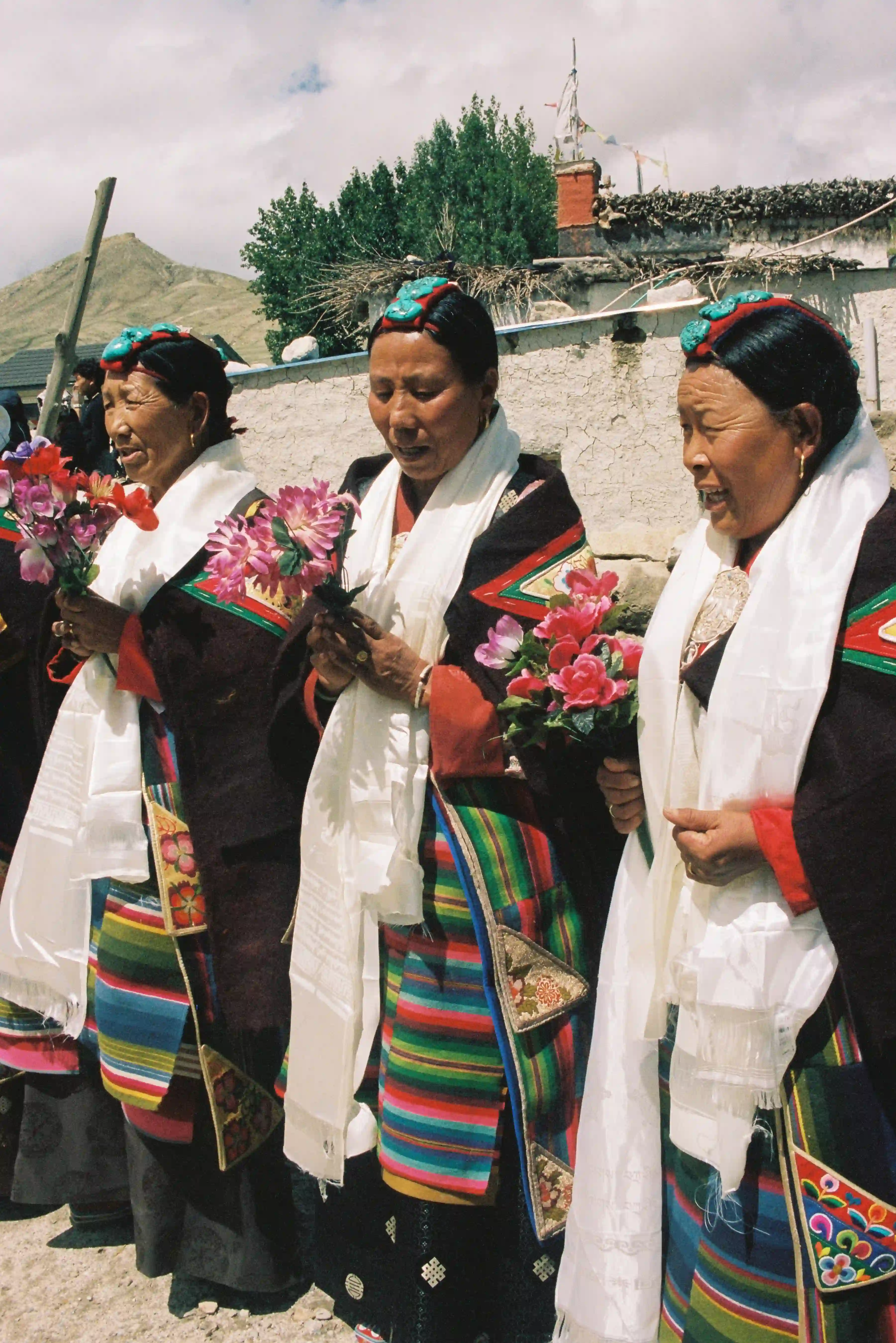
In photographs Rafaela Maia took during Yartung in August 2026, women stand together with white scarves around their necks and flowers in their hands. Maia explains that they are singing traditional Loba songs to welcome the royal procession and honor the king, queen and other participants. Passed down orally, these songs form part of the ceremonial welcome.
These garments are worn for a specific role, before people who know how to read them. Headdresses, shawls, flowers and songs all belong to the same greeting.
The celebrations extend from ceremonies inside the walled town to gatherings in the surrounding fields. After eating, drinking and singing together, riders race back toward the village. In some competitions, they lean down from galloping horses to retrieve silk khata scarves from the ground. An object presented as a gesture of respect during ceremonies becomes part of a test of horsemanship.
Yartung traditionally unfolds over three days: King's Yartung, centred on the king and the male community; Queen's Yartung, involving the queen and local women; and Lama Yartung, dedicated to the Buddhist monastic community.
On the final day, families honour lamas and monks with khata, ceremonial silk scarves, monetary offerings and khrom chang, a festive barley drink. In another of Maia's photographs, young monks sit together sharing yak meat. People whose daily lives follow different routines meet around the same food, processions and festivities.
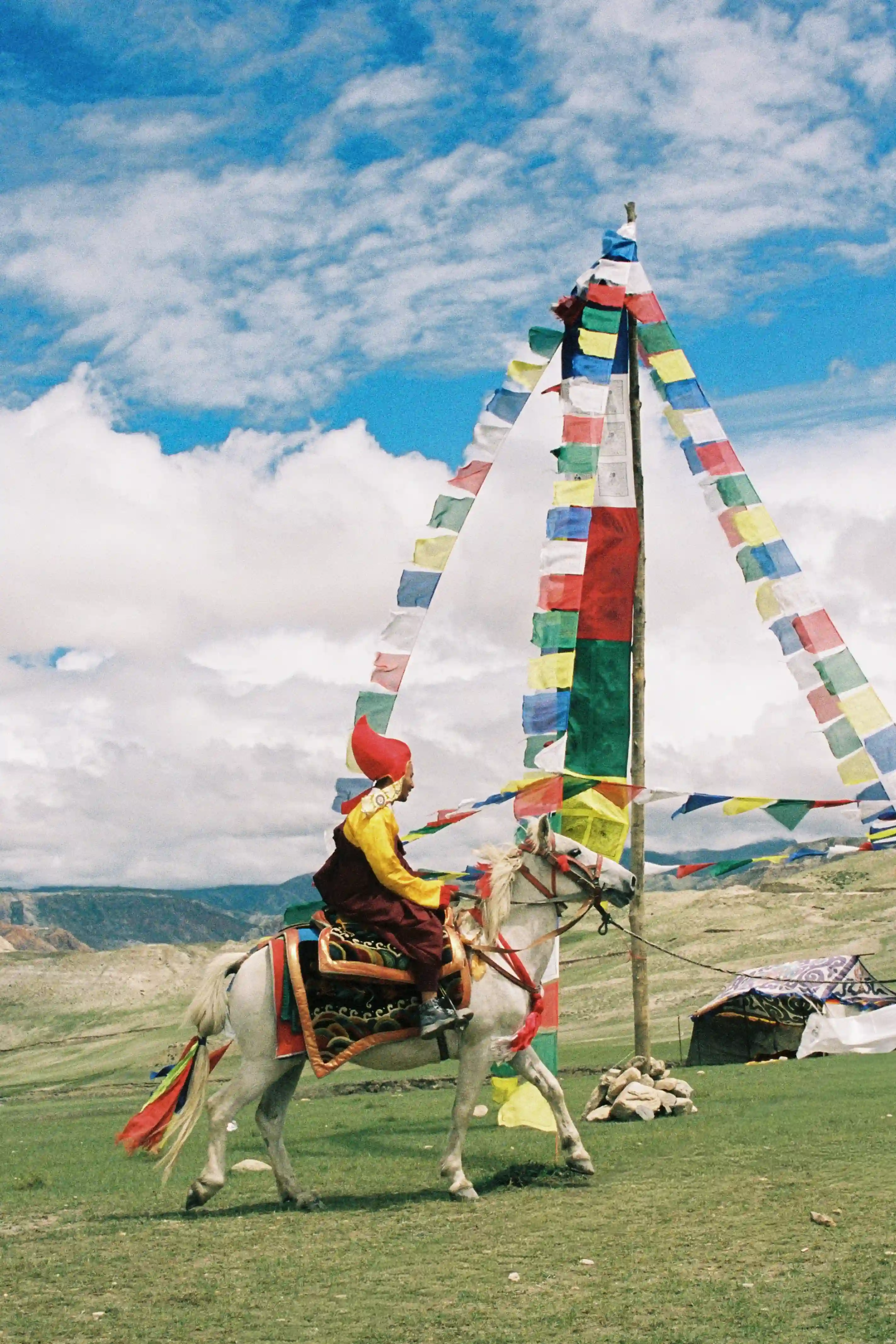
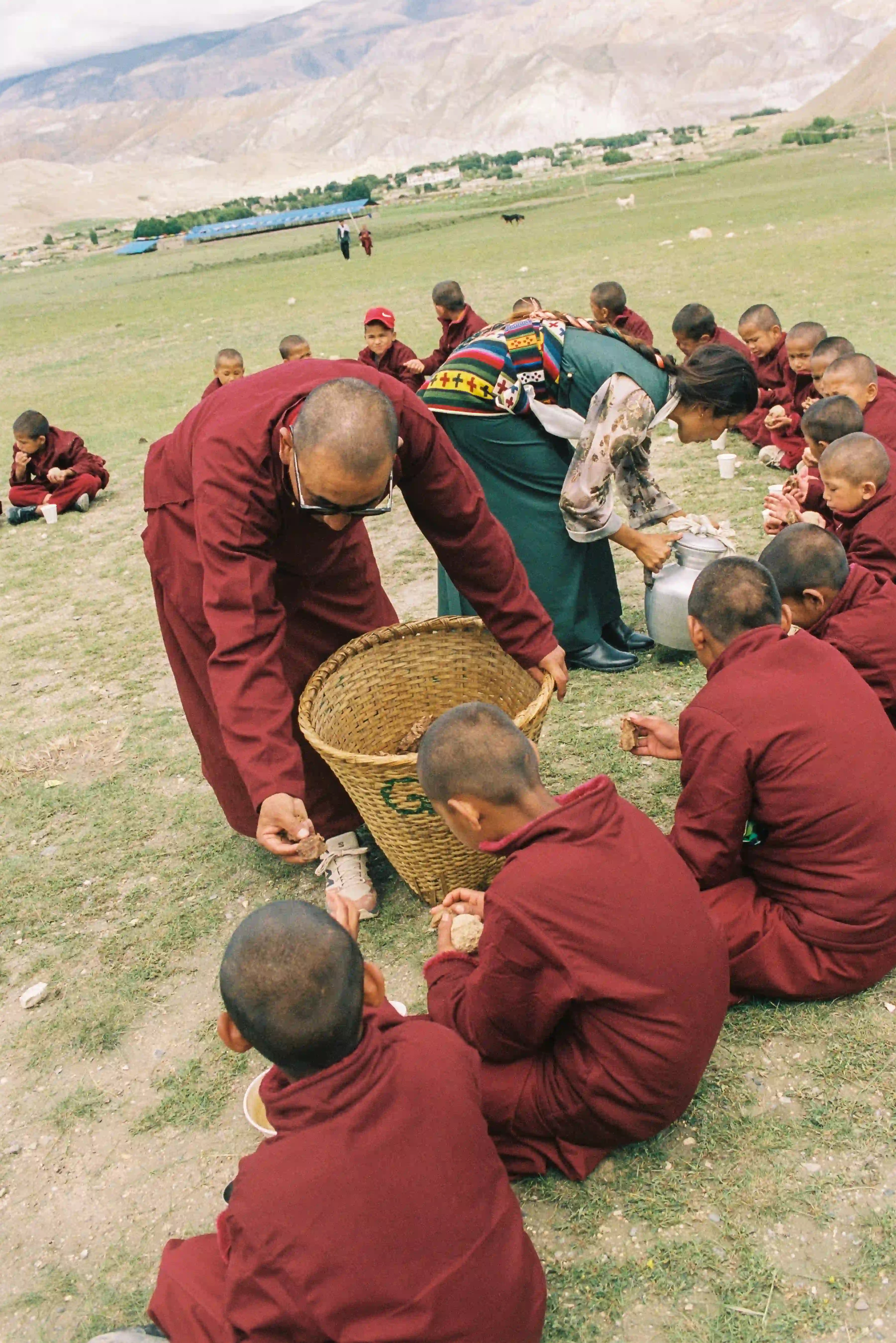
A monk on horseback and young monks sharing yak meat during the Yartung celebrations in Lo Manthang, Nepal. (Images: Rafaela Maia)
The importance of dressing well has its own place in a local saying:
“If you don’t have enough to wear on Yartung, borrow from others.”
— Related Reading: The sā Ladakh Biennale and the Memory of the Earth