Bowerbirds, Fast Fashion, and the True Cost of Beauty
In the wild, animals pay for aesthetic displays with their own energy. Humanity broke this biological contract. By outsourcing the true cost of clothing to fossil fuels, our demand for cheap garments now buries the coastline of Ghana under thousands of tons of synthetic textile waste.
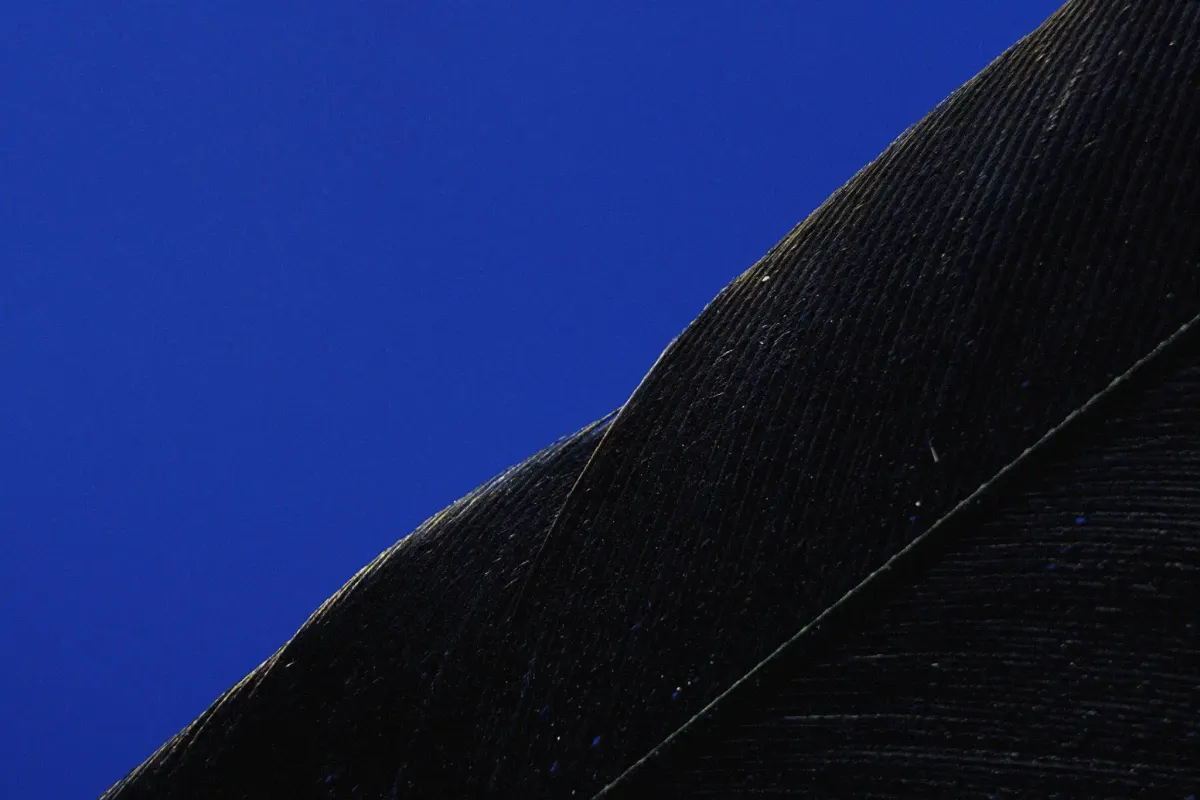
In the eucalyptus woodlands of northern Queensland, Australia, the male great bowerbird (Chlamydera nuchalis, historically referred to in studies as Ptilonorhynchus nuchalis) spends months constructing a structure in which he will neither sleep nor raise offspring. Weaving twigs into a parallel avenue roughly 60 centimeters long, he meticulously furnishes the adjoining court with hundreds of curated objects, including stones, shells, and bleached bones, collectively known as gesso. This structure is not a nest; it is an open-air stage designed solely to captivate a mate.
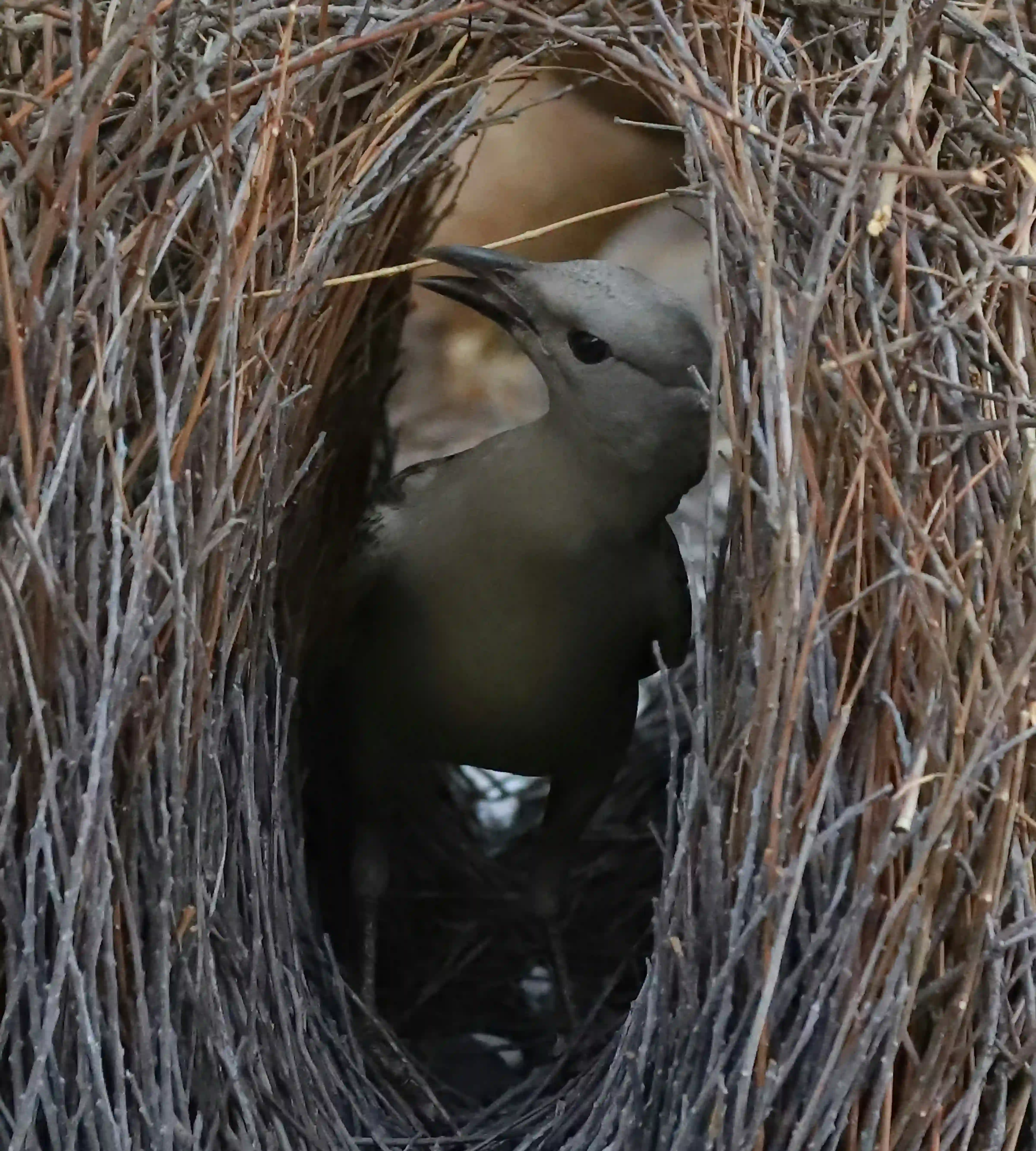
A 2010 study published in Current Biology by John A. Endler and his colleagues demonstrated that the male arranges these objects with geometric precision, placing smaller items near the avenue's entrance and progressively larger ones further away. When researchers intentionally reversed the order of the stones, the males rapidly restored the pattern. A follow-up 2012 study by Laura A. Kelley and John A. Endler in the journal Science showed that this exact arrangement is strongly linked to the male's mating success.
When a female stands inside the avenue to evaluate the display, the varying distances and sizes of the stones create an optical illusion known in architecture and film as "forced perspective". The stones fall onto her retina at nearly identical visual angles, making the courtyard appear highly uniform. According to Kelley and Endler, this regular background may trigger the Ebbinghaus effect, potentially causing the brightly colored object the male brandishes in his beak to appear significantly larger and more striking. Female bowerbirds are ruthless observers. Research indicates they will refuse to mate unless they spend the vast majority of their time in the avenue actively watching the male's display, and the males who construct the most flawless perspective illusions achieve the highest mating rates.
The impulse to select objects outside of one's own body, combine colors, and spend weeks laboring over a display merely to catch another's eye is not an artificial habit invented by modern consumerism. In our own evolutionary history, the urge to adorn predates agriculture, settled societies, and written language.
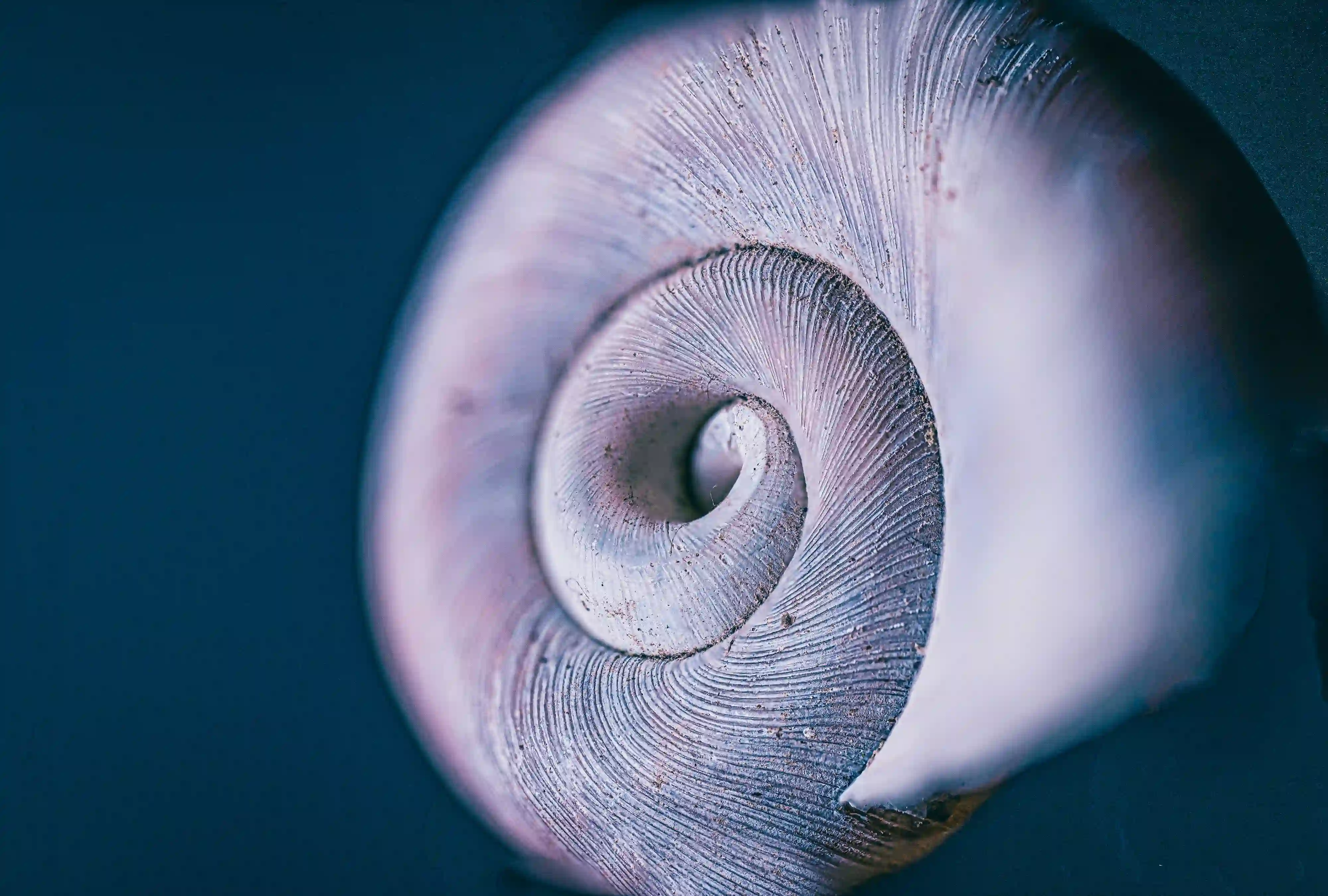
Between 2014 and 2018, an archaeological team led by Abdeljalil Bouzouggar and El Mehdi Sehasseh excavated Bizmoune Cave, located 12 kilometers inland from the Atlantic coast in western Morocco, unearthing 33 perforated Tritia gibbosula sea shells. Published in Science Advances in September 2021, the study used uranium-thorium dating to determine the beads are at least 142,000 years old (with a 95 percent probability of falling between 120,000 and 171,000 years). This makes them some of the earliest known evidence of symbolic human communication. Geochronologist Richard Roberts of the University of Wollongong, who was not involved in the study, noted that due to the limitations of relying on a single sample, the dates could also arguably fall between 100,000 and 120,000 years pending further verification.
As paleoanthropologist Alison Brooks of George Washington University explained to Science magazine:
"Shells are special wherever you find them, because when you wear a shell on a string around some part of your body, you’re using your body to send messages to strangers about your identity."
While archaeologist Steven Kuhn emphasizes that wearing beads was tied to encountering strangers and expanding social networks, anthropologist Polly Wiessner suggests these early ornaments were used as gifts to solidify existing social bonds or for "personal adornment to enhance beauty in the pursuit of mates, or increase social esteem."
Synthetics Infiltrate the Forest Stage
The environmental crisis we face today is not the existence of this biological urge to adorn ourselves. The true crisis lies in how industrial waste is mutating both our planet and nature’s ancient curators. A June 2026 study published in Royal Society Open Science by behavioral ecologist Caitlin Evans, Laura Kelley, and their colleagues documented how urbanization has altered the material preferences of great bowerbirds.
During the 2023 breeding season, the research team examined 61 bowers across the rural Dreghorn cattle station and the urban landscape of Townsville City. Photographing the structures through specialized filters that mimic the female bird's ultraviolet vision, the findings were clear: decorations on urban bowers were more than ten times more likely to be human-made trash than those in rural areas.
While rural birds adorned their stages primarily with green leaves, seeds, fruits, flowers, snail shells, and occasional green glass, their urban counterparts exhibited a strong preference for green glass and red wire. Furthermore, city birds scavenged highly unusual objects depending on their local neighborhoods. Bowers near hospitals featured medicine jars,those near sports fields contained fluorescent mouthguards, and scattered in various locations were even handcuffs. The birds' obsession with shiny synthetics even led to domestic burglary. As Caitlin Evans recounted to The New York Times:
"One family told us that they have to keep the garage door shut, otherwise bowerbirds fly into the garage and steal their really nice nails and screws."
To determine if this was merely a result of urban trash availability, researchers conducted a field experiment. They left mixed piles of 10 natural and 10 human-made objects near 30 urban and 24 rural bowers. Returning three days later, they discovered that males in both environments were more than ten times more likely to select the human-made items. Given the choice, the birds overwhelmingly bypassed natural materials in favor of synthetics.
Daniel Baldassarre, a behavioral ecologist at SUNY Oswego who was not involved in the study, explained to The New York Times that in species where bright colors serve as mating signals, unnatural colors can be especially attention-grabbing:
"They get excited by things that pop."

As Evans points out, there is also a practical driver behind the shift. Plastic and metal objects do not rot or fade like natural berries or leaves, sparing the male bird the energetic cost of constantly replacing his decorations.
However, this enduring artificial glow poses a physical threat to wildlife. The satin bowerbird (Ptilonorhynchus violaceus), known for its intense attraction to the color blue, compulsively hoards blue plastics. In 2018, experts reported that these birds were collecting hazardous waste like plastic bottle rings. Tim Faulkner, director of the Australian Reptile Park, summarized the risk to the Australian Broadcasting Corporation:
"Unfortunately, nowadays with our satin bowerbirds, they like blue things, and there’s not much blue in nature. So, they collect artificial things, and they pose great risk to them."
The Transition from Natural Cycle to Industrial Production
The bowerbirds' shift toward plastic and metal is a biological behavior that may be explained by sensory biases and material durability. Yet, this discovery also offers a profound editorial parallel for understanding humanity's relationship with the fast fashion industry.
In a natural environment, the stage a bird constructs remains within the boundaries of the local ecosystem. The stones, shells, and bones are already a part of the forest floor. The collected leaves and fruits rot; molted feathers and organic debris transform into a rich resource subsidy for other organisms. A 2015 study by ecologists Shinji Sugiura and Hayato Masuya demonstrated that the keratin protein in feathers accumulating in bird breeding colonies attracts specialized keratin-consuming arthropods and microorganisms, driving an efficient decomposition cycle.
Industrial textile production operates entirely outside of this biological loop. As we previously explored in Our Obsession With Cheap Clothes Is Keeping the Petrochemical Industry Alive, most of our garments today are spun from synthetic fibers like polyester, materials born from the exact same petrochemical pipelines as the plastic waste hoarded by the birds.The high-volume, low-cost production model externalizes the true environmental cost of a garment away from the consumer, shifting the burden onto manufacturing hubs and waste-importing nations.
Kantamanto Market, Waste Crisis, and the Economy of Repair
According to data from the Observatory of Economic Complexity (OEC), Ghana became the world’s largest importer of secondhand clothing in 2021, receiving $214 million worth of shipments primarily from the UK, Canada, and China. At the end of this linear global economy sits Kantamanto Market, sprawling across approximately 20 acres (8 hectares) in the capital city of Accra. According to the Ghana-based environmental organization The Or Foundation, Kantamanto receives 15 million secondhand garments from the Global North every single week.
The sheer volume of overproduction and the plummeting textile quality engineered by fast fashion have completely overwhelmed local waste infrastructure. Reports from The Or Foundation and Agence France-Presse (AFP) indicate that approximately 40 percent of the clothing arriving at the market is too damaged or poorly made to be sold, instantly becoming waste. The Accra Metropolitan Assembly spends around $500,000 annually to collect and dispose of this debris but can only process about 70 percent of it. The remaining waste is routinely burned in the open or left in unregulated dumpsites. This crisis was severely exacerbated in 2019 when the Kpone landfill, the country’s only engineered sanitary site, caught fire after being buried under mountains of used clothing. As Justice Adoboe of the Ghana Water and Sanitation Journalists Network explained to AFP, heavy rains sweep the discarded garments down the drains and into waterways, ravaging aquatic life.
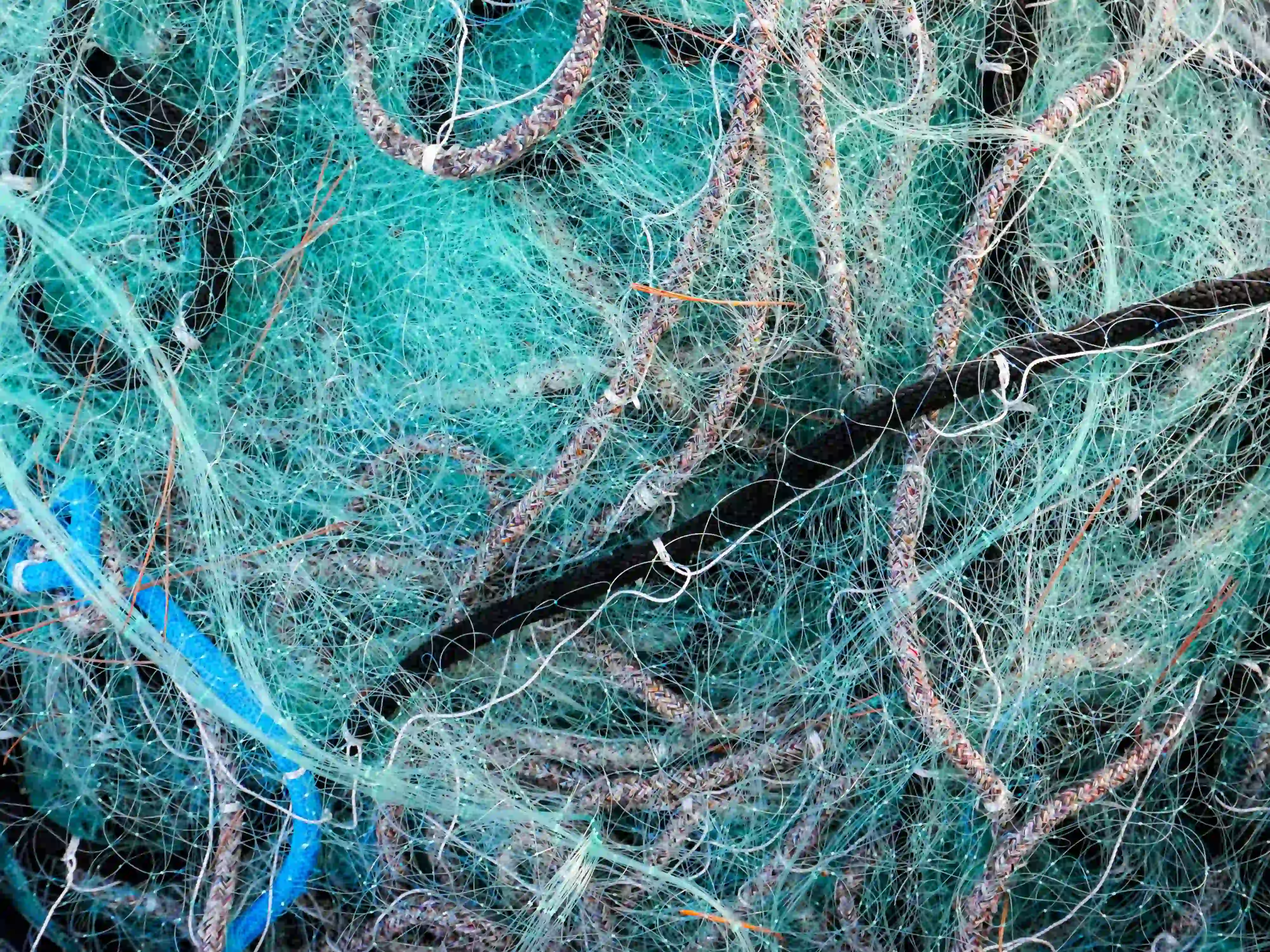
The final destination for these torrential currents of textiles is often the nearby Korle-Gonno beach. Here, the sand has been replaced by towering mounds of textiles and plastics exceeding 1.5 meters in height. Beach monitors from The Or Foundation counted 2,344 textile "tentacles", massive, tangled knots of thousands of garments, some stretching dozens of meters into the surf, along just a seven-kilometer stretch of coastline over a single year. Standing on Korle-Gonno beach, fisherman Nii Armah spends hours hauling heavy nets with his 30-person crew. Pulling up colossal barracudas tangled alongside masses of used clothes, Armah pleaded to AFP that their nets are being destroyed, the fish are fleeing, and their livelihoods are vanishing as they beg authorities for a solution.
Yet, Kantamanto is not merely a tragedy of waste; beating at its core is a monumental repair and reuse economy.According to The Or Foundation, a community of over 30,000 people, comprising retailers, tailors, upcyclers, and the women known as kayayei (head porters), is responsible for recirculating 25 million pieces of clothing every month through resale, repair, and remanufacturing (local trade associations place registered members closer to 10,000). Despite smaller fires in 2020 and 2022, and a catastrophic blaze on January 1, 2025, that decimated a large section of the market,this community continues to rebuild. Through local initiatives like The Or Foundation’s Secondhand Solidarity Fund (SSF), which has distributed over $500,000 to more than 1,500 workers since 2020, along with a $1 million emergency relief commitment to clear debris and provide infrastructure like new sewing machines, Kantamanto stands as a vibrant alternative to fast fashion.
Mitigating the environmental burden created by the apparel industry does not require suppressing humanity's ancient,biological urge to adorn ourselves. The artisans of Kantamanto demonstrate that a sustainable path forward relies on the ethos of the "Right to Repair" movement. Extending the lifespan of existing garments, limiting overproduction, and investing in regenerative materials that can safely return to the earth offers a model that respects organic cycles.
The distance between a bowerbird in the Queensland forest and our own closets is much shorter than we think. We both rely on the language of objects to be seen, to be desired, and to signal who we are. Today, however, even nature's most discerning curator has fallen into the trap of our cheap, enduring synthetics. In the wild, beauty was a display always paid for with genuine effort, meticulously maintained, and eventually surrendered back to the ecosystem. When the production and waste costs of a garment are removed from its price tag, those costs do not disappear; they simply resurface in an Australian forest or on an African coastline.
— Related Reading: The Desert Paradox, Sand Mafias, and Stolen Shores