Coordinates Where Time and Ego Collapse: 'Thin Places'
The modern travel industry often advises us to unwind or "collect" new memories. Yet, human psychology sometimes craves disappearance rather than a destination. We harbor a profound need to shed the heavy, societal identities we carry daily and confront the raw reality of existence.
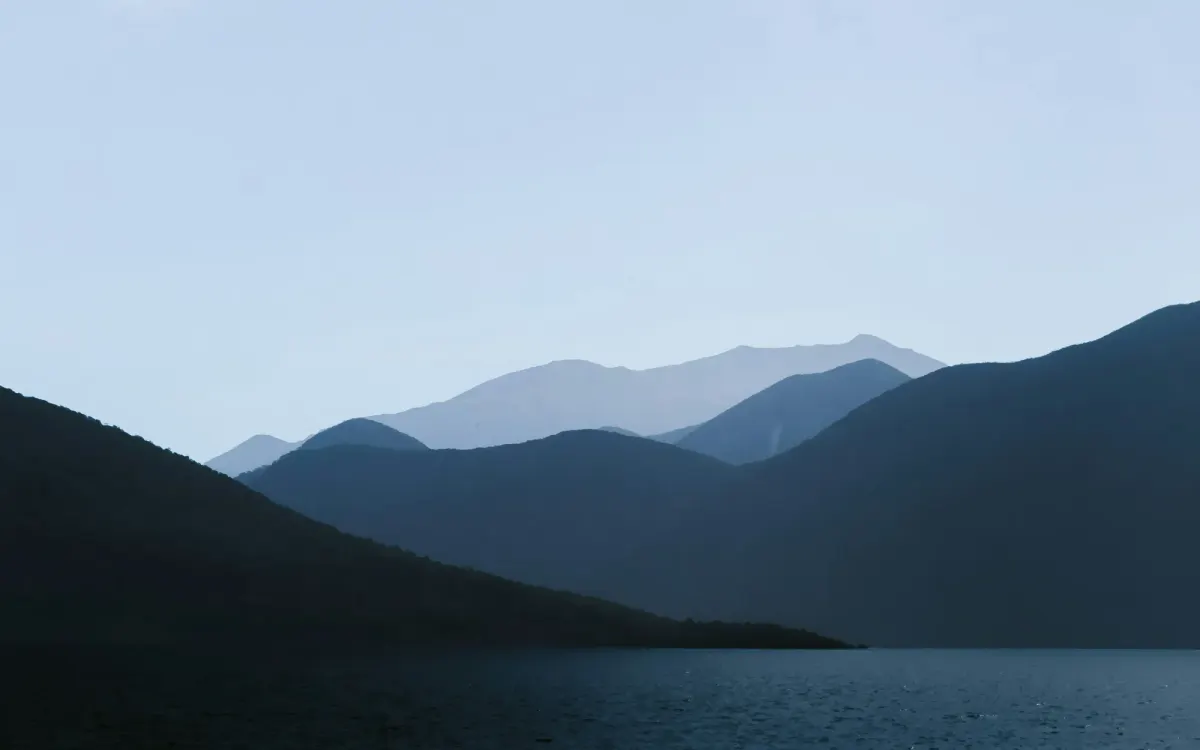
Celtic mythology uses the concept of "Thin Places" to define this exact hunger for vast, untouched landscapes. According to this ancient geographical understanding, the distance between our physical world and the transcendent "beyond" is normally three steps. However, in specific coordinates around the globe, this distance collapses entirely.
The Numinous as a Psychological Threshold
This is not merely a mystical legend; it is a concrete spatial reality. The nameless emotion you feel standing at the edge of a roaring waterfall, at the foot of a colossal mountain range, or before a boundless ocean is no coincidence.
Cognitive psychology refers to this as a numinous experience. It is the critical threshold where you are confronted with your own insignificance. The defense mechanisms, the ego, and the perception of time you have constructed to survive, perform, or prove yourself in cities simply dissolve in these geographies. What remains is a colossal sense of awe and a profound serenity rarely found in modern life.
The "Thickness" Engineered by Humanity
At this exact point, author Eric Weiner asks the fundamental question that challenges our urban hubris: "Why isn't the whole world thin?"
Perhaps it actually is. Perhaps the rest of the world has been rendered unbearably "thick" by us—through the artificial systems, concrete blocks, and endless data streams we have built. Thin places do not offer glimpses of a supernatural heaven, but rather the earth in its original state: unmasked, unfiltered, and unburdened by human hands. We are not discovering something new; we are simply seeing clearly for the first time in a long while.
In 500 B.C., our ancestors erected massive stone monuments at the exact coordinates where these spatial boundaries thinned. Today, even as the walls of modern life have grown thicker than ever, we continue to climb to those very summits driven by the same instinct. Seeking out these desolate geographies is not an escape from the world. On the contrary, it is a radical step toward a world that is unfiltered, bare, and true.
When you part that thick veil of daily life, where is your own sanctuary—the coordinate where nothing else remains and the boundary grows thin?
— Related Reading: The Silent Death of the "Third Place"