The Beautiful Mathematical Illusion of the Blue Moon
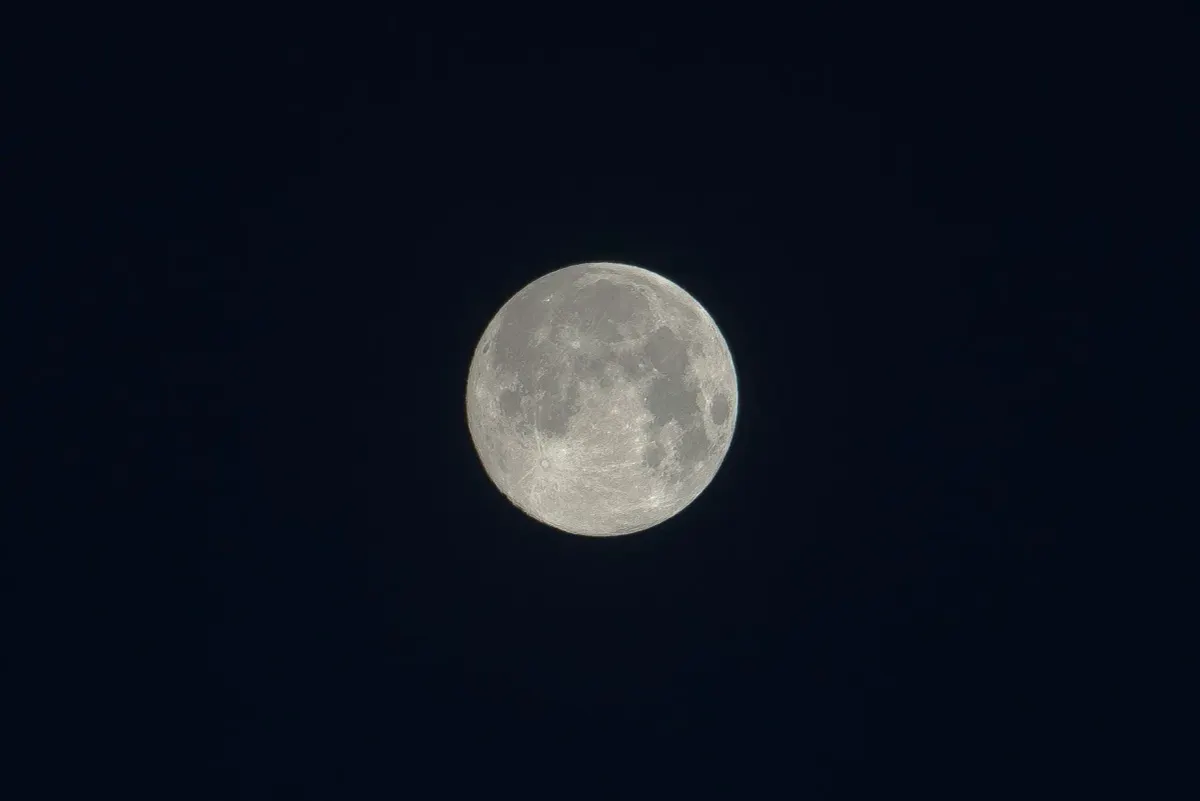
As the crimson hues of sunset slowly fade from the horizon on one half of the world, a quiet anticipation begins on the other. Camera sensors have been cleaned, tripods set up in the darkest spots, and millions of people are preparing to look up at the sky for the same cosmic rendezvous. Yet, there is a small detail unknown to many waiting for tonight's "Blue Moon" phenomenon: the sky will not offer us a visual spectacle, but rather a massive mathematical illusion.
A Collision of Calendars, Not Colors
Despite the poetic tone of its name, the moon rising on the horizon tonight will not be sapphire in color. A "Blue Moon" is born entirely from an elegant discrepancy between human-made solar calendars and the universe's own rhythm. The moon's full orbit around the Earth takes approximately 29.5 days. In our 365-day system, this cycle eventually shifts, and—albeit rarely—an extra full moon fits into a single calendar month or season. Therefore, what we will witness tonight is not a change in the moon's color, but a moment of cosmic "overflow."
A Gamble with the Clouds
Of course, witnessing this rare astronomical coincidence, no matter how well you plan, remains entirely at the mercy of the atmosphere. For instance, stargazers in the United Kingdom are currently in the midst of a serious natural gamble. The clear weekend weather is rapidly giving way to rain clouds descending from Scotland. Across the island, the highest probability of witnessing this show will belong solely to that lucky minority waiting for the clouds to part on the eastern coasts.
In the United States, however, the rules are slightly clearer. Those looking toward the horizon just after sunset on the East Coast will encounter the most massive and brilliant silhouette. But for professionals who truly want to capture that deep, freezing contrast in the moon's craters, the ultimate destination is the Southwest. The region's lightless, arid, and smooth desert plains are poised to be the most flawless viewing spots in the world tonight.
Surrendering to the Rhythm
We live in an era where every detail is planned through apps, where even nature is attempted to be predicted by algorithms. Yet, despite all the weather radars and cutting-edge lenses, at the end of the day, everyone experiences the same old-fashioned helplessness: waiting for the clouds to clear.
Perhaps this is the most valuable lesson the sky teaches us tonight. Setting aside whether we capture that flawless shot or not, it is about putting our plans on hold and simply settling for whatever nature allows.
Truly, even if a thick layer of clouds covers the entire sky tonight, is simply knowing that the massive moon is right there, just behind that grayness, enough for you?