The Mathematical Impossibility of the Ténéré Crash
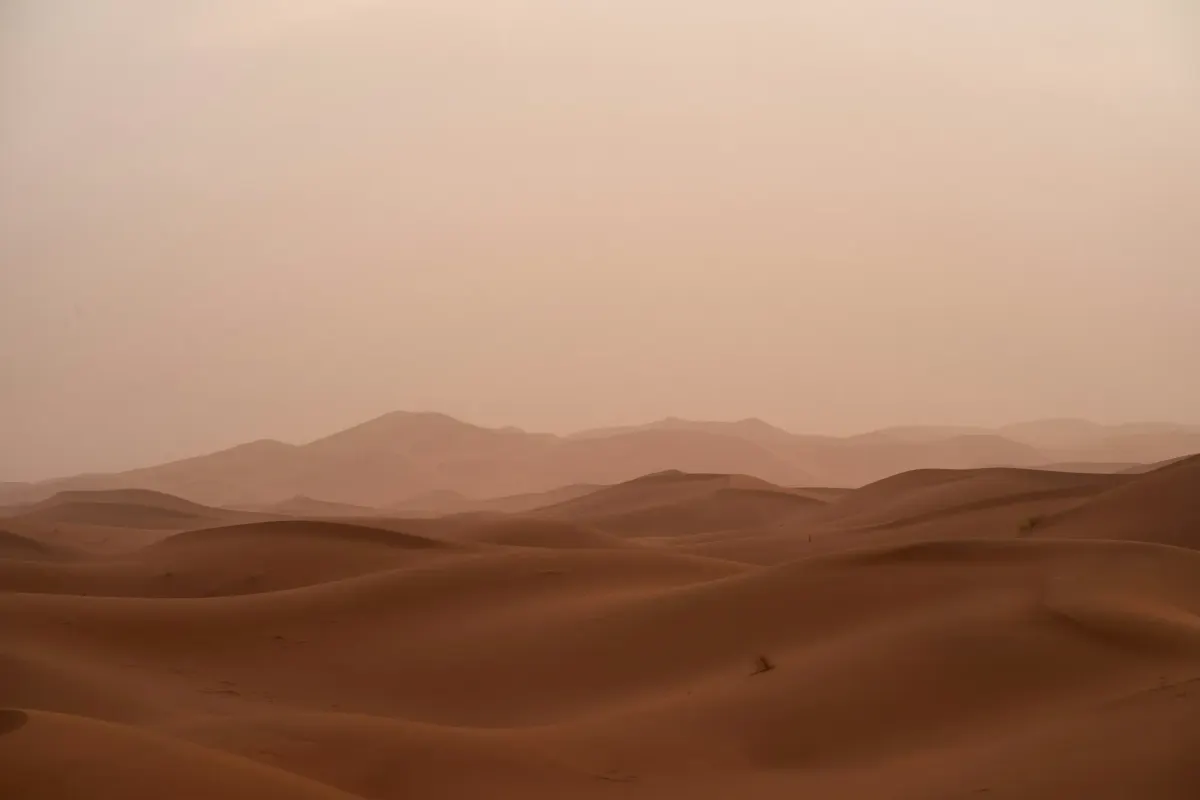
Statistically speaking, hitting an object in a completely empty space the size of France shouldn't just be difficult; it should require deliberate intent. Yet in 1973, a truck driver crossing the Ténéré region of the Sahara Desert managed to achieve this mathematical impossibility. He didn't hit a rock formation or another vehicle. He crashed into the Tree of Ténéré, the most isolated living organism on Earth.
The story of this lone acacia is often told as a quirky historical anecdote—an absurd punchline about an allegedly drunk driver. But looking closely at the coordinates 17°45′00″N 10°04′00″E reveals a much larger picture. It forces us to ask: How did a single tree survive in the middle of a 250-mile void in the first place? And what does its sudden demise say about the speed of destruction in the modern age?
A Ghost of the Green Sahara
To understand the tree, you first have to return to the Sahara before it became a desert. Roughly 10,000 years ago, during the African Humid Period, the Ténéré wasn't a sun-scorched basin of sand. It was a thriving savanna ecosystem teeming with life, lakes, and forests.
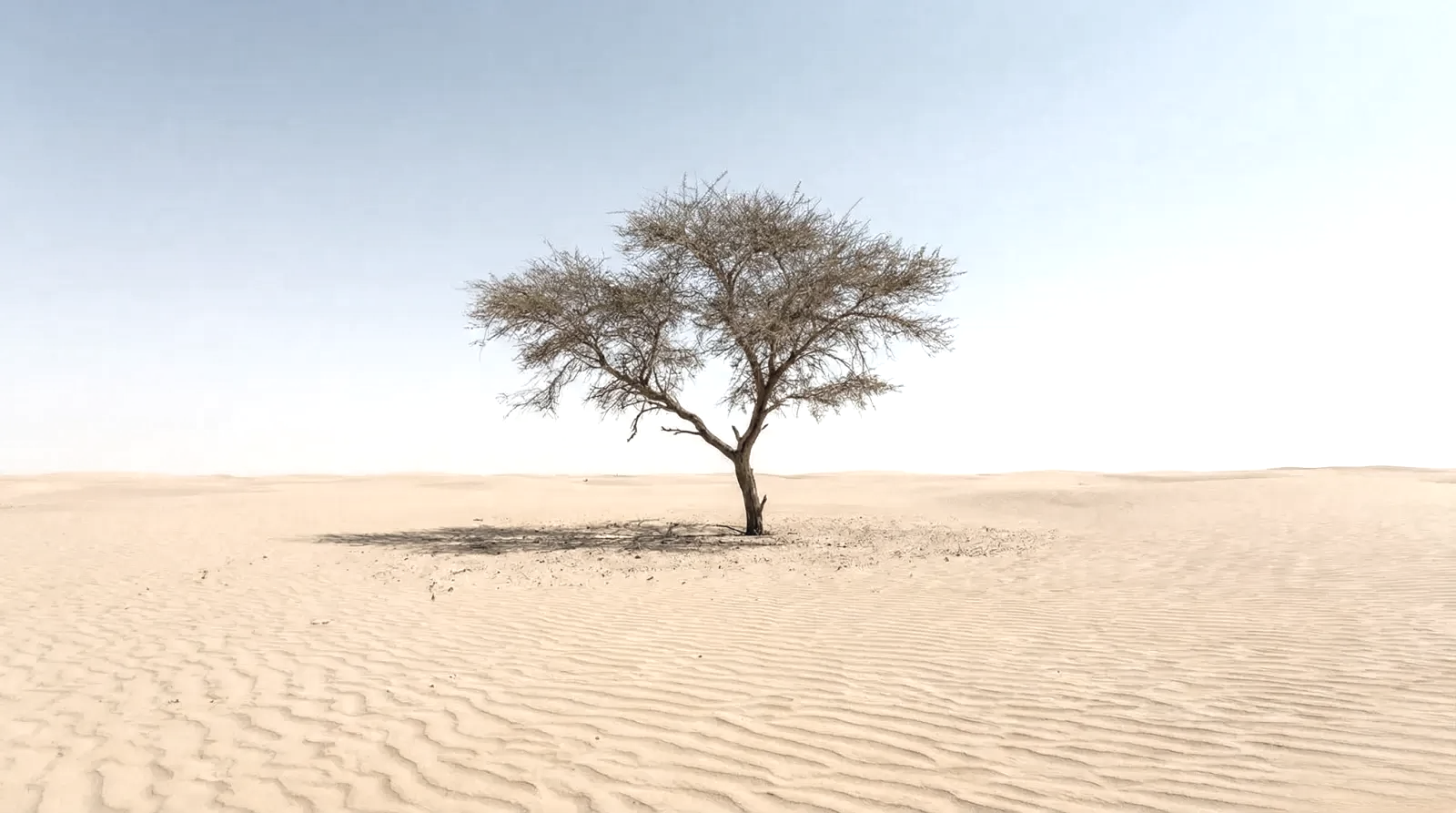
The Ténéré acacia was not born into this isolation; it was the last living thing left behind. As the Earth's orbit shifted and the monsoons retreated, the Sahara dried out. While all the surrounding vegetation turned to dust, this single tree performed an act of radical biological adaptation. Bypassing the surface drought entirely, it drove its roots 100 feet (30 meters) into the earth to tap into a forgotten, deep underground water table.
The tree was, quite literally, surviving by drinking from the past.
The Living Lighthouse
By the early 20th century, the tree was utterly alone. But for the Tuareg nomads guiding salt caravans across the shifting dunes, it was far more than just a plant. In a landscape completely devoid of landmarks and navigational points, this acacia was a living lighthouse.
Consider the discipline required to keep it alive. In the deep desert, night temperatures plummet to freezing levels, and firewood is quite literally a matter of life and death. Despite this, for generations, no passing caravan ever cut a single branch from the Tree of Ténéré. To the Tuareg, it was sacred. They understood a fundamental rule of this ruthless geography perfectly well: You do not destroy the thing that guides you.
When European commanders first documented the tree in the 1930s, they were baffled. French officer Michel Lesourd noted with astonishment that the locals kept even their camels strictly away from the tree's leaves. The tree survived not just through biological resilience, but through a cultural consensus of preservation.
The Speed of Modernity
Nature spent millennia meticulously working to keep this tree alive. Human error destroyed it in a fraction of a second.
In 1973, an unnamed truck driver—following the motor tracks that had replaced the ancient caravan routes—lost control of his vehicle. With absolutely no other obstacles to hit for hundreds of miles, he snapped the ancient trunk in half.
Today, the remnants of the original acacia reside in a quiet pavilion at the Niger National Museum in Niamey. If you travel to the original crash site in the Ténéré today, you won't find an empty pile of sand. You will find a stark, rust-colored metal sculpture of a tree, erected by an anonymous artist.
This sculpture stands as a monument to what was lost; but it also poses an uncomfortable question to the modern traveler. The Tuareg managed to coexist with this fragile ecosystem for centuries out of a survival instinct and profound respect. In our era filled with heavy machinery and high speeds, how many irreplaceable things do we destroy simply because we aren't paying enough attention?
The Tree of Ténéré is no longer a living lighthouse. But as an idea, it still marks a crucial coordinate on our map: The exact intersection of nature's deep resilience and our own careless velocity.