The Misunderstood Silence of Japan’s Most Famous Path
Every spring, millions flock to Kyoto's Philosopher's Path for an aesthetic photo. Yet, this stone trail was designed to isolate the mind from external chaos. From Wabi-Sabi to Zen practice, it offers a quiet but profound rebellion against how we consume the world today.
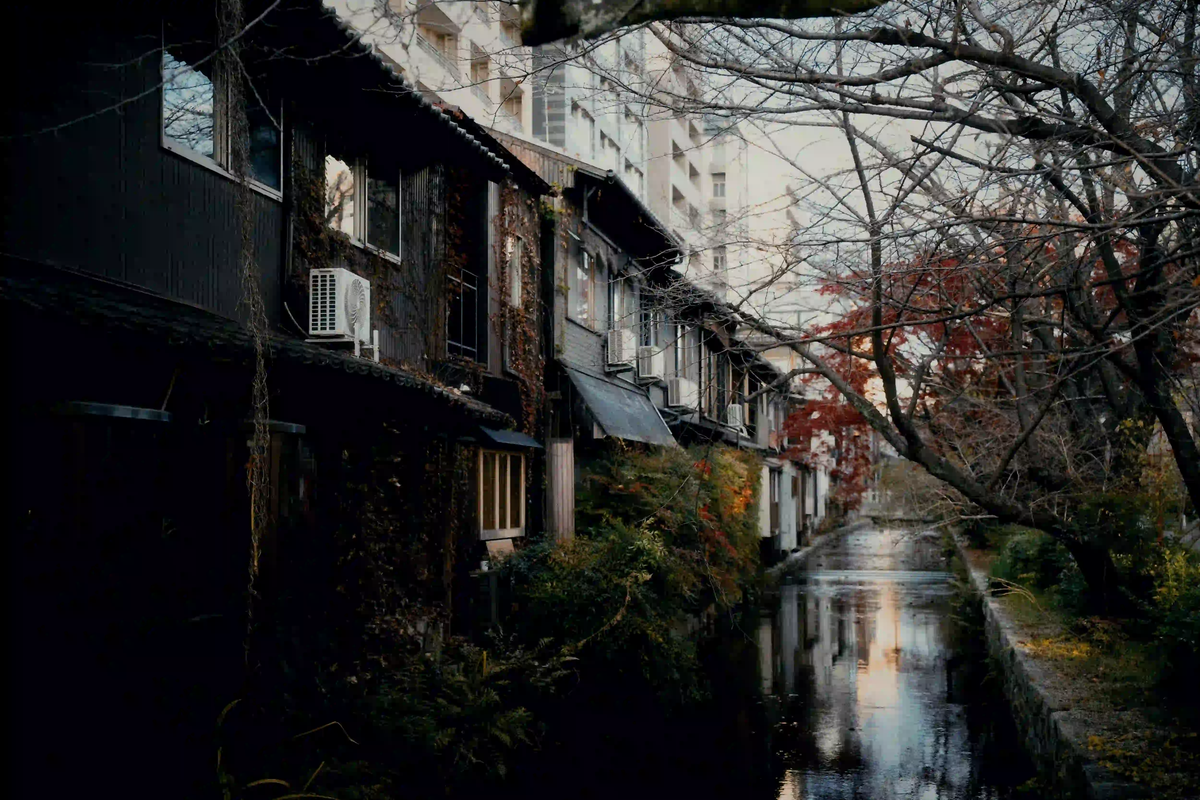
Every spring, Japan’s former capital, Kyoto, becomes one of the most vivid examples of the "overtourism" crisis. Millions of people from around the globe converge around a narrow, two-kilometer canal in the northeast of the city to capture that quintessential spring photograph. Marketed by tourism agencies as the "Philosopher’s Path" (Tetsugaku-no-michi), this stone trail has largely been reduced to a mesmerizing backdrop adorned with pink cherry blossoms, consumed entirely through smartphone screens.
Yet, a closer examination of the architectural and historical codes of this path reveals a profound irony. This route, where millions trample each other for an aesthetic visual feast, was actually created to completely isolate a weary mind from the noise of the outside world and the chaos of crowds. So, what is this path—now transformed entirely into an object of touristic consumption—truly urging us to escape from?
Kitaro Nishida: Steps Against Mental Chaos
The route takes its name from Kitaro Nishida (1870–1945), one of the greatest thinkers of 20th-century Japanese philosophy and the founding figure of the "Kyoto School." Attempting to build a massive philosophical system by bridging Western rationalism with Eastern existential insights, Nishida grappled with heavy problems such as the nature of reality and humanity's place in the universe.
To slow the ceaseless flow of his thoughts, slip away from the chaos created by the academic world, and distill his ideas, he paced this canal-side trail every single day. For Nishida, this path was less a viewing terrace designed for observing the scenery, and more a meditative "wall of silence" meant to turn the mind inward. This route, walked today by millions simply because they find it visually satisfying, is in fact the very blueprint of a philosopher’s escape from the crowds and the noise of his era.
A Myth Within a Myth: Ginkaku-ji and Wabi-Sabi
At the northern end of the Philosopher’s Path lies Ginkaku-ji, built in the 15th century by Shogun Ashikaga Yoshimasa. Curiously, visitors encounter a well-known paradox here: there is not a single gram of silver on this temple named the "Silver Pavilion."
The most widely accepted historical explanation is that the Onin War, which erupted in 1467 and left Kyoto in ruins for a decade, had completely depleted the shogunate's treasury. According to this theory, a desperate Shogun Yoshimasa was forced to accept the weathered, unpainted nature of wood since he could not afford to coat the building in silver. Still, there is a much deeper philosophical possibility debated among historians: the idea of silver plating might have never been planned in the first place. In fact, the name "Silver Pavilion" was a poetic moniker attached to the building centuries later, during the Edo period, to praise the reflection of moonlight on its dark wood.
Whether it was born from a budget crisis or a romantic myth invented later, the result remained the same. The unadorned, aged, and modest structure of Ginkaku-ji became the most profound symbol of the renowned Wabi-Sabi aesthetic, which glorifies the imperfect, the impermanent, and the understated.
Pure Experience: Not in the Landscape, But Within the Mind
At the core of philosopher Nishida’s philosophy lies the concept of "pure experience." Defining that moment of raw perception where subject and object have not yet separated and thought has not yet divided action, this concept is frequently romanticized in tourism guides by associating it with the beauty of temples or nature.
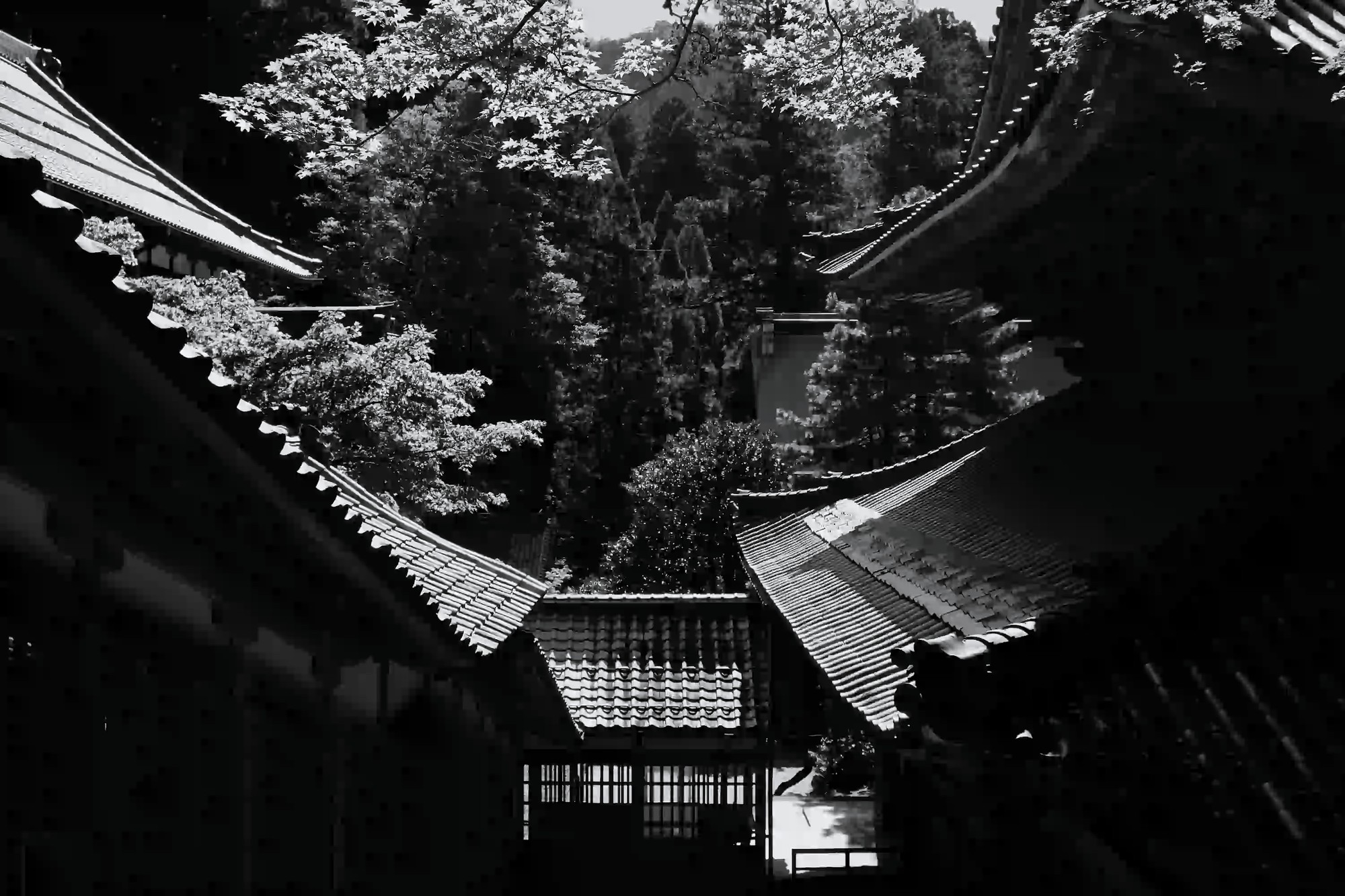
Rather than observing peaceful exterior landscapes, Nishida’s philosophy was shaped through years of heavy and grueling Zen meditation (zazen) practice. The truth is hidden not in the aesthetics of grand temples or rivers, but in the painful internal struggle the philosopher waged within his own mind. The path outside is merely a vessel carrying that profound internal contemplation.
Eikan-do and the Looking-Back Buddha: A Quiet Objection to the Era of Speed
At the southern end of the walk, Eikan-do Temple houses an extraordinary figure: the "Looking-Back Buddha" (Mikaeri Amida). Traditionally, depictions of Buddha gaze straight ahead or slightly downward in a meditative stillness. Unlike them, this rare statue has turned its head completely backward over its left shoulder.
Legend has it that in 1082, as the monk Eikan was circumambulating the statue during a ritual, the figure suddenly came to life and began to walk. When Eikan froze in astonishment and fear, the Buddha turned back and told him he was slow.
This narrative offers a profound philosophical alternative to today’s modern life practice, which is built upon "constantly moving forward and advancing at a breakneck pace." In an era where success is measured solely by how fast one runs, and where those left behind are instantly pushed out of the system, the posture of this statue is a quiet revolution. The ultimate goal is not always to be at the front; sometimes, it is to possess the grace to stop and slow down enough not to abandon those who have fallen behind in faith or in life.
Solitary Steps Against the Masses
On the Philosopher’s Path, carved into an ordinary stone monument by the canal, one can read these lines penned by Nishida in 1934:
"People are people, and I shall be myself. No matter what, I will go my own way."
At first glance, these lines might seem like a simple emphasis on individuality, but they are rooted in a much heavier political climate. Written during years when Japan was increasingly surrendering to aggressive crowds and nationalist mass psychology, this monument stands as an uncompromising declaration of resistance against yielding to the totalitarian noise of the era.
Knowing that all the clamor was temporary, a philosopher chose to count his own solitary steps on this stone path every day instead of conforming to the masses. Today, the millions who walk that route focus merely on an aesthetic social media frame, completely missing the true legacy: the courage to "walk one's own path."
In this era where everything and everyone rushes forcefully in a single direction, we must pause and ask ourselves: How much silence do we need to shut out all the noise around us, just so we can hear our own footsteps?
— Related Reading: Why Does Japan Kill a Building to Keep It Alive?