The June 2026 Celestial Summit: A Rare Alignment of Venus, Jupiter, and Mercury
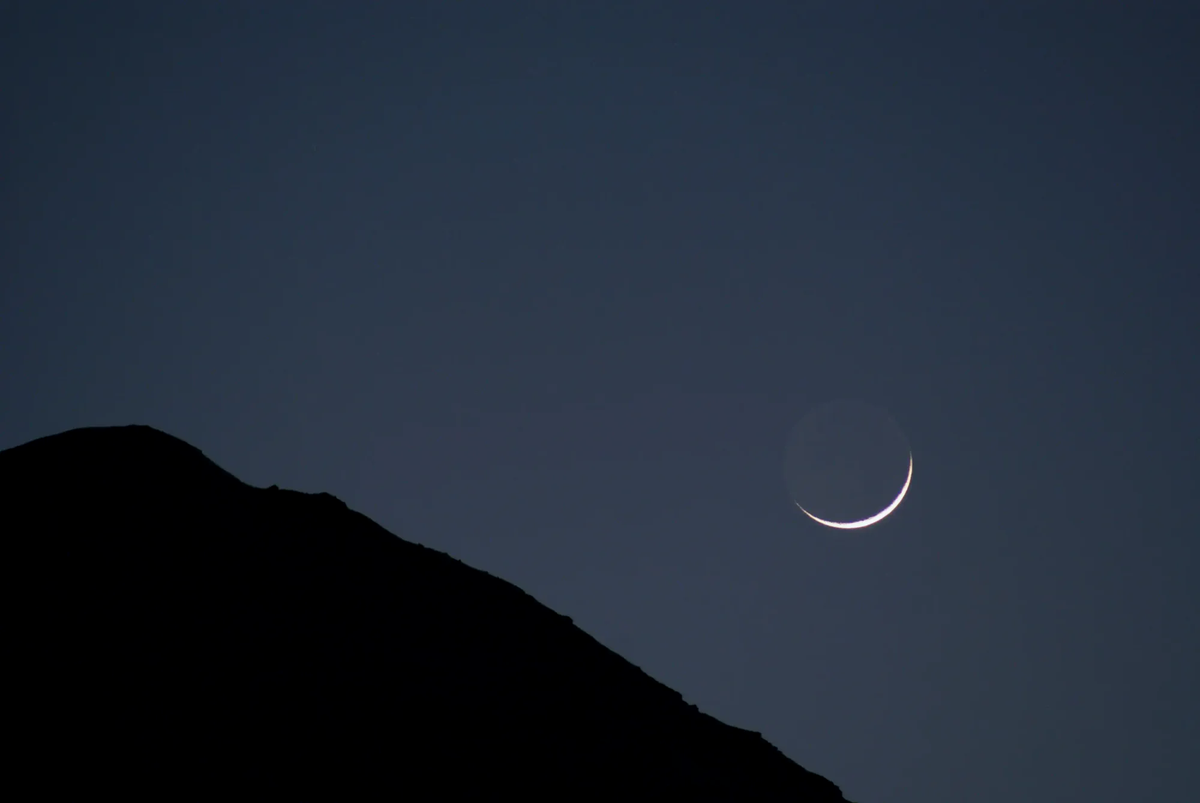
Orbital mechanics rarely offer a flawless choreography for a terrestrial observer. However, astronomical calendars indicate that in June 2026, the western horizon will host one of the most remarkable visual spectacles of recent years. In this cosmic event—requiring no specialized equipment to observe—Venus, Jupiter, Mercury, a slender crescent Moon, and the two brightest stars of the Gemini constellation will converge within the same narrow slice of the sky.
If you manage to look up from your screens and cast your gaze toward the right coordinates at the right time, the sky this month will transform from an ordinary nightscape into a colossal, naked-eye map detailing the distribution of massive bodies across the solar system.
The Initial Approach: The Dual Spectacle of Venus and Jupiter
The first phase of this sequence reveals itself as the western horizon begins to darken in early June. Venus and Jupiter, the two brightest objects in the night sky, will accompany each other throughout the month. Venus will serve as your reference point, outshining everything around it with a steady, brilliant white light. According to NASA data, on June 8 and 9, these two planetary giants will drift so close to one another that, from Earth’s perspective, they will appear almost as a single "double star."
The scientific reality behind this visual feast is striking in its own right: In the vacuum of space, these planets are actually hundreds of millions of kilometers apart. It is merely their orbits intersecting along our line of sight from Earth that creates this grand visual illusion.
Mercury Enters the Stage
The moment the summit becomes truly crowded occurs within a narrow window between June 11 and June 15. According to observation notes from the Planetary Society, Mercury will appear during these dates just below Venus and Jupiter, hovering close to the horizon line. Because it never strays far from the Sun from our vantage point on Earth, Mercury is notoriously difficult to catch; it frequently fades into the twilight's glow. Therefore, mark June 15 on your calendars—this is the day Mercury reaches its highest point above the horizon, offering its clearest visibility.
June 16-17: The Visual Apex and Lunar Occultation
As the nights of June 16 and 17 arrive, new actors join the stage. A slender crescent Moon will glide into this tight celestial corridor, immediately flanked by Pollux and Castor, the luminous members of the Gemini constellation. Together, this quartet will form a loose yet highly distinct line stretching toward the western horizon.
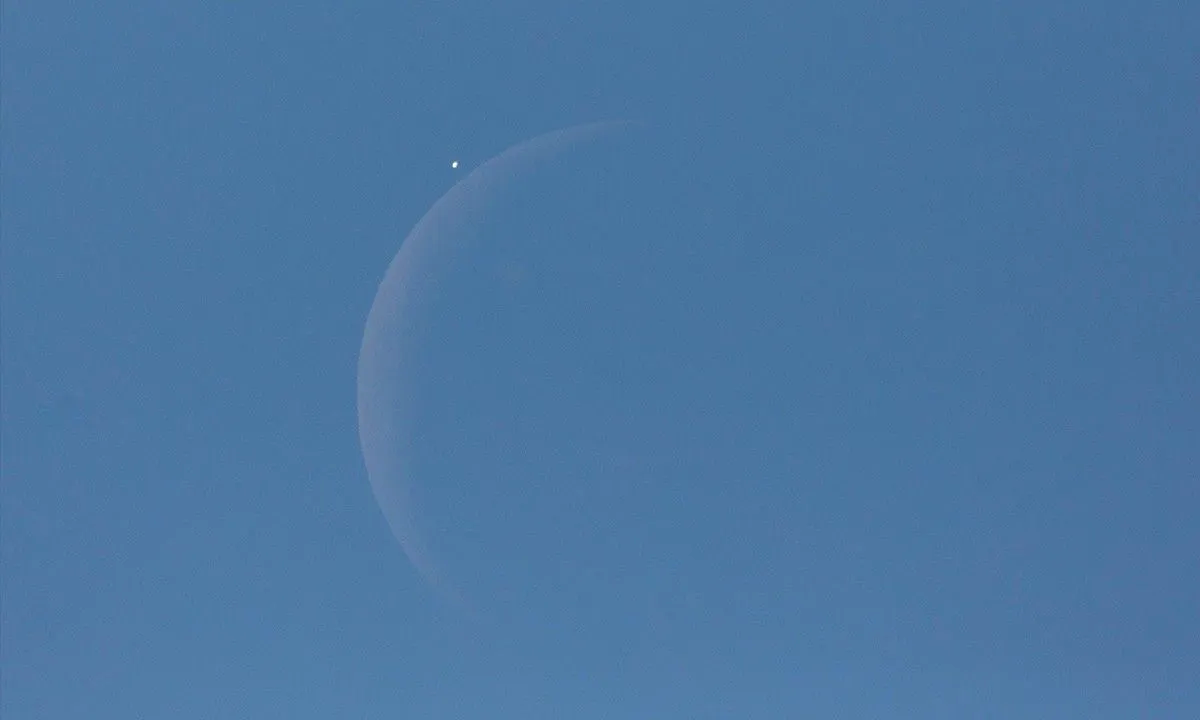
June 17, in particular, hosts a rare astronomical event for viewers across the Americas (the United States, Canada, Brazil, and Venezuela): a lunar occultation. The Moon will pass directly in front of Venus, briefly swallowing the planet before allowing it to reappear. For many observers in these regions, this phenomenon will occur during daylight hours but can still be witnessed through powerful telescopes. A critical reminder: If you plan to observe this daytime occultation with a telescope or binoculars, never point optical devices near the Sun without proper solar filters, as doing so can cause permanent eye damage.
An Alternative Route for Night Owls: Saturn and Mars
June rewards not only the evening hours but the dawn as well. Deep into the night, just before sunrise, a glance toward the eastern horizon will reveal Saturn and Mars. While Saturn is easily distinguishable by its pale yellow tint, Mars will sit slightly lower on the horizon, presenting a more elusive target.
All this orbital momentum will culminate on June 21 with the Summer Solstice, marking the longest day of the year in the Northern Hemisphere and the official dawn of astronomical summer. As the nights begin to shorten, the "Summer Triangle" will take over the stage for those eager to observe deep-sky objects.
For the next two weeks, however, the grandest show remains firmly anchored in the west. All you need is a cloudless sky and a gaze directed toward the horizon roughly an hour after sunset.
As planets approach one another from millions of miles away with such slow, silent, and flawless precision, could your habit of staring at a screen every morning, rapidly consuming your own life in a panic of "missing out," be the greatest aesthetic crime ever committed against the universe?
— Related Reading: The Optical Anatomy of the July Sky