The Underground World Forging Its Own Climate: Hang Son Doong
Hundreds of meters underground lies an isolated ecosystem with its own rainforest and weather. A quiet reminder of nature’s raw, unseen scale.
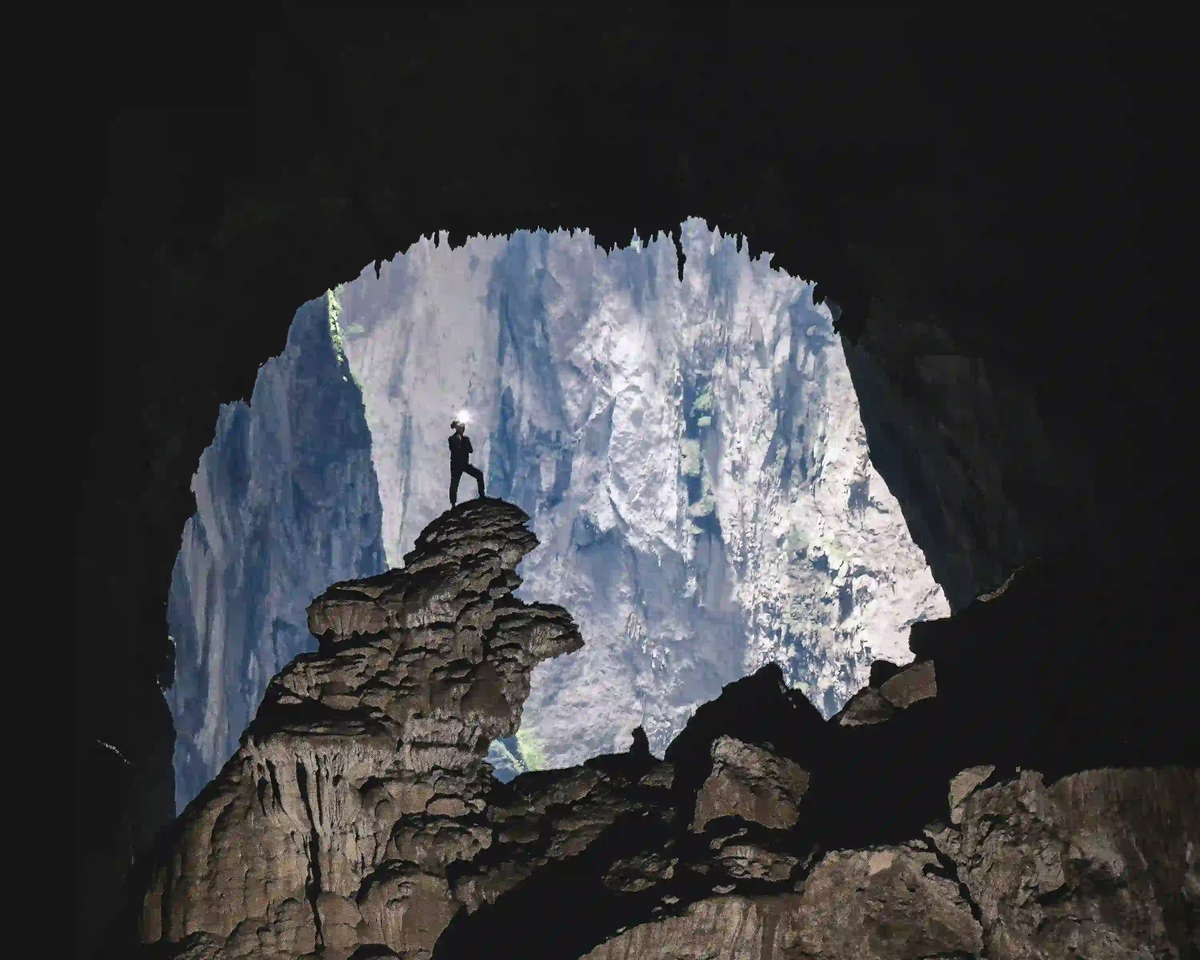
We live in an era where satellites collect terabytes of topographical data from orbit every second, leading us to believe that every square centimeter of the planet has been digitally mapped. The idea that there are no unknowns left to discover, demarcate, or name is one of modern humanity's most comforting—and perhaps most arrogant—assumptions. Yet, hundreds of meters beneath our feet lies an isolated planet operating with its own rainforests, rivers, and weather systems, quietly dismantling this illusion of absolute dominion.
Nestled deep within Vietnam's Annamite Mountains, Hang Son Doong is a subterranean anomaly that invalidates all known geographical scales.
What truly makes this colossal void—large enough to easily house an entire New York City block of 40-story skyscrapers—so captivating is not its sheer volume. Beating at the heart of this darkness is a flawless mechanism that has managed to remain completely isolated from surface ecological shifts for hundreds of thousands of years.
An Atmospheric Engine Generating Its Own Weather
There is a common misconception that caves are stagnant, damp, and dead stone hollows. Hang Son Doong, however, is an atmospheric engine that literally generates its own climate and breathes. This manifests as a highly specific example of "speleological meteorology," a phenomenon rarely encountered in geological literature.
The system operates on an entirely closed thermodynamic principle, requiring no input from the Earth's surface atmospheric cycles. The fierce subterranean rivers rushing through the cave continuously produce a dense layer of water vapor. As this warm vapor rises toward the cave's cold ceiling hundreds of meters above, it collides with the air seeping in from the outside. The result is the formation of real, dense clouds within the cave's closed atmosphere.
Walking through the depths of Hang Son Doong, when you look up, you do not see limestone rock; instead, you see heavy, misty clusters of clouds that the cave has woven from its own waters toward its ceiling. This subterranean void is an independent ecosystem that generates its very own winds and fog.
Isolation Sprouted by Sinkholes: The Garden of Edam
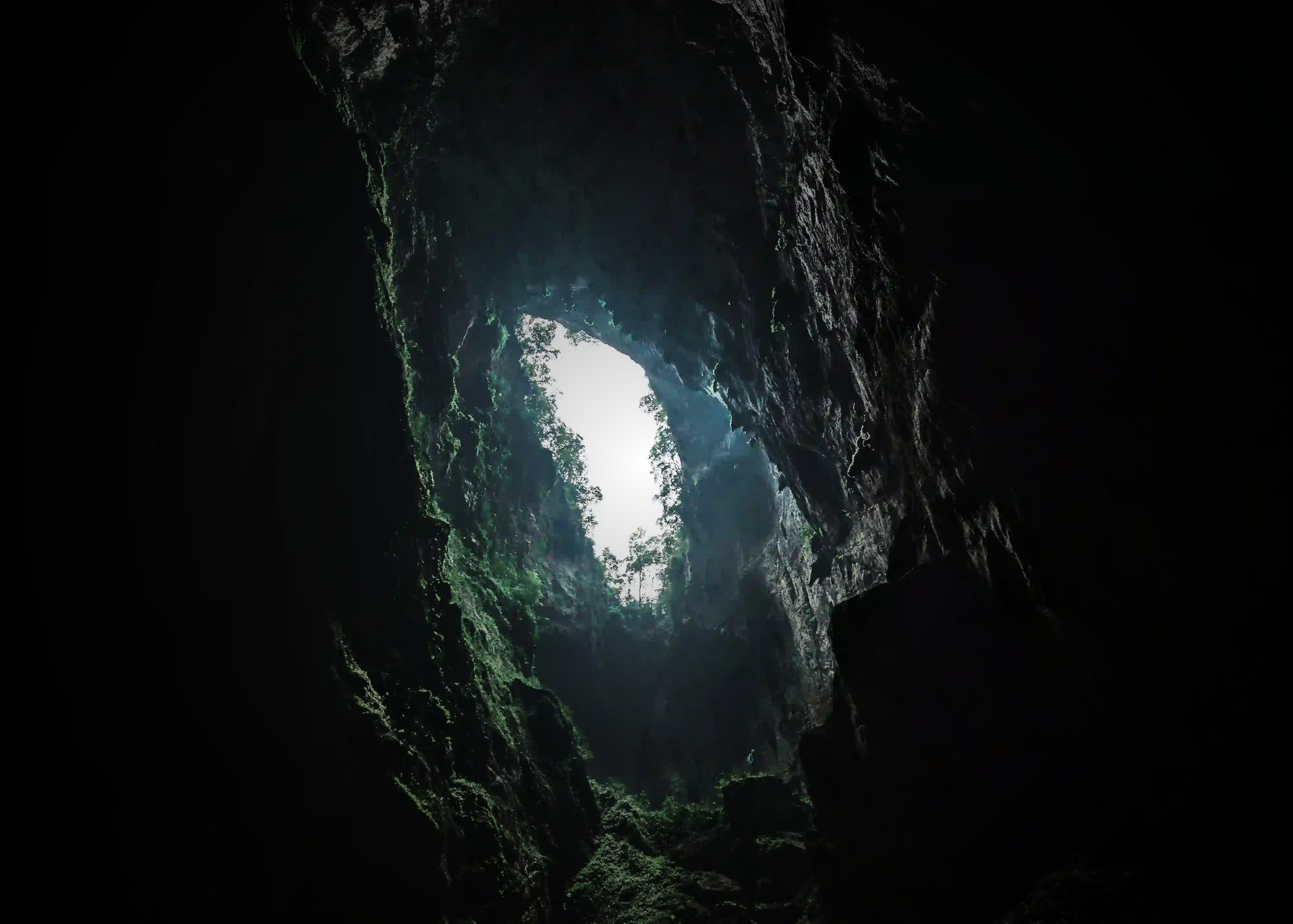
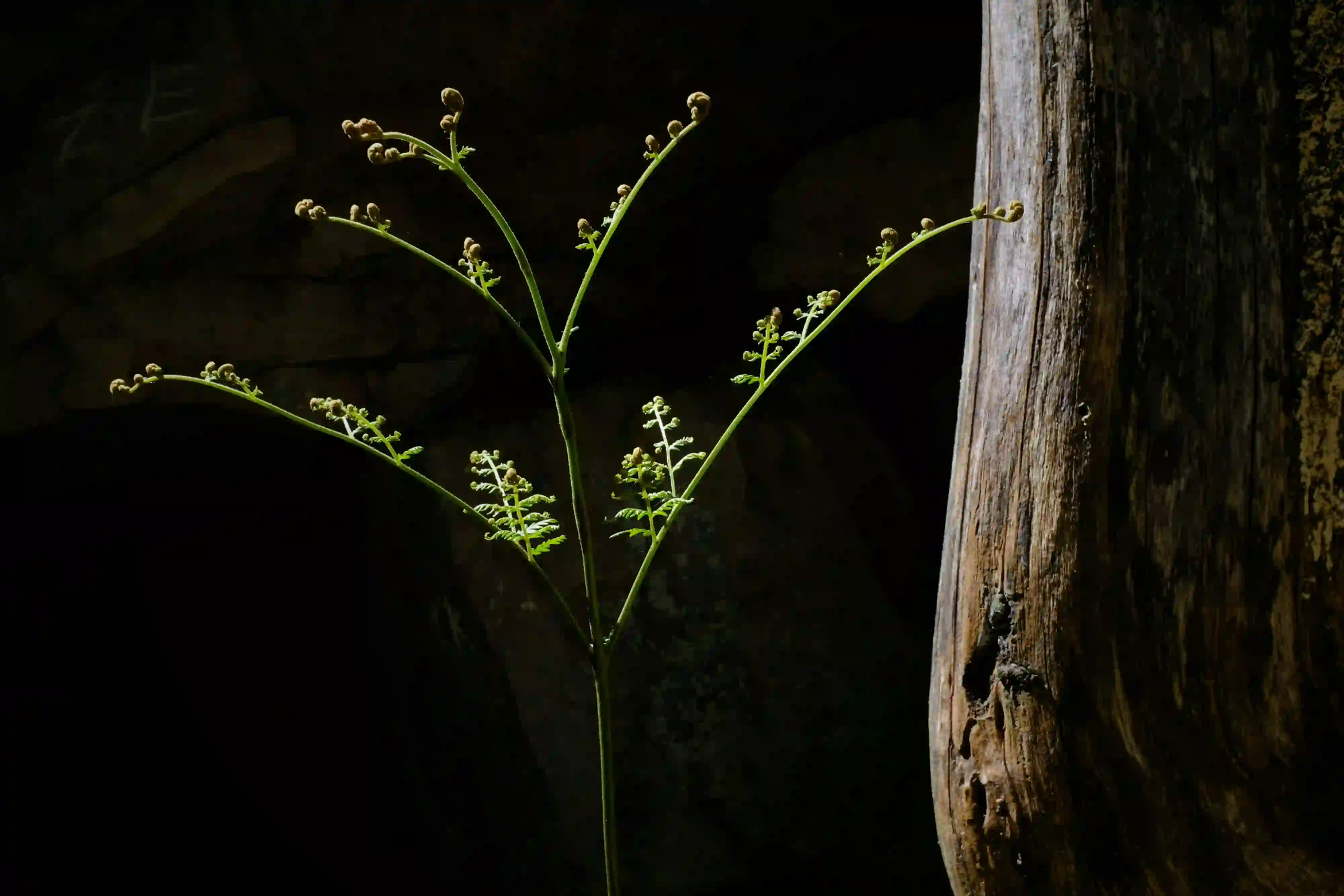
The cave's flawless darkness and insulation were pierced hundreds of thousands of years ago when the karst ceiling collapsed at specific points. These massive natural windows, termed "dolines" in geology, allowed a limited but steady stream of sunlight to filter in.
When this light combined with the trapped moisture inside, a rainforest sprouted hundreds of meters underground. A perfect example of a "refugium" in ecological science, this subterranean forest never partook in the chaos of surface epochs, ice ages, or mass extinctions. Untouched by winds capable of scattering seeds and inaccessible to apex predators, this underground greenhouse continued to grow purely in its own silence, free from any external interference.
The Biological Economy of Darkness
Moving away from the doline zones where light seeps in and descending into the pitch-black depths of the cave, biology begins to operate on an entirely different principle of conservation. These regions are the evolutionary laboratories of "troglobites"—creatures that spend their entire lifespans strictly within cave ecosystems.
Species striving to survive in absolute darkness for millions of years must utilize energy with utmost efficiency in a world completely devoid of sunlight. Sight requires significant energy consumption for both the brain and the body. Since expending energy on eyes in a place without light would be an evolutionary waste, the fish and insects in the depths of Hang Son Doong entirely lost their eyes over thousands of generations.
Nature’s rule in these pitch-black depths is brutally simple: abandon what you do not need.
Likewise, they ceased production of the color pigments that would otherwise protect them from harmful UV rays or provide camouflage. These creatures assumed translucent forms devoid of pigment, perfecting their tactile senses to detect the slightest vibration in the water or chemical shift in the air instead of relying on vision.
The Pace of Time and Flawless Insulation
The most striking aspect of this massive, living ecosystem is not its scale, but its success in keeping itself hidden until the modern era. Hosting its own forests, clouds, and eyeless inhabitants, this subterranean world was only fully documented by the surface in 2009—even in an age where satellites scan the globe inch by inch. As continents shifted and species went extinct on the Earth's surface, time flowed much slower, undisturbed, and silent underground.
Humanity's relationship with nature is generally built upon conquering, mapping, or managing it under the guise of "conservation." Yet, the existence of a world beneath our feet—completely unaware of us and functioning flawlessly precisely because we are absent—is a profound realization.
In our era, where knowing, naming, and making every corner accessible is deemed an absolute triumph, the fact that the survival secret of one of the planet's most complex ecosystems has simply been to remain "undiscovered" for centuries—what does this tell us about the true nature of our desire to explore?